
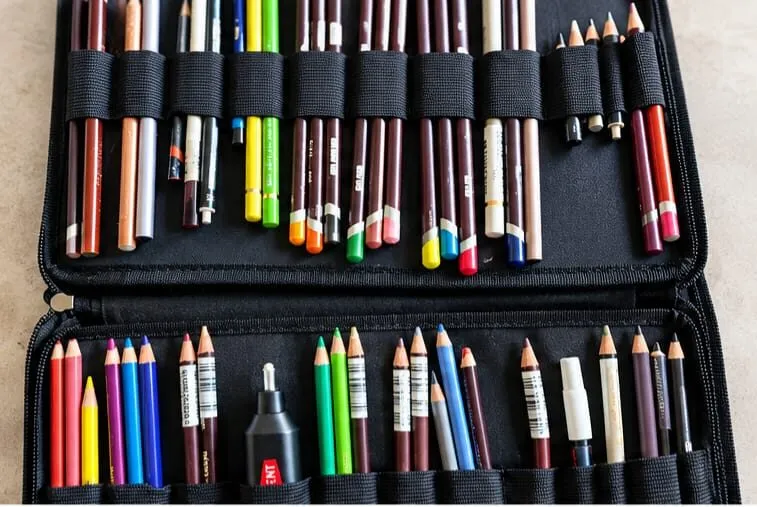
Coloured pencils, which US readers call colored pencils, look simple, and that is the trap. Two sets that appear identical on the shelf can behave completely differently on paper: one glides and blends, another holds a razor point but resists softening, a third leaves a waxy haze after a dozen layers. Choosing well means understanding what the pencil is made of and what you want it to do.
This guide is the hub for everything we cover on the medium. It explains the main pencil types, how artist and student grades differ, which brands matter, and how to choose by subject and budget. Along the way it points you to a dedicated guide for each decision, so you can go as deep as you need.
What coloured pencils actually are
A coloured pencil is a core of pigment held together by a binder, usually wax or oil, wrapped in wood. The pigment gives the colour; the binder decides how the core feels, how it lays down and how it layers. Fillers make up some of the volume, and cheaper pencils generally contain more filler and less pigment.
That composition explains most of what artists notice. A high pigment load means richer colour from lighter pressure. A well-made binder means the core stays smooth, resists crumbling in the sharpener and keeps its point. Pigment quality determines lightfastness, meaning how well a colour resists fading in light, which matters if you plan to sell or exhibit. We cover that fully in coloured pencil lightfastness explained.
Unlike paint, coloured pencils are built up in thin layers rather than mixed on a palette. Colours are combined on the paper itself, which is why control of pressure and layering matters more than any single pencil. Michael puts it as thinking of each layer as a whisper: begin with light pressure and increase gradually, so the tooth of the paper is never flattened too early. The full method is in how to layer coloured pencils.
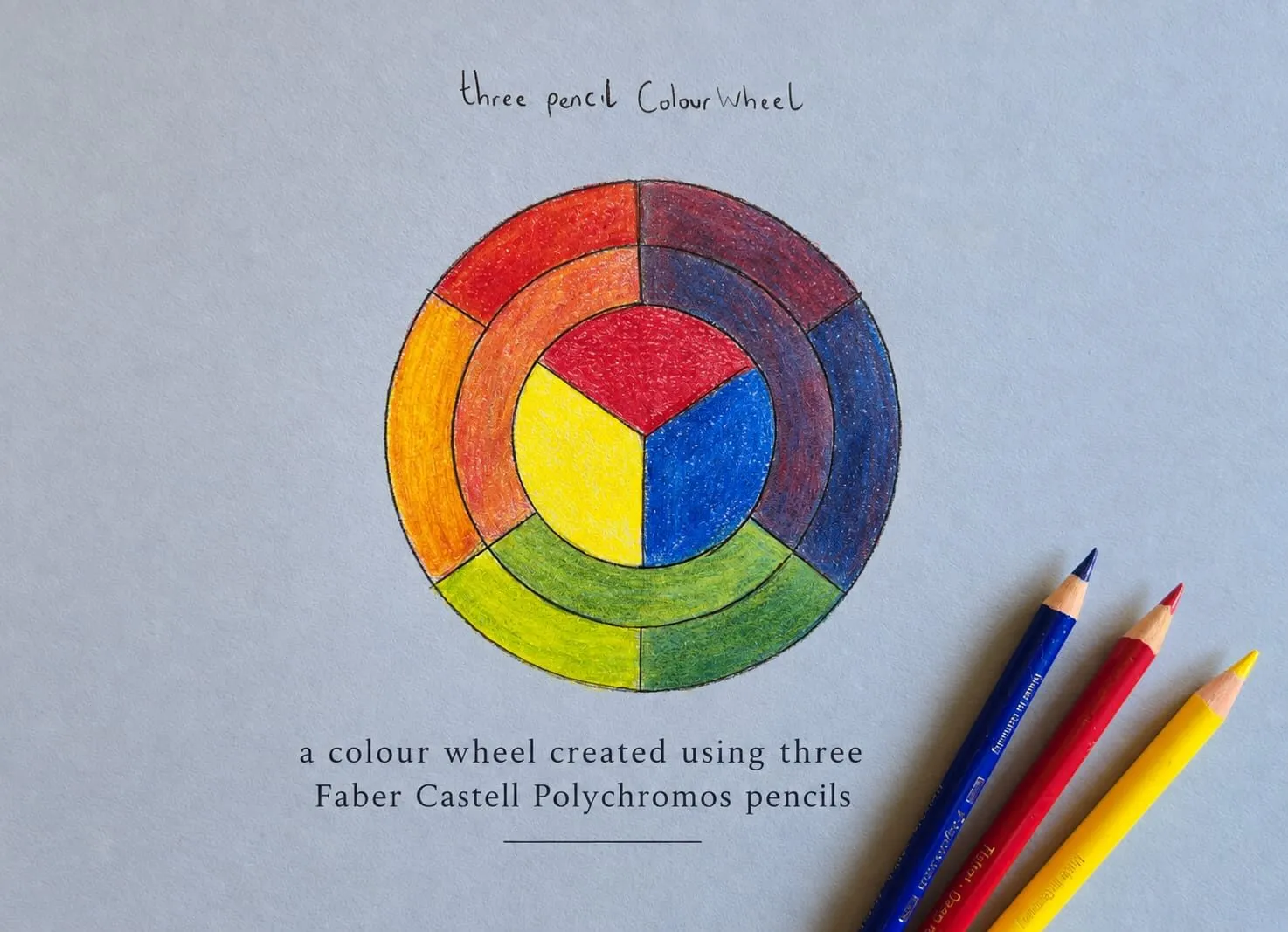
A hand-drawn colour wheel made with three Faber-Castell Polychromos pencils on blue-grey paper. Drawing by Michael Brace.
Wax, oil and water-soluble pencils
Three families cover almost everything you will meet.
| Type | Feel | Strengths | Watch out for |
|---|---|---|---|
| Wax-based | Soft, creamy, quick to lay down colour | Smooth gradients, easy blending, rich burnishing | Wax bloom, softer points that wear quickly |
| Oil-based | Firm, crisp, holds a sharp point | Fine detail, many clean layers, crisp edges | Less buttery for large soft areas |
| Water-soluble | Behaves like a pencil dry, like watercolour wet | Washes, mixed media, bold colour | Needs suitable paper and a little planning |
Wax-based pencils, such as Caran d’Ache Luminance and Derwent Coloursoft, suit soft realism and painterly transitions. Oil-based pencils, with Faber-Castell Polychromos the best-known example, favour precision. Water-soluble pencils, including Derwent Inktense and Caran d’Ache Museum Aquarelle, can be used dry or activated with a wet brush.
Many artists use both wax and oil in a single drawing: wax for softness, oil for precision. Our guide to wax versus oil-based coloured pencils explains how to pair them without trouble, and how to recognise wax bloom before it spoils a drawing. For more on activating pigment with liquid, see using solvents with coloured pencils.
Artist grade versus student grade
The difference is not a marketing label. It shows up in the drawing.
Professional pencils are defined by high pigment concentration, excellent lightfastness, smooth layering, predictable behaviour and strong cores that resist breakage. They let you build cleaner layers, blend more subtly, match colours more accurately and control pressure with confidence. Student and beginner ranges usually cost less and have fewer colours or lower pigment loads, but many are pleasant to use and forgiving while you learn.
Our rule of thumb: learn on a good beginner set, then move to artist grade when you find yourself fighting the pencils, not the drawing. Muddy colours, waxy build-up and cores that snap are common signs. The full argument, with what you gain and what you do not, is in professional versus student coloured pencils.
The major brands at a glance
You do not need to know every brand, only the ones that keep appearing in serious studios.
- Faber-Castell Polychromos - oil-based, firm and precise, with a wide colour range. Popular with wildlife and still-life artists. See the Polychromos review.
- Caran d’Ache Luminance - creamy, opaque and expensive, prized for portraits and skin. See the Luminance review.
- Derwent - a wide family. Coloursoft is velvety and painterly, Chromaflow is vibrant and beginner-friendly, Drawing pencils are muted and earthy, Lightfast is premium and creamy, and Inktense is water-soluble. Read our Derwent range reviewed.
- Prismacolor Premier - creamy and smooth, well known for ease of use when learning to blend.
- Faber-Castell Goldfaber - firm enough for detail, soft enough for shading, and a gentle introduction to the feel of Polychromos.
- Caran d’Ache Pablo and Museum Aquarelle - Pablo is firmer and good for detail and layering; Museum Aquarelle is water-soluble yet highly pigmented.
The three professional standards - Polychromos, Luminance and Derwent Lightfast - are set against each other feature by feature in Polychromos vs Luminance vs Lightfast.
How to choose by subject
Start with what you draw most, because the subject usually settles the pencil question.
- Portraits and skin. Creamy, opaque pencils give soft gradients and delicate transitions. Luminance and Derwent Lightfast are the usual choices, with Polychromos for crisp detail in eyes and hair. See best coloured pencils for portraits.
- Wildlife, fur and feathers. Firm oil-based pencils hold the fine points fur needs; soft pencils help in eyes and noses.
- Still life, glass and metal. Crisp edges and clean layering favour Polychromos; food, glaze and rich colour reward softer wax pencils.
- Landscapes and atmosphere. Muted, earthy ranges such as Derwent Drawing suit nature work.
- Learning and sketching. A forgiving beginner set. See best coloured pencils for beginners.
If you want a single shortlist across all subjects, the best coloured pencils for serious artists gathers our top picks with a comparison table.
How to choose by budget
You do not need everything at once. A sensible approach is to buy in stages.
- Small good set first. A 12 to 24 pencil set of a well-regarded beginner range teaches pressure and layering without overwhelming you.
- Add a white and a few problem colours. A strong white matters, especially on toned paper. Buy open stock of the colours you run out of.
- Upgrade the pencils you use most. Move to an artist range for the subject you draw constantly, rather than replacing everything.
- Spend on paper before a second set. A better surface often improves results more than a larger range.
Prices and set sizes change often, so check the manufacturer or a current retailer instead of relying on figures printed anywhere, including here.
Essential accessories
The pencils are only part of the system.
Paper. Heavier paper with some tooth grips pigment and survives many layers. Michael works on grey paper of heavy weight for glossy subjects, and on smooth, heavier white papers such as Arches Hot Press and Stonehenge for soft blending. Start with the best paper for coloured pencils, then explore why grey paper works for coloured pencil and the wider paper guide.
Sharpeners. A poor sharpener snaps cores and wastes pigment. If your pencils keep breaking, the sharpener is often the cause. Our best pencil sharpeners for coloured pencils guide covers long points and gentle cutting.
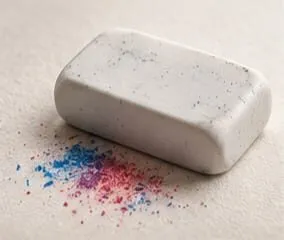
Erasers. Coloured pencil is harder to correct than graphite, but the right tools lift colour and clean edges. See best erasers for coloured pencils and lifting and erasing coloured pencil.
Swatch cards. Keep a swatch of every pencil you own on the paper you use. Colours behave differently over grey or white, and the card saves you guessing.
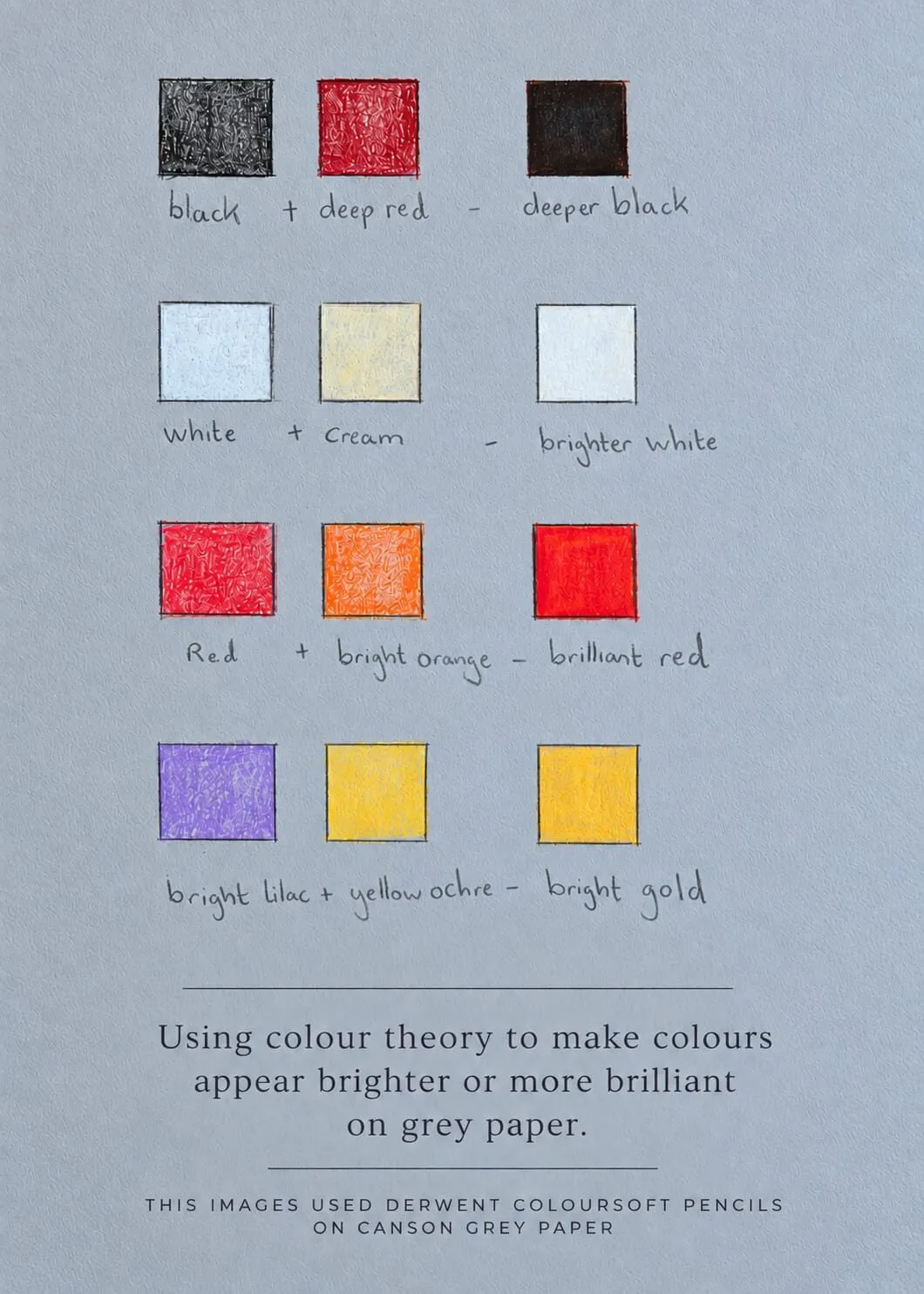
A swatch card on grey paper: combining colours on the page, such as black and deep red for a deeper black.
Common mistakes to avoid
Two more patterns come up often. Beginners blend by scrubbing instead of layering, which polishes the surface early and leaves colour patchy; layering thin, even strokes and burnishing at the end gives better results, and how to burnish coloured pencils explains when to do it. The second is choosing colours by name, not by how they behave. Values matter more than hue, so squint at your reference or use the value study tool before committing to colour.
Colour and technique
Pencils are only half of it. Once you have them, colour choices decide whether a drawing feels rich or flat. Our colour theory guide explains hue, value, temperature and saturation in practical terms, and the colour scheme generator helps you plan a palette. The techniques guide covers layering, blending, burnishing and how a realistic drawing comes together stage by stage.
Where to start: a simple path
If you are new, follow this order.
- Read the beginner picks. Start with best coloured pencils for beginners and choose a small set.
- Get suitable paper. A heavier sheet with tooth, from the paper guide.
- Learn layering. Practise gradients from light to dark with the method in how to layer coloured pencils.
- Understand the pencil families. Read wax vs oil-based coloured pencils before you buy a second set.
- Upgrade with intent. When you outgrow the set, consult the best coloured pencils and the comparison of professional ranges.
If you are already experienced, jump straight to the brand reviews and lightfastness guide, then decide where an upgrade will change your drawings most.
Buying guides and comparisons
Once you know the basics, these guides help you choose. Start with the pencil set quiz for a personal shortlist, then compare lines head to head: Prismacolor vs Polychromos, Derwent Coloursoft vs Prismacolor Premier, Faber-Castell Polychromos vs Goldfaber and Derwent Coloursoft vs Chromaflow. To build a kit, see the best coloured pencil sets, how many coloured pencils you need and best drawing supplies for beginners. For specific jobs, read about the best watercolour pencils, the best white pencils for drawing on grey paper and the best coloured pencils for adult colouring. New to drawing? Try coloured pencil drawing for beginners or the how to draw lessons.
Every guide in this cluster
| Guide | Why read it |
|---|---|
| Best coloured pencils | Our picks for serious artists, by need |
| Best for beginners | Set sizes, what to skip, first exercises |
| Best for portraits | Skin tones and paper pairing |
| Wax vs oil-based | Composition, bloom and mixing both |
| Polychromos vs Luminance vs Lightfast | Ten-feature professional comparison |
| Derwent reviewed | Every Derwent range, honestly assessed |
| Faber-Castell Polychromos review | The firm, precise oil-based standard |
| Caran d’Ache Luminance review | The creamy premium choice |
| Best pencil sharpeners | Stop snapped cores |
| Best erasers | Lifting and cleaning colour |
| Professional vs student | When to upgrade |
| Lightfastness explained | Making work that lasts |