Coloured Pencils
Faber-Castell Polychromos Review
An honest review of Faber-Castell Polychromos coloured (colored) pencils: firm, oil-based, crisp detail and clean layering. Who they suit and who should skip them.
This guide contains affiliate links. If you buy through them we may earn a small commission at no cost to you. How this works.
Jump to recommended products
Key takeaways
- ◆Polychromos are oil-based, firm pencils that hold a sharp point and layer cleanly, which makes them a favourite for detail work.
- ◆Their behaviour is consistent across the range, so a drawing built from many colours feels coherent under your hand.
- ◆They are especially popular with wildlife and still life artists who want crisp edges, fur, feathers, glass and metal.
- ◆Firm cores deposit colour more slowly than soft wax pencils, so they suit artists who enjoy control more than fast, painterly coverage.
- ◆Goldfaber is the budget-friendly sibling and a fair way to find out whether you like the Faber-Castell feel before committing to Polychromos.
If you have spent any time around coloured pencil artists, you have heard the name. Faber-Castell Polychromos turn up in wildlife drawings, botanical studies and tightly rendered still life so often that they have become a default recommendation. The question is whether that reputation matches what the pencils actually do, and whether they suit the way you work.
This review covers how Polychromos behave, how they respond to different papers and sharpening, and who should buy them and who should not. The short answer: they are among the best pencils for precision and clean layering, and among the slower ones for filling large areas fast. Polychromos are coloured pencils (colored pencils in the US) with an oil-based binder. If you are weighing the cheaper range, see Polychromos vs Goldfaber; for a wax rival, Prismacolor vs Polychromos; and the pencil set quiz helps with set choice.
What Polychromos are
Polychromos are oil-based coloured pencils. The binder is oil rather than the wax used in softer pencils, and that single fact explains most of their character. They are firm, they hold a point for a long time, and they layer without building up the greasy sheen that soft wax pencils sometimes produce. Michael’s own notes on them come down to five words: precision, clean layering, sharp points, excellent detail control, and consistent behaviour across the range.
They are also one of the widest ranges on the market. The line runs to 120 colours, which matters more than it sounds. A large range means you can pick the exact hue rather than mixing towards it, and mixing many colours over each other is where muddy results begin.
If you are still working out the difference between the two binder types, wax versus oil-based coloured pencils explains what each does on the page.
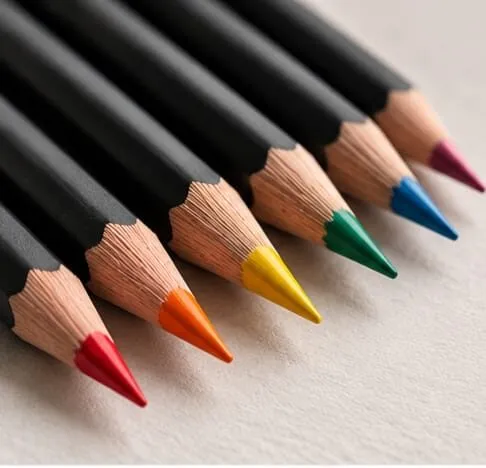
Close-up of a row of sharpened coloured pencils with red, orange, yellow, green, blue and magenta leads.
How they feel and behave
The first thing you notice is resistance. Compared with a creamy wax pencil, Polychromos feel drier and more controlled. You deposit colour in thin, even layers, and the point does not flatten or crumble as quickly.
That gives you several practical strengths:
- Crisp edges. A sharp point stays sharp long enough to draw a clean line around an eye, a whisker or the rim of a glass.
- Clean layering. Firmness means the pencil does not clog the paper’s tooth quickly, so you can keep adding layers over a long drawing. See how to layer coloured pencils for the method.
- Predictability. Because the range behaves consistently, you are not relearning pressure every time you change colour.
- A crisp burnish. Burnished areas take on a polished, sharp finish rather than a soft melt, which suits reflective surfaces and fine detail. The technique is covered in how to burnish coloured pencils.
The trade-offs
Firmness cuts both ways. You cannot flood large areas with colour quickly, and getting a rich, saturated, opaque finish takes more layers than with a soft pencil. On a portrait with large smooth skin areas, that is more work. The pencils also give you less of the buttery blending that soft wax pencils are famous for.
Lightfastness is rated excellent overall, though a few colours vary slightly. Before you commit to selling work, check the manufacturer’s published lightfastness information for the specific colours you use. Our guide to coloured pencil lightfastness explains how to read and test it.
Where Polychromos shine
Polychromos are especially popular among wildlife and still life artists, and the reasons are straightforward.
Wildlife. Fur, hair, feathers and whiskers are all about many fine, controlled strokes in layered colour. A firm pencil with a long-lasting point suits that job. If fur is your subject, pair this review with how to draw animal fur.
Still life. Glass, metal and reflective surfaces reward crisp edges and tight control over highlights. That is exactly what a firm oil-based pencil delivers. The related technique guides, how to draw shiny metal and reflections and how to draw glossy surfaces, apply well to this pencil.
Detail in portraits. Even artists who prefer softer pencils for skin often reach for Polychromos for the eyes, hair and texture. Firmness gives control where you need it most.
Michael’s hand-drawn colour wheel, made with only three Polychromos on blue-grey paper, is a neat demonstration of what a small selection can do.
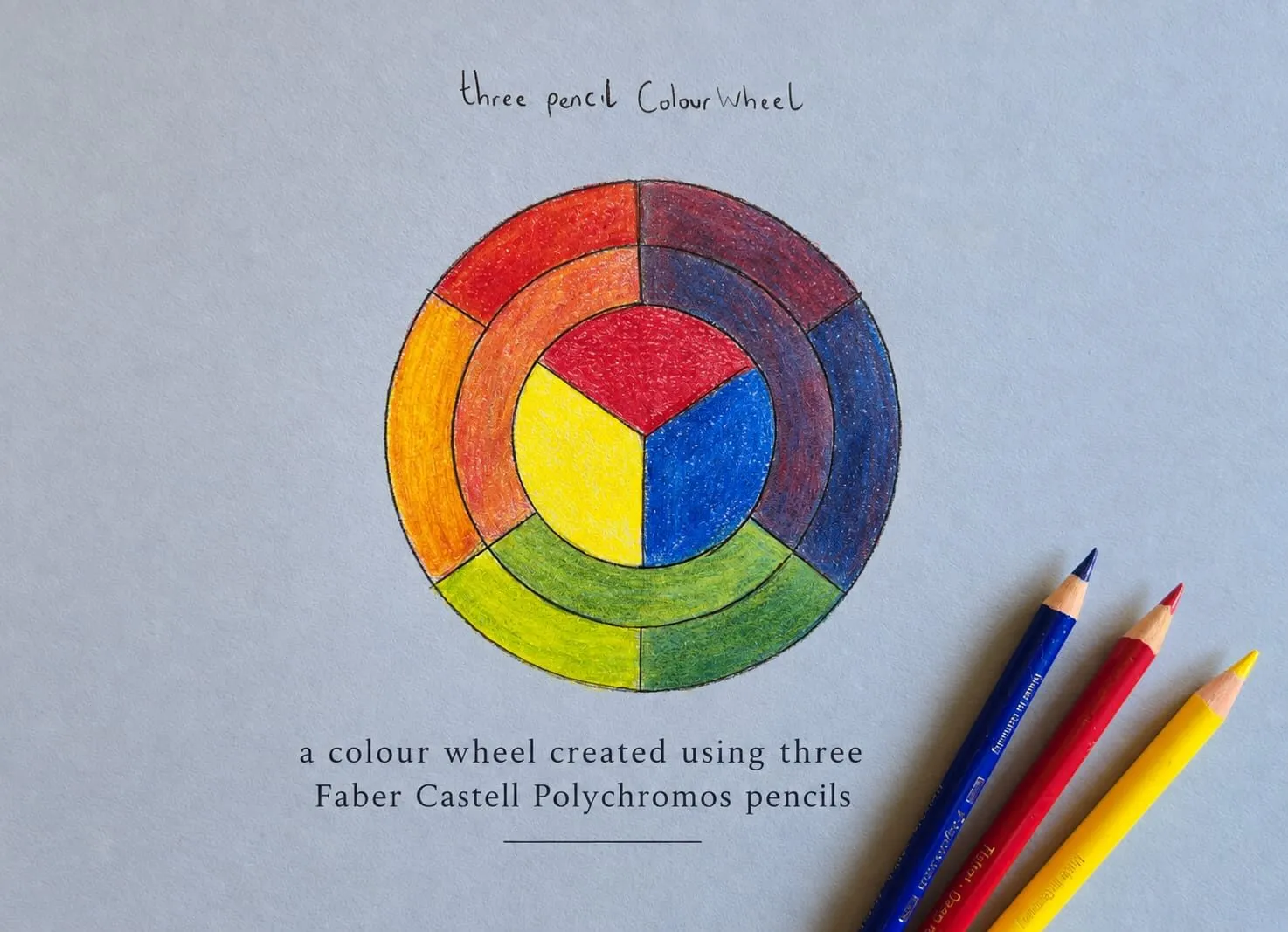
A colour wheel from just three Polychromos pencils on blue-grey paper: mixing does more than the size of the set suggests.
How they behave on different papers
Paper changes the experience of firm pencils more than it does soft ones.
| Paper type | What to expect |
|---|---|
| Smooth hot press | Fine detail and clean transitions; fills quickly, so limit layer count and pressure |
| Textured or mixed media | Plenty of tooth to grip pigment, more layers possible, slightly grainier finish |
| Toned or grey paper | Firm pencils cover less opaquely, so plan light areas with a strong white and build slowly |
| Thin or soft paper | Firm points can indent and wear the surface with heavy pressure |
On hot press papers such as Arches, Polychromos give beautifully controlled gradients, which is why they pair so well with fine detail. On heavier textured papers you can build more layers before the surface fills. Our guides to the best paper for coloured pencils and paper tooth will help you choose.
Sharpening Polychromos
A firm core holds an excellent point, but it is also brittle if the sharpener is poor. Use a sharp blade, and take off wood with slow, steady turns rather than forcing the pencil. A long, tapered point is ideal for detail, though a very long point will snap if you press hard. Choosing the right tool is covered in the best pencil sharpeners for coloured pencils.
What about Goldfaber?
Goldfaber is Faber-Castell’s more accessible line. In Michael’s description they are firm enough for detail and soft enough for shading, and a good introduction to the feel of Polychromos. If you are new to coloured pencil or unsure whether you like firm pencils, they are a sensible test before you invest in a full Polychromos set. Expect a smaller choice of colours and a slightly lower level of finish than the professional range, so check the maker’s current specifications and lightfastness information if permanence matters.
Who should buy Polychromos
Polychromos suit you if you:
- draw fine detail such as fur, feathers, hair, glass and metal;
- like control and are happy building colour slowly in layers;
- want reliable, consistent behaviour across a wide range;
- want professional quality at a price that is more accessible than the premium wax brands.
Who should skip them
Consider something softer if you:
- mainly want smooth, painterly blending and fast, rich coverage;
- draw large portrait skin areas where creamy wax pencils save time;
- work on very thin paper or press hard by habit;
- are a complete beginner who would be helped by an easier, more forgiving pencil.
For that last group, best coloured pencils for beginners suggests gentler options. And if you cannot decide between the professional brands, Polychromos vs Luminance vs Lightfast compares them feature by feature.
Getting the best from them
A few habits make firm oil-based pencils noticeably easier to use.
- Layer lightly and often. Firm pencils reward many thin passes. Pressing hard early fills the tooth of the paper and leaves nowhere for later layers to go.
- Work from light to dark where you can. Because coverage builds slowly, it is easier to deepen a colour than to lighten it.
- Keep the point sharp for edges and slightly blunt for tone. A fresh point draws a clean line; a worn one lays down smoother, broader tone.
- Vary the angle. A low angle uses the side of the point for soft tone, while a steeper one gives a precise line.
- Save burnishing for the end. Once you burnish, the surface is sealed and later layers will not grip.
If your drawing starts to look muddy, the usual cause is too many colours stacked without enough control over value. Our guide to value in drawing shows how to keep tones readable while the colour builds.
Building a first Polychromos palette
You do not need all 120 colours. A practical starting palette covers a warm and cool version of each primary, a couple of earth tones, a strong dark, a good white and a few neutrals. That is enough to mix most subjects, and it teaches you far more about layering than a huge set would. Add hues only when you notice yourself repeatedly trying to mix one that never quite arrives. Many artists buy open stock for exactly this reason: it lets you replace the colours you use fastest, such as whites and darks, without buying the whole set again.
How they compare with their competition
Against soft wax pencils, Polychromos give up speed and buttery blending in exchange for control. Against other firm pencils, their advantage is range and consistency. In the wider market they sit in the middle on price: less than the most premium wax brands, but well above student pencils. The features are set out side by side in Polychromos vs Luminance vs Lightfast, and professional vs student coloured pencils explains why the step up in cost buys what it does.
The short version
Polychromos are precise, firm, consistent and well loved for wildlife and still life. They reward patience with clean layers and sharp detail. If you want fast, creamy coverage, look at softer wax pencils instead, or combine both. For most artists moving towards serious realism, they are a strong first professional set.
Where to buy
Recommended products
Affiliate links. We may earn a small commission if you buy, at no extra cost to you. Why?
Pencils · Faber-Castell
Faber-Castell Polychromos
Firm, oil-based artist pencils that hold a point - a benchmark for detail and clean layering.
Quick answers
Frequently asked questions
Are Faber-Castell Polychromos wax or oil based?+
Polychromos are oil-based. That is why they feel firmer and drier than soft wax pencils, hold a point well and layer without the waxy bloom that soft pencils can develop. The trade-off is that colour goes down a little more slowly, so heavy coverage takes more layers.
Are Polychromos good for beginners?+
They can be, but they are not the easiest starting point. The firmness rewards patience and control, while a softer pencil is more forgiving when you are still learning pressure. Many beginners start with Goldfaber or a soft wax set and move to Polychromos later.
What paper works best with Polychromos?+
Papers with some tooth that can take many thin layers, such as heavyweight mixed media or hot press watercolour paper. Very soft, thin paper wears out under firm pencils used with pressure. Test a swatch first, because the paper changes the result more than most people expect.
Can Polychromos be used with wax pencils?+
Yes. Many artists combine both, using wax for soft, quick areas and oil-based pencils for precision and final detail. Working the firm oil-based layers first and adding soft wax on top is a common approach, though it is worth testing on scrap paper before committing to a finished piece.
Are colored pencils and coloured pencils the same?+
Yes. Coloured pencils is the British spelling and colored pencils is the American one, and both describe the same drawing medium: pigment in a wax or oil binder, set in a wooden barrel. Brands, sets and techniques do not change with the spelling, so advice about one applies equally to the other. Only shop listings and product names follow one spelling or the other.