Coloured Pencils
Wax vs Oil-Based Coloured Pencils
Wax vs oil-based coloured pencils (colored pencils in the US): compare feel, layering, bloom and pairing, and see which brands are which and how to choose.
This guide contains affiliate links. If you buy through them we may earn a small commission at no cost to you. How this works.
Jump to recommended products
Key takeaways
- ◆Wax-based pencils are soft and creamy, blend effortlessly and suit smooth gradients, portraits and soft realism.
- ◆Oil-based pencils are firm and precise, layer cleanly without bloom and suit fur, hair, crisp edges, still life and wildlife.
- ◆Wax bloom, a hazy film that can appear on heavily layered wax pencils, is mainly a wax problem and is reduced by light early pressure.
- ◆Many artists use both: wax for softness, oil for precision, with good results.
- ◆Faber-Castell Polychromos is the best-known oil-based pencil; Caran d'Ache Luminance and Derwent Coloursoft are wax-based.
Understanding what your coloured pencils (colored pencils in the US) are made of helps you choose the right tool for the drawing. Two sets can look identical and behave nothing alike because one is bound with wax and the other with oil. That difference shapes how they feel, how they blend, how many layers they allow and how they age on the page.
This comparison covers composition, feel, wax bloom, layering, brand examples and how to mix both. It sits within our complete coloured pencil guide, and if you want the brand-level picks afterwards, see best coloured pencils. For a wax versus oil test case, read Prismacolor vs Polychromos, and the pencil set quiz can point you to a set.
Wax versus oil at a glance
| Feature | Wax-based | Oil-based |
|---|---|---|
| Feel | Soft, creamy, glides | Firm, crisp, controlled |
| Point | Wears faster | Holds a sharp point |
| Blending | Effortless | More gradual |
| Layering | Builds colour fast, fills tooth sooner | Many clean layers |
| Wax bloom | Can occur | Rarely an issue |
| Best for | Portraits, soft realism, smooth gradients | Fur, hair, crisp edges, still life, wildlife |
| Examples | Caran d’Ache Luminance, Derwent Coloursoft, Prismacolor Premier | Faber-Castell Polychromos |
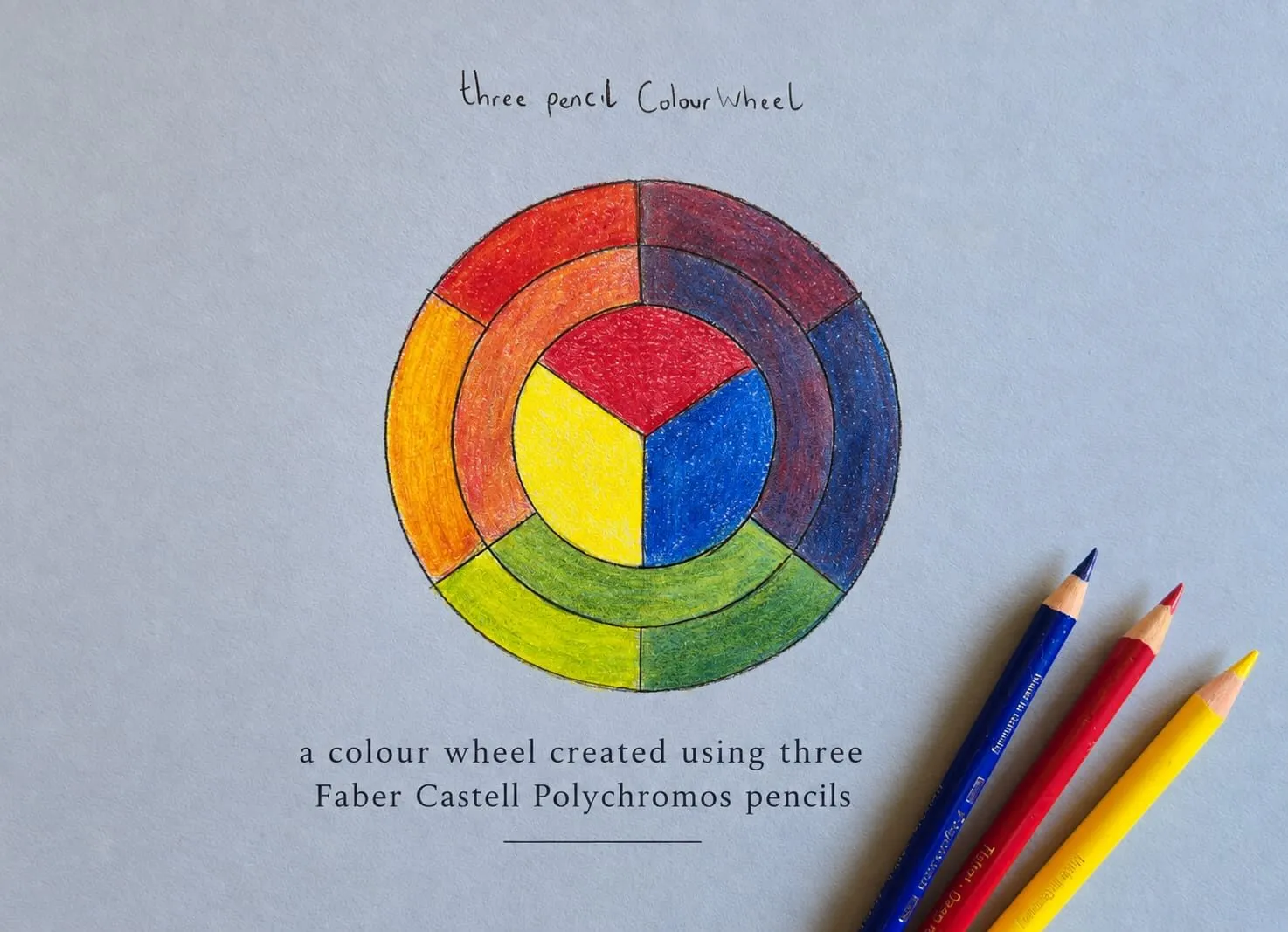
A hand-drawn colour wheel made with three Faber-Castell Polychromos pencils on blue-grey paper. Drawing by Michael Brace.
What they are made of
Every coloured pencil has pigment plus a binder. In wax-based pencils the binder is mostly wax, which makes the core soft, smooth and quick to deposit colour. In oil-based pencils the binder is oil-based, which gives a firmer core that keeps its shape under pressure and holds a sharper point for longer.
Neither is better in the abstract. Wax gives you the buttery, painterly quality many portrait and food artists love. Oil gives you control. Formulas differ by range, and brands are not always perfectly categorised, so look at the manufacturer’s description if you need certainty.
Feel and control
Wax-based pencils glide, deposit rich pigment quickly and blend effortlessly. They are perfect for smooth gradients and painterly transitions, and they are ideal for portraits and soft realism. The trade-off is a softer point that dulls faster, so you sharpen more often.
Oil-based pencils are firm, precise and excellent for detail. They hold a point beautifully, which makes them ideal for fur, hair, feathers, glass and metal edges. They suit artists who love control and sharpness. For big soft areas they take more layers than a creamy wax pencil.
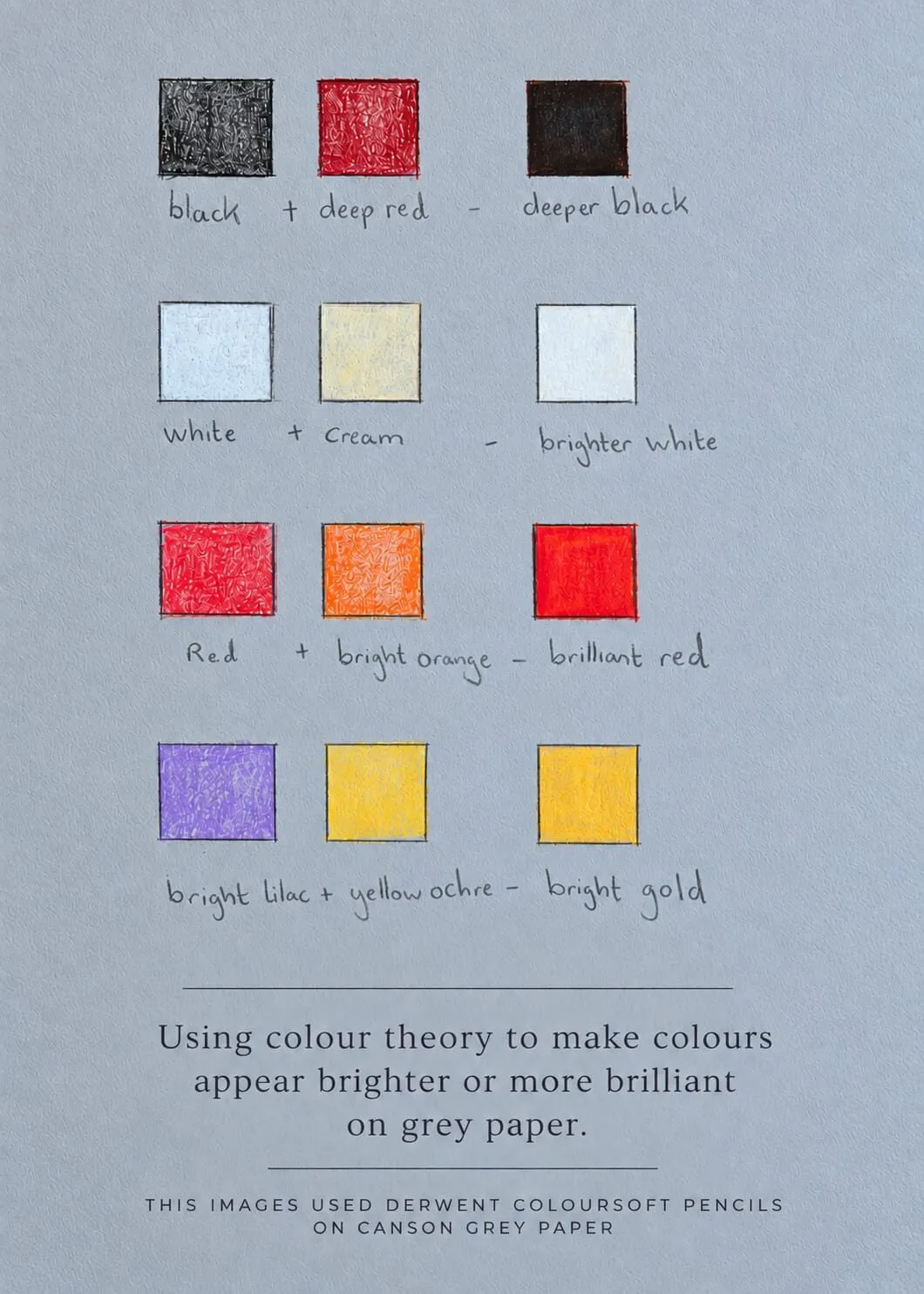
A hand-drawn swatch card on grey paper showing colour pairings: black with deep red, white with cream, red with bright orange, and bright lilac with yellow ochre. Drawing by Michael Brace.
Layering and wax bloom
Layering is the backbone of coloured pencil realism, and the binder controls it. Firm oil-based pencils do not clog the tooth quickly, so you can build dozens of layers cleanly. Wax pencils build colour faster and give deep, opaque layers, but soft wax can fill the tooth sooner.
Wax bloom is the hazy film that can rise to the surface of a heavily layered wax drawing when excess wax accumulates. It dulls the colour and can look like a whitish cloud. It is mostly a wax issue. Prevent it with these habits:
- Start with light pressure and build gradually.
- Keep pencils sharp so you do not smear wax around.
- Avoid saturating the tooth early; save heavy pressure for the end.
- Test on a scrap of your own paper before committing to a large piece.
Our layering guide shows the method, and how to burnish coloured pencils covers when heavy pressure is useful.
Which brands are which
- Oil-based: Faber-Castell Polychromos is the best-known example. See the Polychromos review.
- Wax-based: Caran d’Ache Luminance, Derwent Coloursoft and Prismacolor Premier are soft, creamy wax pencils. Read the Luminance review.
- Hybrid feel: Michael describes Derwent Lightfast as a wax-based hybrid that sits between Polychromos and Luminance, smoother than the first and firmer than the second.
- Water-soluble: Derwent Inktense and Caran d’Ache Museum Aquarelle are a separate family; see Derwent coloured pencils reviewed.
For a feature-by-feature comparison of the three professional standards, see Polychromos vs Luminance vs Lightfast.
How each binder behaves in practice
Wax on the page
A wax pencil gives you quick coverage. A few strokes lay down a lot of pigment, so large areas such as skin, a glossy sauce or an iced bun fill in fast. The wax also helps colours fuse into one another, which is why wax pencils are so good at smooth gradients. When you press harder, the wax melts a little into the paper and gives a smooth, saturated finish, which is the basis of burnishing.
The other side of that softness is wear. Soft cores lose their point quickly, so you sharpen more often, and heavy layering can fill the tooth of the paper. Working lightly at first and switching to harder pressure at the end keeps the surface open for longer.
Oil on the page
An oil-based pencil is more restrained. It lays down colour steadily and gives you more room to adjust, because you build tone in smaller steps. Because the core is firmer, points last, edges stay crisp and fine lines stay fine. That is why oil pencils are so popular for fur, feathers, glass and the sharp edges of metal. The cost is that you need more layers to reach very deep, saturated colour on a large area, and they feel less indulgent than a creamy wax pencil.
Common myths
- “Oil pencils cannot blend.” They can, more gradually. Firm pencils blend through layering, not smearing.
- “Wax is for beginners, oil is for professionals.” Both families include professional ranges. Luminance is a premium wax pencil, and Polychromos is a professional oil-based one.
- “Bloom ruins wax drawings.” It is avoidable with good habits, and many artists never meet it.
- “You must choose one.” Many artists use both, picking the pencil by what each area of the drawing needs.
Paper, pressure and the binder
The binder interacts with paper. Heavier paper with some tooth accepts more layers of either type, and grey paper suits both when you want highlights to glow. On very smooth paper such as hot press, soft wax can fill the surface quickly, so lighter pressure and patience matter more. Read hot press versus cold press paper and smooth versus textured paper to see how surface changes your results.
A quick test at home
You can feel the difference in five minutes. Draw a value ramp with one wax pencil and one oil pencil in the same colour on the same scrap of paper. Compare how much pressure each needs to reach the darkest tone, how sharp the edge stays after a minute of drawing, and how each looks when you layer a second colour over it. Then burnish a small square of each and see how the surface changes. Notes from a test like this are worth more than any description, because they use your own paper and hand pressure.
Which should you choose?
Choose by subject.
- Portraits and soft realism: wax, for smooth blends and skin. See best coloured pencils for portraits.
- Wildlife, fur, feathers: oil, for fine, controlled detail.
- Still life, glass, metal: oil for crisp edges and reflections; wax for rich, food-like textures and painterly finish.
- Learning: a forgiving wax set is the friendliest start. See best coloured pencils for beginners.
Mixing wax and oil in one drawing
Many artists use both: wax for softness, oil for precision. Mixing them can create beautiful results.
- Lay soft base colour and blends with wax pencils, with light pressure.
- Add crisp detail, edges and texture with oil pencils on top.
- Keep wax layers light so the surface still has tooth to accept the next pencil.
- Test the combination on a scrap of the same paper first.
Paper matters here too. Heavier paper with some tooth accepts more layers; see the best paper for coloured pencils.
The short version
Wax is soft, creamy and painterly; oil is firm, precise and clean. Use wax for portraits and gradients, oil for detail and crisp edges, and combine them when a drawing needs both. Keep early pressure light either way.
Where to buy
Recommended products
Affiliate links. We may earn a small commission if you buy, at no extra cost to you. Why?
Pencils · Faber-Castell
Faber-Castell Polychromos
Firm, oil-based artist pencils that hold a point - a benchmark for detail and clean layering.
Pencils · Derwent
Derwent Coloursoft Pencils
Soft, velvety and richly pigmented - excellent for painterly blending and bold colour.
Pencils · Prismacolor
Prismacolor Premier
Creamy, smooth pencils famous for easy blending and soft shading.
Pencils · Caran d'Ache
Caran d'Ache Pencils
Premium artist pencils - Luminance is creamy and opaque for portraits, Pablo is firmer for detail.
Quick answers
Frequently asked questions
What is the difference between wax and oil-based coloured pencils?+
The binder holding the pigment differs. Wax-based pencils are softer and creamier, lay down colour quickly and blend easily. Oil-based pencils are firmer, hold a sharper point and layer cleanly for longer. Wax suits smooth gradients; oil suits fine detail and crisp edges.
What is wax bloom on coloured pencils?+
Wax bloom is a cloudy, whitish film that can rise to the surface of a heavily layered drawing where excess wax has built up. It can dull colours. It is mostly associated with soft wax pencils and is best avoided by using light pressure early and building layers gradually.
Can you mix wax and oil-based pencils in one drawing?+
Yes, and many artists do. A common approach is wax for soft, blended areas and oil for precise detail. Keep early layers light, test on a scrap of your paper first and avoid over-saturating the tooth with heavy wax before adding other layers.
Is Polychromos wax or oil?+
Faber-Castell Polychromos are oil-based, which is a large part of why they are firm, hold a point well and layer without heavy wax build-up. Caran d'Ache Luminance is a wax-based pencil, which is why it feels softer and creamier.
Are colored pencils and coloured pencils the same?+
Yes. Coloured pencils is the British spelling and colored pencils is the American one, and both describe the same drawing medium: pigment in a wax or oil binder, set in a wooden barrel. Brands, sets and techniques do not change with the spelling, so advice about one applies equally to the other. Only shop listings and product names follow one spelling or the other.