Coloured Pencils
Best Coloured Pencils for Beginners
The best beginner coloured pencils (colored pencils in the US): which sets to buy, how big a set to get, what to skip and first exercises for layering and blending.
This guide contains affiliate links. If you buy through them we may earn a small commission at no cost to you. How this works.
Jump to recommended products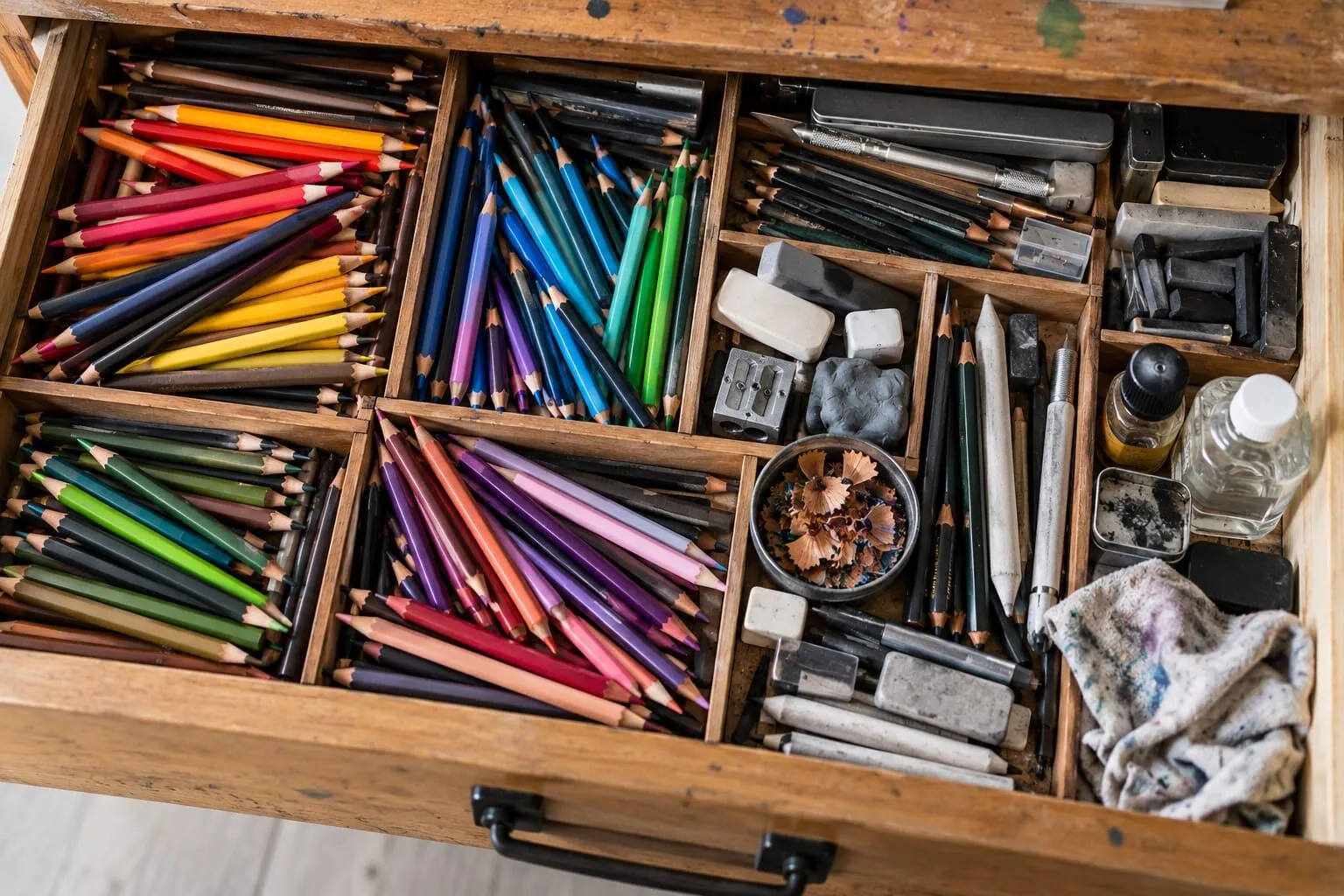
Key takeaways
- ◆Derwent Chromaflow, Prismacolor Premier and Faber-Castell Goldfaber are the beginner sets we recommend, each teaching a different feel.
- ◆A small set of 12 to 24 good pencils teaches more than a huge set of poor ones.
- ◆Beginners need pencils that blend easily, cost less and forgive mistakes while pressure control develops.
- ◆Skip very cheap children's pencils, oversized tins and gimmick sets; spend the difference on paper.
- ◆Three short exercises - a value ramp, a two-colour blend and a simple sphere - teach the core skills in an evening.
Beginners are told to buy the best pencils they can afford, which is unhelpful advice if you have never drawn with coloured pencil (colored pencil in the US). What a new artist really needs is pencils that are easy to blend, reasonably priced and forgiving, so pressure control, layering and colour mixing can be learnt without frustration.
Below are the sets we would start with, how big a set to buy, what to avoid, and three exercises that build the essential skills. When you outgrow them, the best coloured pencils for serious artists is the natural next step, and the complete coloured pencil guide fills in the background. The pencil set quiz narrows the choice, how many coloured pencils you need settles set size, and coloured pencil drawing for beginners shows what to draw first.
The short answer
| Set | Feel | Good for |
|---|---|---|
| Derwent Chromaflow | Vibrant, soft, easy to blend | Learning layering and colour transitions |
| Prismacolor Premier | Creamy and smooth | Learning blending and soft shading |
| Faber-Castell Goldfaber | Firmer, more controlled | Detail work, and an introduction to the feel of Polychromos |
| Derwent Coloursoft | Velvety, rich and soft | Painterly effects once you are comfortable |
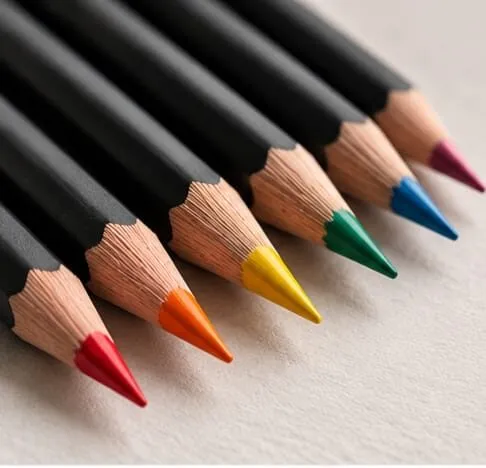
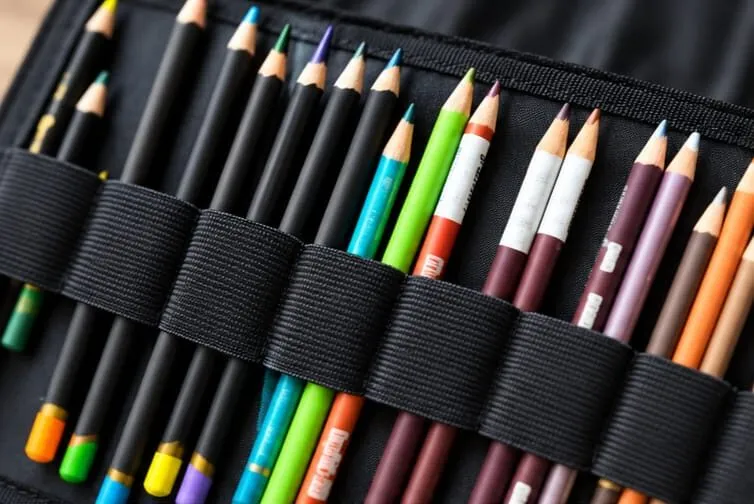
Sharpened coloured pencils lined up on cream paper.
Our beginner picks
Derwent Chromaflow
Chromaflow is vibrant, soft and easy to blend, which makes it a good place to learn how pressure changes colour. The pigment is bold, so results look encouraging quickly. It is our first suggestion for someone who wants to practise gradients and layering. Compare it against the rest of the brand in our Derwent coloured pencils reviewed.
Prismacolor Premier
Premier pencils are creamy and smooth, and they are famous for ease of use. If you want to learn blending and soft shading, they are forgiving and rewarding. As with most soft wax pencils, they can develop wax bloom under heavy layering, and the points wear down faster, so keep them sharp and press lightly. The wax versus oil-based guide explains why.
Faber-Castell Goldfaber
Goldfaber is firm enough for detail and soft enough for shading. It is a great introduction to the feel of Polychromos, and a sensible pick if you know you like sharp points and control. It is less buttery than the softer sets, so large areas take a little longer to cover.
Derwent Coloursoft
Coloursoft is velvety and rich, great for soft blending and painterly effects. It is a step up in richness, and many beginners enjoy the laydown. It suits those who already have the pressure basics.
How big a set should you buy?
Smaller than you think. A set of 12 to 24 pencils lets you mix most colours by layering, which is a skill you need to learn anyway. A giant tin encourages you to grab a ready-made colour instead of mixing, and the extra pencils often sit unused.
A better plan is a small set plus a strong white. A good white matters most on toned paper, where it is your highlight tool. Add colours singly as gaps appear. Our guides to how to match and mix colours with pencils and the colour wheel show how far a small palette can go.
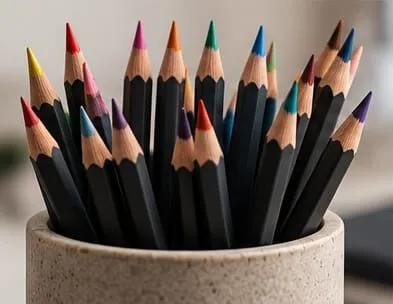
Coloured pencils standing in a speckled ceramic pot.
What to skip
- Children’s pencils and very cheap sets. Low pigment means you press harder, flatten the paper and get muted colour.
- Enormous tins. Quantity is not quality.
- Water-soluble sets for your first drawing. They are wonderful, but they change the technique, so learn dry pencil first.
- Thin, cheap paper. It wears out under layering. Spend the saved money on a heavier sheet with some tooth; see the best paper for coloured pencils.
Three first exercises
- A value ramp. Draw a strip and shade it from the palest tone to the darkest with one pencil. Start with light pressure and press harder gradually. You are learning how many steps one pencil can give.
- A two-colour blend. Layer a yellow and a red in overlapping strokes to make an orange, then reverse the layer order to see how it changes. This is how you mix on the page.
- A sphere. Shade a simple ball with a light source, a core shadow and a cast shadow. It teaches form, and the value in drawing guide explains why value matters more than hue.
A frequent beginner mistake is pressing hard too soon, which flattens the tooth and limits future layers. Keep early layers light and build. The step-by-step method is in how to layer coloured pencils, and you can plan tone with the value study tool.
What good beginner pencils have in common
Whatever brand you pick, a good beginner pencil has three qualities. It blends easily, so you can see immediately how layering works. It is affordable enough that you will not be afraid to use it. And it is forgiving, meaning a heavy-handed mistake does not ruin the sheet. These are the pencils that help new artists understand how coloured pencil behaves: how pressure affects colour, how layering builds depth and how blending creates smooth transitions.
Notice what is not on the list: the largest colour range, the highest lightfastness rating or the most expensive tin. Those matter later. Right now the goal is mileage, and mileage comes from pencils you enjoy picking up.
A sensible first-month plan
Rather than trying to draw a masterpiece, aim for repetition with small, finishable studies.
- Week one. Swatch your whole set on your practice paper and label it. Draw value ramps with three or four pencils.
- Week two. Blend pairs of colours, then try mixing a colour you do not own, such as a green from a blue and a yellow.
- Week three. Draw simple rounded objects: an egg, an apple, a mug. Focus on light, mid and dark shapes before adding colour.
- Week four. Choose one small subject with a reference photo and layer it slowly, keeping early layers pale.
Working on a reference you can compare against, and drawing it a little larger than you first planned, makes it easier to see mistakes. If you want to transfer a subject accurately, the grid drawing tool helps you get proportions right before you start colouring, and how to practise drawing daily suggests ways to keep the habit going.
Common beginner questions
Do I need blending tools? Not at first. Layered pencil strokes do most of the blending, and a paper stump or tortillon can wait. The cleanest results come from patient, light layers.
Should I use white paper or toned paper? White is simplest to read while you learn colour. Once you are comfortable, try grey paper for glossy subjects; see why use grey paper for coloured pencil.
How soon should I worry about lightfastness? Only when you start selling or exhibiting. Until then, enjoy the pencils and learn. The topic is covered in coloured pencil lightfastness explained.
Sharpener and eraser basics
A poor sharpener snaps soft cores. A decent one makes practice more enjoyable and saves pencils; see best pencil sharpeners for coloured pencils. Coloured pencil is harder to correct than graphite, so learn what lifts colour in best erasers for coloured pencils.
Looking after your pencils
Good habits protect a small set and keep it working for years. Store pencils flat or point-up in a tin or pot, because dropped soft cores can fracture inside the wood without any visible sign, and the core then breaks every time you sharpen. Sharpen before a session, not during a tense moment mid-shading, and keep a spare rag or tissue for wiping the point. Take care with the white pencil in particular, since it picks up other colours from the paper, and wipe it clean on scrap paper before adding highlights. A tidy set is also a faster set: line pencils up by colour family so you can find the right one without breaking your flow.
When to upgrade
Move to artist-grade pencils when your technique is ahead of your tools: colours turn muddy, wax builds up, cores snap or you cannot get enough layers. Professional versus student coloured pencils explains the trade-offs. For a wider learning path, read drawing for beginners: where to start.
The short version
Buy one small set of Chromaflow, Premier or Goldfaber, a white pencil, a decent sharpener and a heavier paper. Practise value ramps, blends and spheres with light pressure. Upgrade only when the pencils limit you.
Where to buy
Recommended products
Affiliate links. We may earn a small commission if you buy, at no extra cost to you. Why?
Pencils · Derwent
Derwent Chromaflow Pencils
Vibrant, smooth and forgiving - a friendly set for learning layering and blending.
Pencils · Derwent
Derwent Coloursoft Pencils
Soft, velvety and richly pigmented - excellent for painterly blending and bold colour.
Pencils · Faber-Castell
Faber-Castell Goldfaber
Firm enough for detail, soft enough for shading - an accessible introduction to the feel of Polychromos.
Pencils · Prismacolor
Prismacolor Premier
Creamy, smooth pencils famous for easy blending and soft shading.
Quick answers
Frequently asked questions
What coloured pencils should a beginner buy?+
Derwent Chromaflow, Prismacolor Premier or Faber-Castell Goldfaber are good starting points. Chromaflow is vibrant and easy to blend, Premier is creamy and smooth, and Goldfaber is firm enough for detail yet soft enough for shading. Choose by whether you want softness or control.
How many coloured pencils do I need to start?+
A set of 12 to 24 is plenty. You can mix new colours by layering, so you rarely need hundreds. A smaller set of better pencils is better value than a large tin of weak ones. Add open stock, especially a good white, as you learn what you use.
Do I need artist-grade pencils as a beginner?+
No. Good beginner sets are easier on the budget and forgiving while you learn pressure control. Move to artist grade when the pencils rather than your technique are limiting the drawing. Muddy colour, waxy build-up and breaking cores are common signs it is time.
What paper is best for beginner coloured pencil?+
Choose a heavier paper with a little tooth, since thin paper wears out under layering. Cartridge paper is a low-cost place to practise, and a mixed media paper gives more grip. See our paper guides for a proper comparison before you commit to a larger pad.
Are colored pencils and coloured pencils the same?+
Yes. Coloured pencils is the British spelling and colored pencils is the American one, and both describe the same drawing medium: pigment in a wax or oil binder, set in a wooden barrel. Brands, sets and techniques do not change with the spelling, so advice about one applies equally to the other. Only shop listings and product names follow one spelling or the other.