Coloured Pencils
Coloured Pencil Lightfastness Explained
What lightfastness means for coloured pencils (colored pencils in the US), why it matters if you sell, how ratings work, how to test colours and protect drawings.
Key takeaways
- ◆Lightfastness is a pigment's resistance to fading under light, and it decides whether a drawing looks the same in ten years.
- ◆It matters most if you sell, exhibit or give drawings as gifts, because you are promising the work will last.
- ◆Manufacturers use rating systems such as ASTM and the Blue Wool scale, but ratings differ by brand, so read each maker's own chart.
- ◆You can test your own colours by covering half a swatch and leaving the rest exposed to light for a period of time.
- ◆Framing with UV-filtering glazing, avoiding direct sun and choosing colours carefully all extend the life of a drawing.
A drawing that looks brilliant on the easel can look very different a decade later if its colours fade. Reds and magentas that glowed become dull, purples drift toward grey, and the balance of the piece shifts. This is not a rare disaster; it is an ordinary property of pigments, and it is why lightfastness matters in coloured pencils, which US readers call colored pencils.
This guide explains what lightfastness is, how ratings work in general terms, how to test your own colours, and what you can do to make sure the drawings you make will last. If you are choosing pencils with this in mind, the pencil set quiz and best coloured pencil sets are good places to start.
What lightfastness means
Lightfastness is how well a pigment resists fading or changing colour when exposed to light. Light, especially ultraviolet, slowly breaks down some pigments. Others are far more stable. A pencil’s lightfastness is a property of the pigments in it, not of the brand’s reputation or price.
It becomes relevant the moment your drawing goes on a wall. A sketch in a notebook rarely sees strong light. A framed drawing hanging in a room might see it every day for years.
Four sharpened black pencils with grey leads on textured paper.
Why it matters if you sell or exhibit
When you sell a drawing you are implicitly promising it will last. Collectors, galleries and competitions expect artists to use durable materials, and a drawing that fades damages both the buyer’s trust and your own reputation.
That is why professional lines are marketed to artists who sell, exhibit or want their drawings to last decades. It is also why the difference between professional and student pencils often comes down to published lightfastness data.
If you are moving toward selling work, treat lightfastness alongside paper choice and framing. Our guides on archival paper for selling your drawings and how to price your drawings cover the rest of the picture.
How ratings work, in general terms
Manufacturers test their pigments and publish ratings to help you choose. Two systems you will often see mentioned are ASTM ratings and the Blue Wool scale. In general terms, both describe how well a colour resists fading, with one end of the scale meaning very stable and the other meaning likely to fade.
Some caution is needed:
- Systems differ. A number on one scale does not translate directly to another, and the direction and meaning of the scale depends on which system is used.
- Brands rate their own ranges. Ratings come from each manufacturer’s own testing, so read the definitions each one provides.
- Ratings apply to individual colours. A brand can have mostly stable colours and a few weaker ones. Michael’s own comparison notes that Polychromos are excellent overall with a few colours varying slightly, while Luminance and Lightfast are designed as top-tier for artists who exhibit or sell work.
- Charts change. Ranges are updated, so use the current chart.
Do not assume that any given pencil passes or fails. Check each manufacturer’s published lightfastness chart for the exact colours you plan to use.
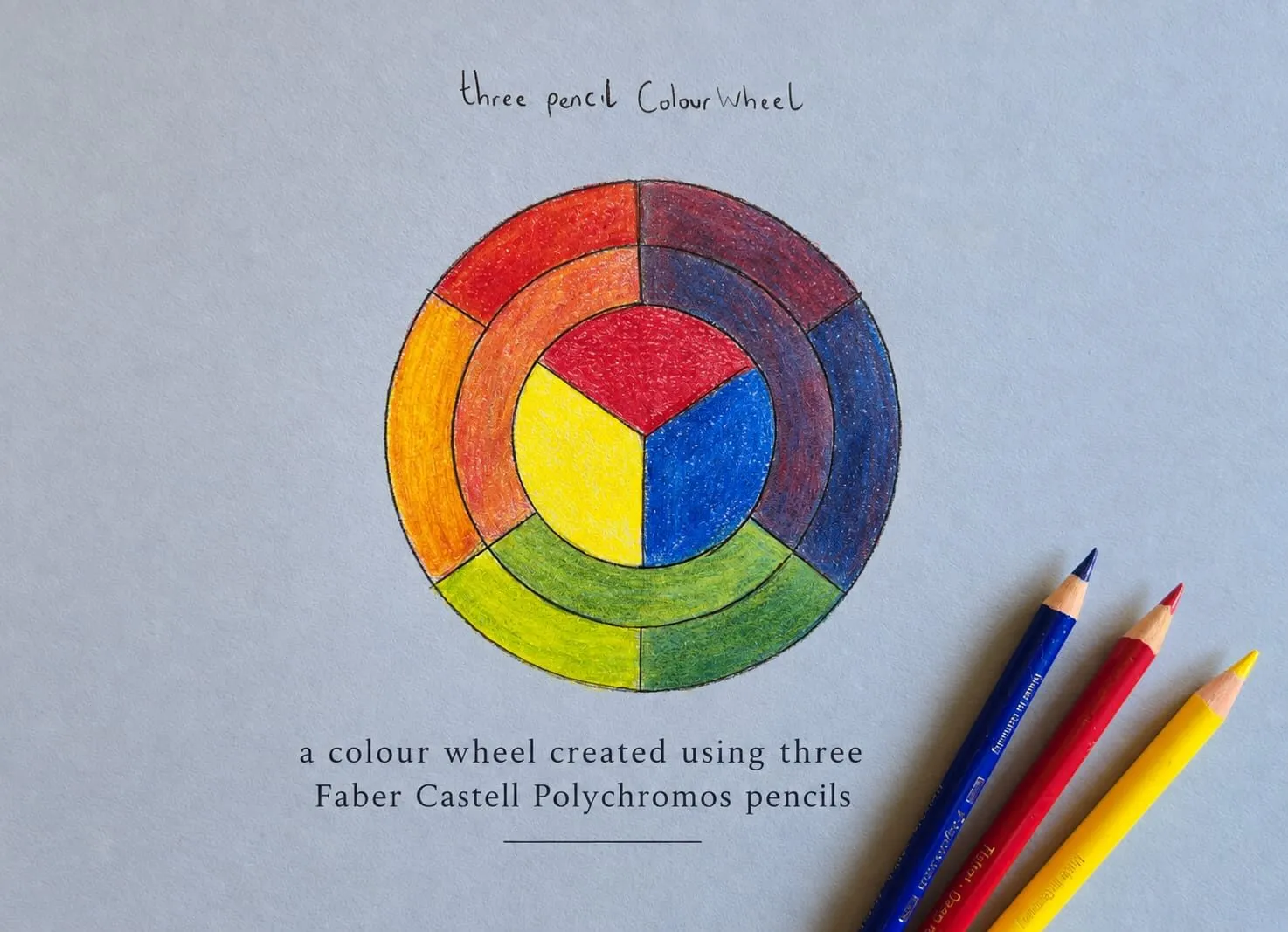
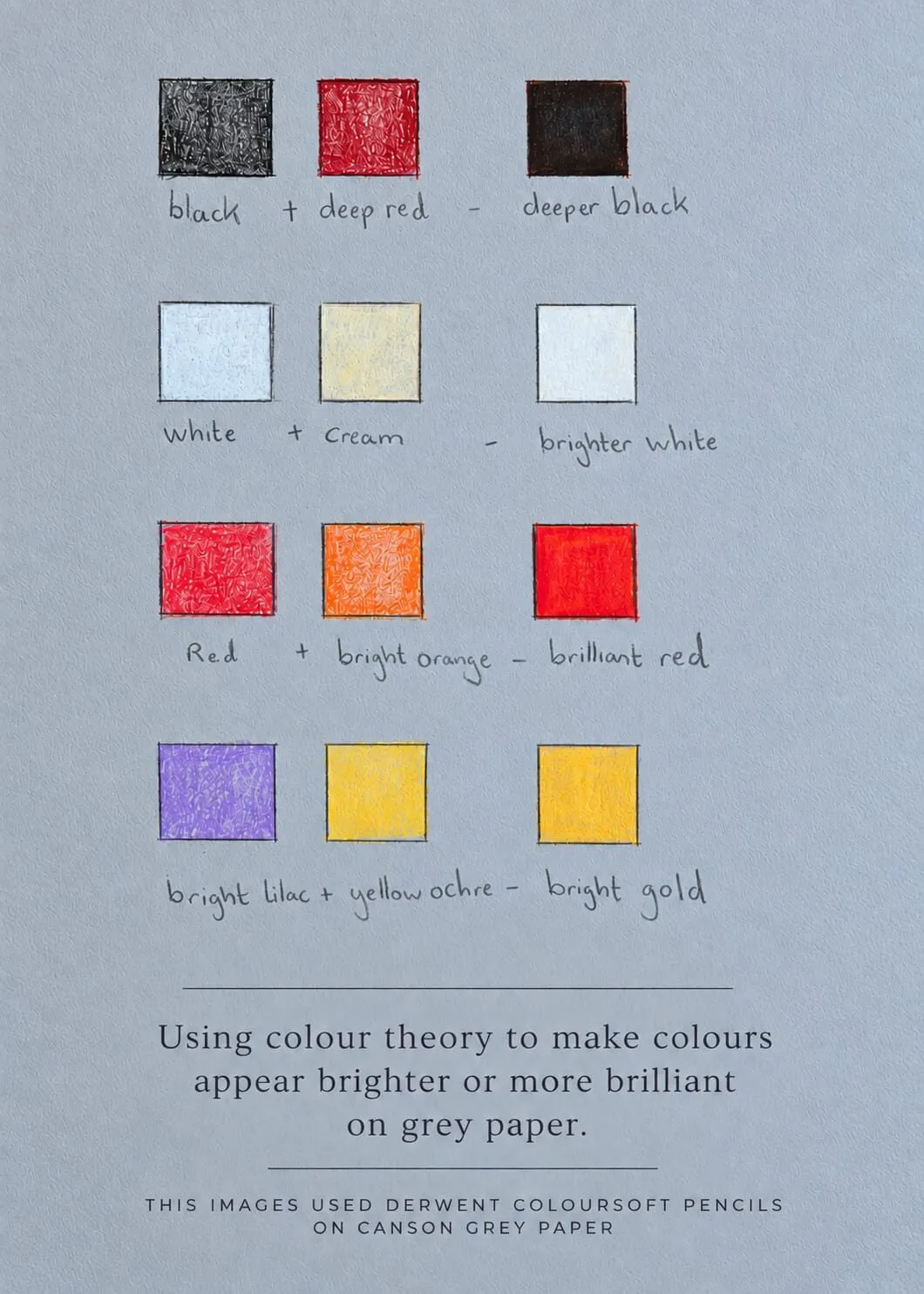
A hand-made colour chart is the simplest testing tool: make one for the colours you plan to use in a finished piece.
How to test your own colours
A simple test costs almost nothing and tells you what your own materials do.
- Make a swatch card. Draw a clear patch of each colour you intend to use, on the same paper as your finished drawing. Label each one.
- Cover half. Tape a piece of card or foil over half of each swatch so no light reaches it.
- Expose the card. Place it near a bright window, out of the way, and leave it for a good stretch of time.
- Compare. Peel back the cover and compare covered and exposed halves in good light.
- Note the results. Any colour that has visibly shifted is one to avoid or use only in low-risk work.
This is a rough, practical check rather than a laboratory test, and it should be used alongside published charts, not instead of them. A swatch card also shows you how your colours behave together, as in the hero image. For a fuller picture of colour behaviour, see colour theory on grey paper.
Choosing colours
Lightfastness should shape your palette, not narrow it to nothing.
- Use published charts for your chosen pencils and pick colours with strong ratings for anything you will sell or display.
- Be careful with vivid pinks, purples and magentas, which are often the colours most worth checking in any range.
- Mix around weak colours. If a favourite is unreliable, you can often match it with a combination of stable ones. See how to match and mix colours with pencils.
- Keep fugitive colours for sketches, where permanence does not matter.
If you are selecting pencils with this in mind, the best coloured pencils and Polychromos vs Luminance vs Lightfast compare the main professional options.
Framing and display
Even lightfast pigments benefit from protection.
- Use UV-filtering glazing. Ultraviolet light is a major cause of fading, and glazing that filters it adds a valuable layer of defence. It is a strong recommendation for anything you sell.
- Add a mount. A mount keeps the drawing off the glass and gives it breathing room. Use archival, acid-free materials.
- Avoid direct sunlight. Do not hang work opposite a window or where sun strikes it during the day.
- Control the environment. Avoid damp, heat sources and steamy rooms.
Framing details are covered in how to frame and mount a drawing, and the frame and mount calculator helps you size the mount.
Storing unframed work
Keep drawings flat, in the dark, in archival folders or boxes with acid-free interleaving. Avoid stacking heavy items on top, and keep them away from damp and heat. A small silica sachet in a portfolio can help in humid climates.
Reading a manufacturer’s chart
When you open a lightfastness chart, look for four things.
- Which system is used. ASTM and Blue Wool are both common, and the scales run in different directions, so read the key.
- What the categories mean. Manufacturers usually group colours into bands, from very stable to less reliable, and explain what each band means for display.
- Which colours are flagged. Note any colours with weaker ratings and decide whether to avoid them or keep them for work that will not be displayed.
- The date or version. Ranges and testing evolve, so use the current chart and keep a copy for your records.
Keeping a record is useful. If you sell work, a short note of the pencils and paper used gives buyers confidence, and it helps you if a question comes up later.
Lightfastness and other causes of damage
Light is only one threat. Damp can cause mould and cockling, heat can affect wax, and acidic paper and mounts yellow over time. That is why lightfastness works together with good materials: an archival paper, an acid-free mount and sensible display conditions. Our guide to archival paper for selling your drawings covers the paper side.
Wax bloom, the whitish haze that soft wax pencils can develop, is a separate issue from fading, although both affect the finish of a drawing. A light fixative or careful framing behind glass reduces handling damage and dust, though you should test any fixative on scrap first and follow the maker’s guidance.
A practical checklist before you sell
- Check the published lightfastness of every colour you used.
- Use a paper made for lasting work.
- Frame with UV-filtering glazing and an acid-free mount.
- Tell buyers to hang the work away from direct sun.
- Keep notes on materials for your records.
Doing these things costs little compared with the value of the drawing, and it turns a good drawing into one that stays good. If you are also thinking about competitions and exhibiting, our overview of the best drawing competitions is a useful next step.
The short version
Lightfastness is a colour’s resistance to fading, and it matters most when you sell, exhibit or gift your work. Read each manufacturer’s own lightfastness chart, note which rating system they use, test your key colours with a covered swatch, choose stable colours for finished pieces, and frame under UV-filtering glazing away from direct sun. Do that and your drawings will look the way you intended for a long time.
Quick answers
Frequently asked questions
What does lightfast mean for coloured pencils?+
A lightfast pencil has pigment that resists fading when exposed to light over long periods. Because coloured pencils are used for framed, displayed work, lightfastness decides whether colours stay true. Manufacturers publish ratings for their ranges, and it is worth reading them before selling or exhibiting drawings.
How are coloured pencils rated for lightfastness?+
Manufacturers commonly use standard systems such as ASTM ratings or the Blue Wool scale to describe how well a colour resists fading. The details and scales differ, so you should always use the manufacturer's own chart and explanation rather than comparing numbers across brands without checking what they mean.
How can I test the lightfastness of my pencils?+
Make a swatch of each colour, cover half with card or foil, and leave it near a bright window for a good length of time. Compare the covered and uncovered halves. It is a rough check rather than a laboratory test, but it can reveal colours to avoid.
Do I need UV glass to protect a coloured pencil drawing?+
UV-filtering glazing is strongly recommended for work you sell or display for a long time, because ultraviolet light is a major cause of fading. It does not replace lightfast pigments, but it adds valuable protection. Hang work away from direct sunlight too.
Are colored pencils and coloured pencils the same?+
Yes. Coloured pencils is the British spelling and colored pencils is the American one, and both describe the same drawing medium: pigment in a wax or oil binder, set in a wooden barrel. Brands, sets and techniques do not change with the spelling, so advice about one applies equally to the other. Only shop listings and product names follow one spelling or the other.