Paper & Surfaces
Archival Paper for Selling Your Drawings
What archival, acid-free and museum-grade paper really mean, which papers qualify, and how to pair them with lightfast pencils, glass and storage.
This guide contains affiliate links. If you buy through them we may earn a small commission at no cost to you. How this works.
Jump to recommended products
Key takeaways
- ◆Archival, acid-free and museum-grade are general terms, not guarantees: check the maker's stated specification for the exact paper you buy.
- ◆Michael's paper guides describe Arches and Stonehenge as fully archival, Canson Mixed Media as durable but not always fully archival, and Clairefontaine as generally archival but varying by line.
- ◆If you are selling or exhibiting, choose archival paper: it is designed to last decades without yellowing.
- ◆Paper is only one link in the chain: lightfast pencils, UV-filtering glass, acid-free mounts and careful storage all protect the drawing.
- ◆Be honest in labelling: state the medium and paper, and only make permanence claims you can support.
The moment you sell a drawing, the paper stops being your private choice and becomes part of what the buyer is paying for. A drawing that yellows, foxes or turns brittle within a few years is a problem for the buyer and for your name. Archival paper is the first line of defence, and it is easy to choose well once you know what the terms mean and where the gaps are.
This guide explains what archival, acid-free and museum-grade really mean, which of the popular drawing papers are fully archival according to Michael’s paper guides, and how paper fits with lightfast pencils, glazing, mounts, storage and labelling. The advice applies to coloured pencil (colored pencil in the US) and graphite work. Standard sheet sizes for framing are in the paper sizes hub, and the best coloured pencil sets guide is useful when you are choosing pencils to pair with archival paper.
What archival, acid-free and museum-grade mean
These words are used loosely, so treat them as pointers to check, not proof.
- Acid-free. The paper has a neutral or alkaline pH, so it does not carry acids that eat away at its own fibres and cause yellowing and brittleness. Many papers are sold as acid-free, and some are also buffered with an alkaline reserve.
- Archival. The paper is intended to last a long time without degrading. In practice that usually means acid-free, made from stable fibres such as cotton, and free of substances that discolour.
- Museum-grade (or conservation-grade). A marketing term for the highest quality, typically for papers and boards made to a high standard of longevity. It is not a regulated standard.
- Cotton (rag) paper. Paper made from cotton fibres, which are naturally low in the lignin that turns wood-pulp paper yellow. Premium watercolour papers are typically cotton based.
Because none of these terms is a legal standard, the reliable step is to check the manufacturer’s stated specification for the exact paper and line you plan to use. Ask about acid content, fibre and any statement on longevity.
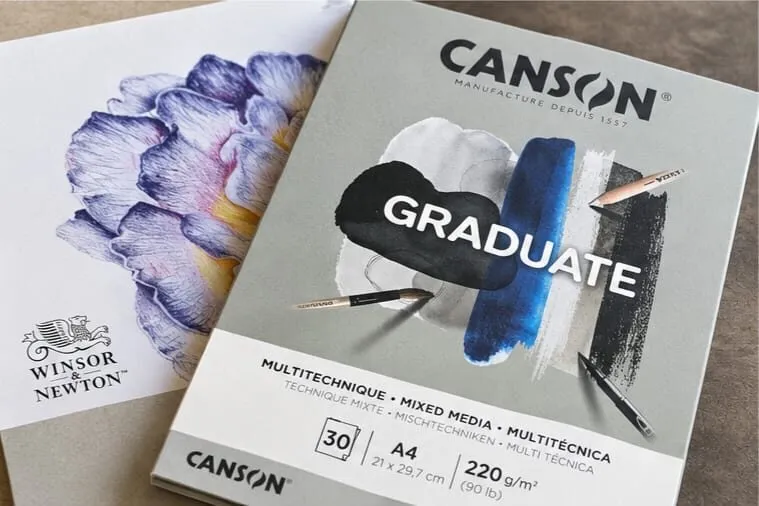
A grey mixed media paper pad beside a sheet with a purple flower drawing.
Why it matters when selling or exhibiting
A drawing is often bought as an investment in something personal: a portrait, a pet, a place. Buyers, galleries and competition organisers assume the work will hold up. Using archival paper:
- Protects the buyer. A drawing on stable paper is more likely to look the same in years to come.
- Protects your reputation. Yellowing or brittle edges reflect on the artist.
- Supports pricing. Professional materials support a professional price; see how to price your drawings.
- Meets expectations at exhibitions. Many galleries and competitions look favourably on quality materials. Check the organiser’s current rules before you enter, as covered in how to enter an art competition.
Which papers qualify
Michael’s paper guides summarise how four common papers stand on archival quality.
| Paper | Archival status | Notes |
|---|---|---|
| Arches (Hot Press and Cold Press) | Fully archival, acid-free, museum-grade | Designed to last decades without yellowing |
| Stonehenge | Fully archival, acid-free, museum-grade | Soft, velvety, popular for realism |
| Canson Mixed Media | Durable but not always fully archival | Great for practice, studies and still life |
| Clairefontaine | Generally archival, but varies by line | Check the specific paper |
Arches
Arches is a premium watercolour paper and is the safest choice on this list for saleable work. It comes in smooth hot press and lightly textured cold press surfaces, with Arches Hot Press at 300 gsm in Michael’s description: museum-grade strength that handles solvents and burnishing. Buying heavy paper also helps a drawing survive handling, transport and reframing over the years. For which surface to use, see hot press vs cold press paper.
Stonehenge
Stonehenge is fully archival and acid-free, with a soft, velvety surface that suits skin, fur, feathers and botanical work. It is slightly lighter than Arches, at around 250 gsm, so gentle layering works best.
Canson Mixed Media
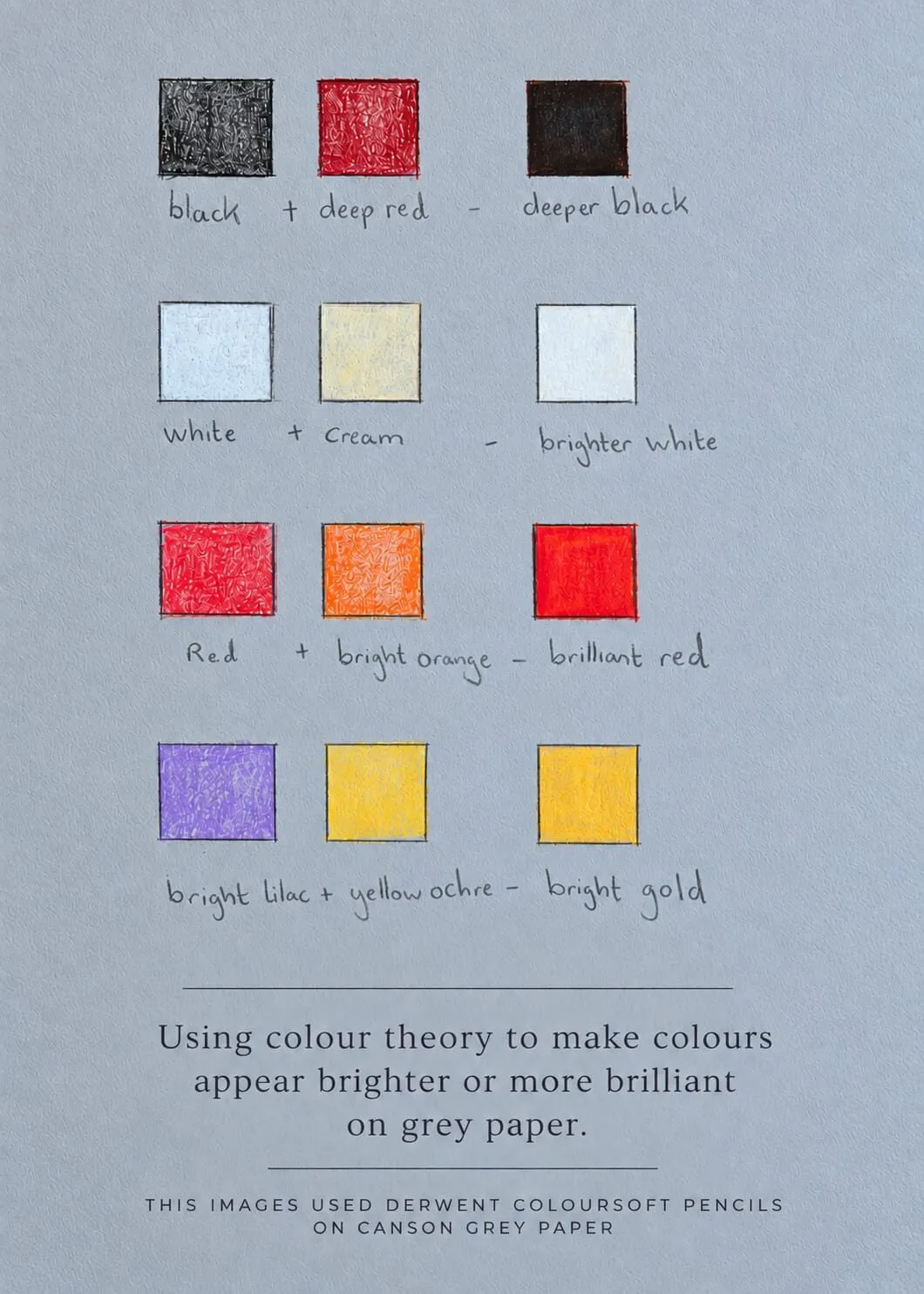
Canson Mixed Media, the grey paper Michael uses for glossy still life, is durable and forgiving, but he does not describe it as always fully archival. It is excellent for practice, studies and reference-heavy work. If you intend to sell a drawing made on it, check the specification of the exact product, and consider stating the paper honestly in the description.
Clairefontaine
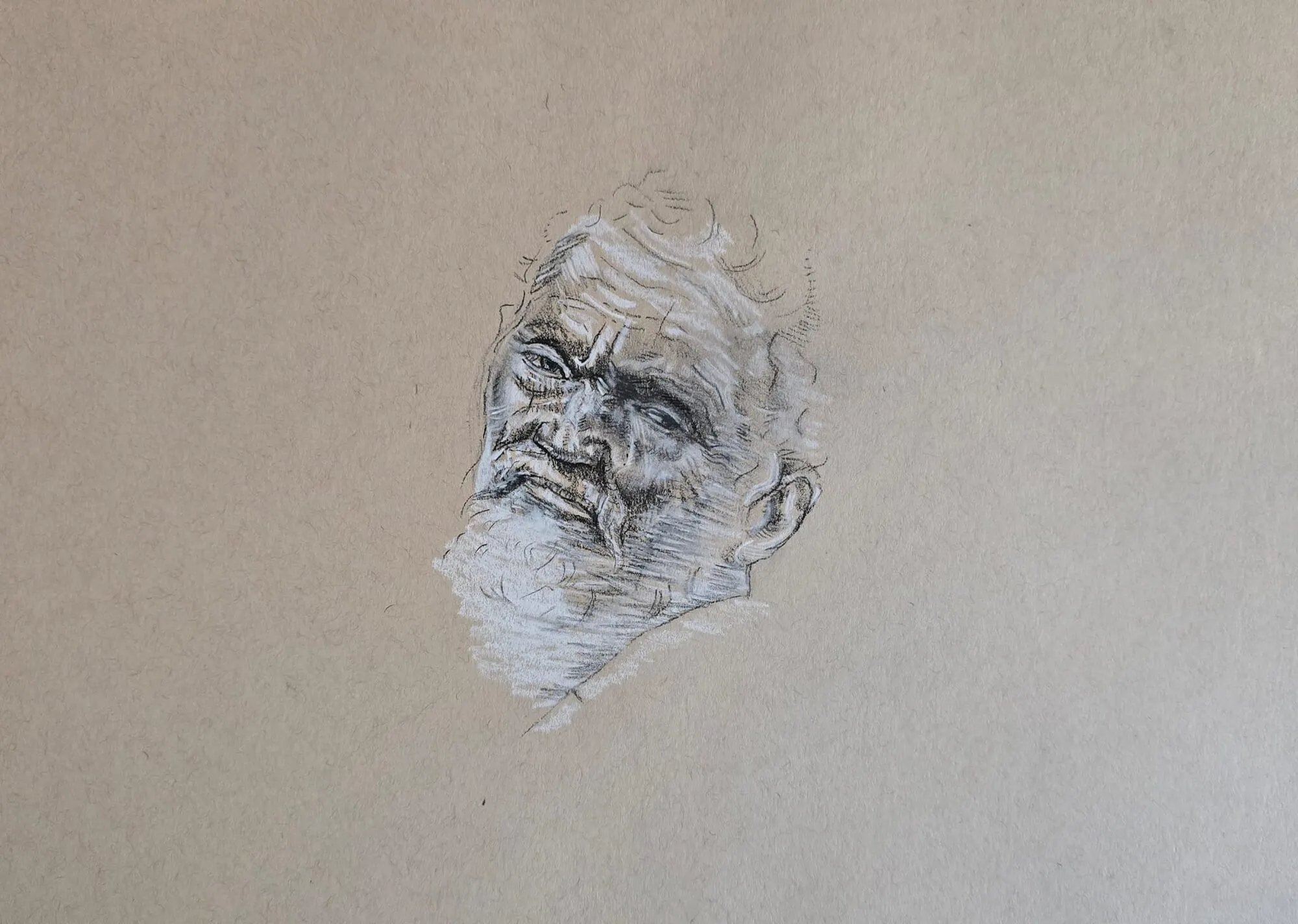
Clairefontaine is generally archival, but it varies by line. The dramatic Paint’On Gris is popular for moody still life and expressive portraits; check the maker’s information for the specific paper before relying on it for sales.
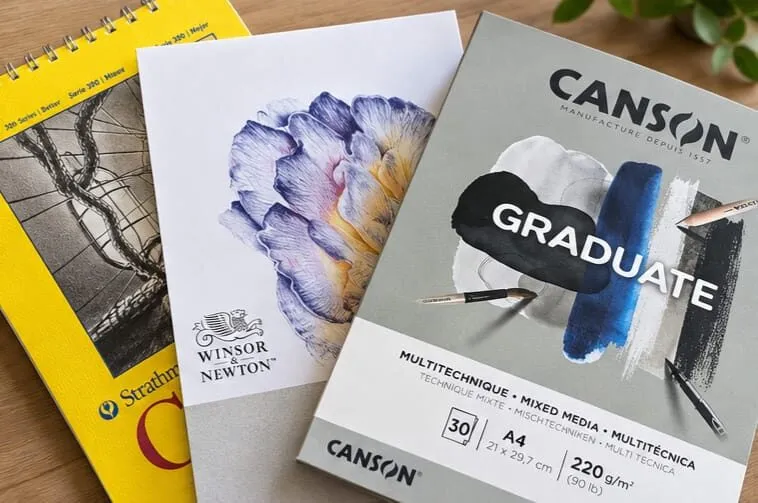
Paper pads and a spiral sketchbook beside a sheet with a purple flower drawing.
Paper is only one link in the chain
Choosing archival paper will not save a drawing made with fugitive pencils or hung in direct sunlight. Think of four links.
1. Pigment
Lightfastness describes how well a pigment resists fading in light. Choose pencils with good lightfast ratings for saleable work, and check the ratings for the specific colours you use, as they differ within a range. Our guide to coloured pencil lightfastness explained explains the rating systems, and polychromos vs luminance vs lightfast compares popular ranges.
2. Paper
Archival, acid-free paper as described above.
3. Framing and glazing
Frame under UV-filtering glass or acrylic, and use acid-free mounts and backing so nothing touches the drawing that could discolour it. Keep glass off the surface with a mount to avoid pressure or condensation. See how to frame and mount a drawing and the frame and mount calculator.
4. Display and storage
Direct sunlight, heat and damp shorten the life of any drawing. Advise buyers to hang work away from windows and heat sources.
Storing drawings before sale
- Keep them flat in a clean, dry place, away from light and heat.
- Interleave with acid-free tissue or glassine, especially for graphite and heavily layered coloured pencil, which can transfer.
- Use acid-free boxes or folders, not cardboard that can give off acids.
- Handle by the edges with clean, dry hands.
- Do not roll tightly. Wax-based coloured pencil layers and graphite can crack, mark or smudge.
- Photograph before you ship. A record protects both parties; see how to photograph your drawings.
Certificates and labelling basics
Buyers value clear information. A simple, honest label or certificate of authenticity might include:
- your name and the title of the work;
- the year;
- the medium and the paper, for example “coloured pencil on archival cotton paper”;
- the size;
- your signature, and an edition number if it is a print.
Only include statements you can support. If you used a paper that is not fully archival, say what it is rather than implying otherwise. Do not promise how long a drawing will last, because that depends on the pigment, the framing and how it is displayed, and you can only advise. If you are unsure of the correct wording for legal or consumer purposes, ask a professional body or adviser rather than guessing.
For a fuller picture of preparing work for sale, read how to build an art portfolio.
Questions to ask before you buy a paper
A few minutes of checking saves awkward conversations later. Look for the maker’s statement on acid content and fibre, and for any statement about longevity on the packaging or technical sheet. Ask whether the paper is the same product you used before, since lines and formulations change. If the information is not available, contact the manufacturer or retailer, and keep their reply with your records. If the answer is unclear, treat the paper as suitable for practice and studies rather than saleable work.
A simple checklist
- Choose paper you can verify as archival, such as Arches or Stonehenge.
- Check the specification of the exact paper you buy.
- Use pencils with strong lightfastness ratings.
- Frame with UV-filtering glass and acid-free mounts.
- Store flat and interleaved.
- Label honestly and keep records.
The short version
If you are selling or exhibiting, choose archival paper: Arches and Stonehenge are fully archival, acid-free and museum-grade; Canson Mixed Media is durable but not always fully archival and is best kept for practice and studies; Clairefontaine varies by line. Check the maker’s specification, protect the drawing with lightfast pencils and UV-filtering glass, and label it honestly. Return to the paper hub or see paper weight explained for the next decision.
Where to buy
Recommended products
Affiliate links. We may earn a small commission if you buy, at no extra cost to you. Why?
Paper · Arches
Arches Hot Press Paper
Smooth, archival paper prized for portraits, fine detail and subtle blending.
Paper · Arches
Arches Cold Press Paper
Archival paper with a gentle texture - good for rich graphite shadows.
Paper · Canson
Canson Mixed Media Grey Paper
A toothy mid-tone grey paper that grips pigment and makes highlights glow.
Quick answers
Frequently asked questions
What does archival paper mean?+
Archival paper is made to last a long time without yellowing or becoming brittle. It is normally acid free, meaning it has a neutral or alkaline pH, and often cotton based. The term is not tightly regulated, so check the manufacturer's stated specification rather than relying on a label alone.
Is Canson Mixed Media paper archival?+
Michael describes Canson Mixed Media as durable but not always fully archival, and great for practice, studies and still life. Specifications can differ between products and change over time, so check the maker's details for the exact pad you buy before using it for work you plan to sell.
Do I need archival paper to sell drawings?+
It is strongly recommended. Buyers expect artwork to last, and archival paper is designed to last decades without yellowing. There is no universal legal requirement in most cases, but using archival materials protects buyers and your reputation. If you use non-archival paper, say so honestly.
How should I store finished drawings?+
Keep them flat, clean and dry, away from direct light and heat. Interleave with acid-free tissue or glassine, store in an acid-free box or folder, and avoid stacking heavy items on top. Handle by the edges, and do not roll pencil work tightly because it can crack or smudge.