Paper & Surfaces
Hot Press vs Cold Press Paper for Pencil Drawing
Hot press is smooth, cold press has a light texture. See how each behaves under coloured pencil and graphite, and which Arches surface to buy.
This guide contains affiliate links. If you buy through them we may earn a small commission at no cost to you. How this works.
Jump to recommended products
Key takeaways
- ◆Hot press and cold press are watercolour paper surfaces: hot press is smooth, cold press has a light, even texture.
- ◆For coloured pencil portraits, Michael prefers Arches Hot Press because it allows subtle transitions and delicate shading.
- ◆For graphite, Arches Cold Press gives the tooth needed for rich shadows and crosshatching.
- ◆Rough paper is a third option with pronounced texture: dramatic for landscapes and loose work, but hard to control for fine detail.
- ◆If you can only buy one, choose by subject: smooth for skin and detail, textured for shadow-heavy graphite and layered texture.
Walk into an art shop looking for drawing paper and you are quickly asked a question that sounds like a manufacturing term: hot press or cold press? Both words come from watercolour paper, where they describe the surface, but pencil artists use these papers heavily because a good watercolour sheet is heavy, durable and long lasting.
This comparison explains what the two terms mean, how coloured pencil and graphite behave on each, and which one to pick for portraits, shadows and detail. It focuses on Arches, the paper most often used in both surfaces, and touches on rough paper as a third option. The comparison covers coloured pencils (colored pencils in the US) and graphite. Sheet sizes are listed in the paper sizes hub, and best blending tools for coloured pencil helps on smooth hot press.
What hot press and cold press mean
The names describe how the paper is finished. Hot press paper is pressed between heated rollers, which flattens and smooths the surface. Cold press paper is pressed without heat, so the surface keeps a light, natural texture. Rough paper is dried with little or no pressing, leaving the most pronounced texture.
In drawing terms these translate to tooth. Tooth is the texture of the paper, the tiny hills and valleys that catch pigment, and the three finishes sit along a scale from minimal tooth to pronounced tooth. For the full explanation of how tooth changes layering, blending and lifting, read paper tooth: smooth vs textured paper.
| Surface | Texture | Pencil character |
|---|---|---|
| Hot press | Smooth, fine | Creamy, blends easily, best for detail |
| Cold press | Light, even texture | More grip, richer darks, visible grain |
| Rough | Pronounced texture | Dramatic grain, harder for fine detail |
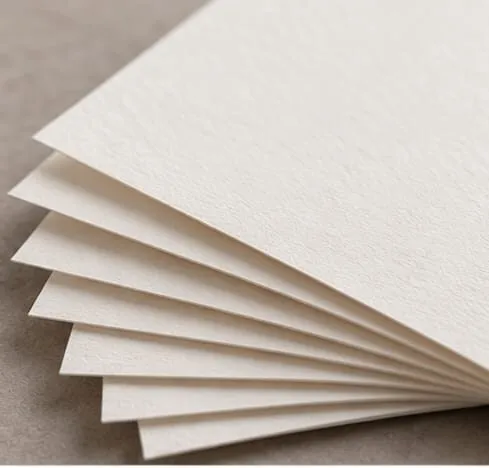
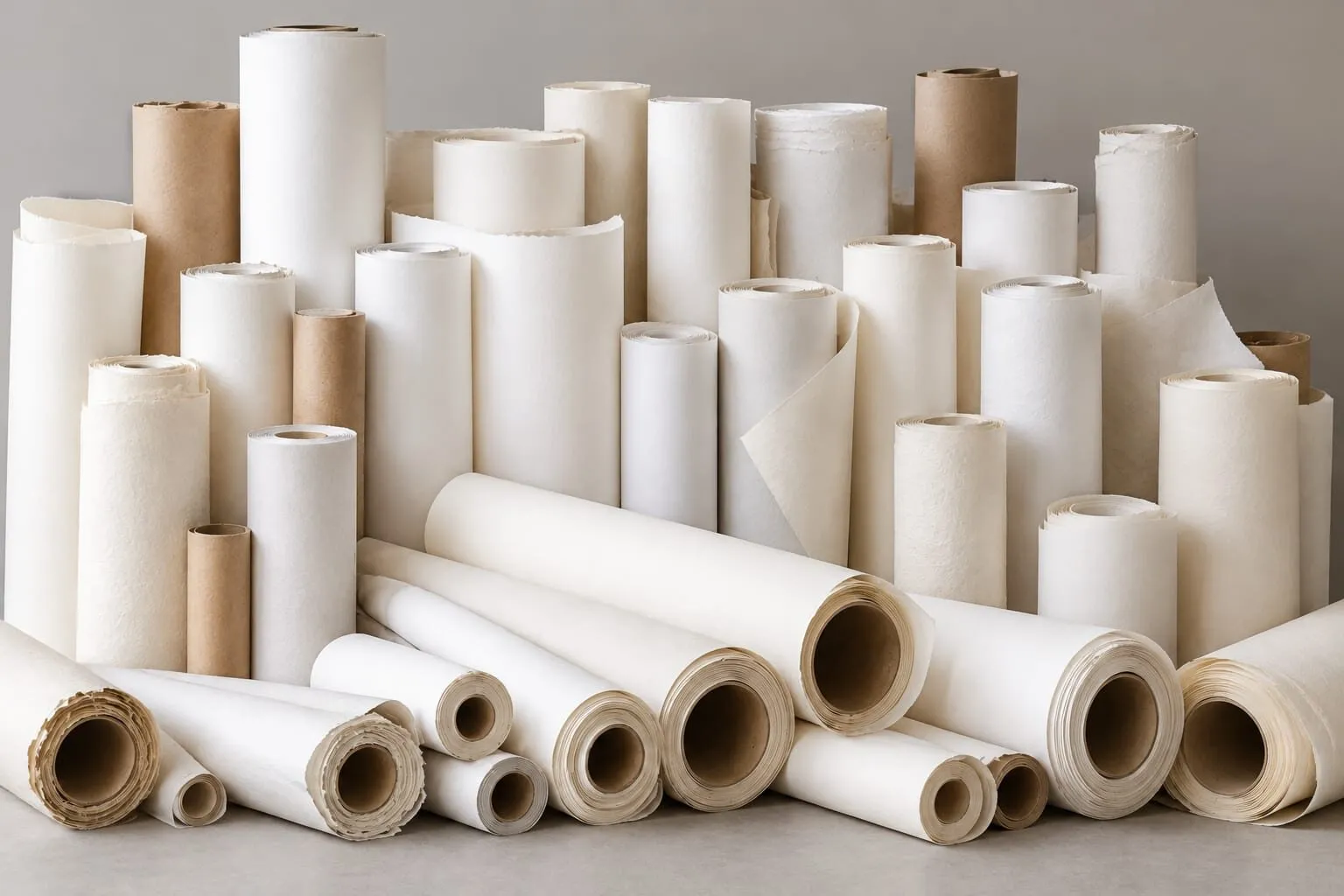
A fanned stack of heavyweight white paper showing the thick edges.
Hot press: smooth and controlled
On hot press, the pencil glides. Pigment sits evenly on the surface with little grain showing, so tones can melt into one another and delicate edges stay clean. For coloured pencil artists this suits portraits, botanical work and any subject where fine detail and subtle transitions matter.
Michael’s description of Arches Hot Press is the elegant one: smooth, refined and beautifully consistent. It is a premium watercolour paper, yet coloured pencil artists favour it for portraits because it allows subtle transitions and delicate shading. It is strong enough for heavy layering but smooth enough for fine detail, and at 300 gsm it has museum-grade strength that copes with solvents and burnishing.
There are trade-offs:
- Minimal tooth means it fills up sooner. You need more layers to reach deep colour, and gentle pressure keeps the surface open. Learn more in how to layer coloured pencils.
- Harder to lift. Pigment sinks into the smooth surface, so corrections take planning rather than a quick erase.
- Soft burnish. Burnishing on hot press gives a soft, refined sheen, which is why it suits skin.
Cold press: texture with a purpose
Cold press has a light, even texture that grips pigment. In coloured pencil that means more layers before the surface seals, and a slightly visible grain in the finish. In graphite it means richer, deeper shadow because the valleys hold more graphite.
That is why Michael recommends Arches Cold Press for graphite: it gives the tooth needed for rich shadows and crosshatching. The extra grip stops the pencil skating, and hatched lines build convincingly into dark tone. Winsor & Newton cartridge paper is his other graphite choice, covered in the best paper for graphite drawing.
The trade-offs are the mirror image of hot press:
- Grain shows. In smooth-skinned portraits the paper texture can compete with the drawing.
- Fine detail is a little less crisp, because a sharp point catches on the surface.
- Lifting is easier, since more pigment sits on the peaks.
A stack of white drawing paper sheets on a wooden board.
Hot press vs cold press at a glance
| Question | Hot press | Cold press |
|---|---|---|
| Best coloured pencil use | Portraits, botanical, fine detail | Layered work where texture is welcome |
| Best graphite use | Clean detail and polished finish | Rich shadows, crosshatching |
| Layers before it seals | Fewer | More |
| Blending | Smoothest | Grain remains visible |
| Lifting and erasing | Harder | Easier |
| Fine detail | Crispest | Slightly softer |
Which should you buy for which medium?
Coloured pencil portraits
Choose Arches Hot Press. It allows subtle transitions and delicate shading, and gives skin the seamless blend that realism needs. Stonehenge is the soft, velvety alternative for the same subjects. If your subject is a glossy still life rather than a portrait, a toothy grey paper often does better; see why use grey paper for coloured pencil.
Graphite shadows and crosshatching
Choose Arches Cold Press. The tooth holds enough graphite to build darks and gives hatching something to bite into. If you want a very polished, photographic graphite finish with fine detail in the lights, hot press is a legitimate alternative, and a mix of both is not unusual.
Mixed work and one paper for everything
If you draw both media and want a single paper, cold press is the more forgiving all-rounder: it holds graphite well and layers coloured pencil, at the cost of a slight grain. If your work is mostly figurative, buy hot press.
Animals, fur and botanical work
Fur and feathers benefit from soft tooth, which suggests Stonehenge or cold press. Botanical work, with its fine veins and crisp edges, leans towards hot press.
Does the surface change the finish?
Yes, and it is worth deciding early. On hot press, a fully worked drawing looks smooth and almost painted, with soft transitions and no obvious paper texture. On cold press, the same drawing keeps a fine, even grain that gives it a slightly more tactile, pencil-drawn character. Neither is more skilled or more professional. It is a matter of the look you want and the subject in front of you. A portrait of smooth skin generally benefits from the smoother finish, while a drawing of rough hide, stone or fabric can take advantage of the grain.
The same is true of workflow. On hot press you plan, layer gently and accept that corrections need care. On cold press you have more room to build and more forgiveness when lifting a highlight. If you are unsure, start on cold press for your first sheets and move to hot press once your pressure control is confident.
What about rough paper?
Rough paper is the third watercolour surface and has the most pronounced texture. For dry media, it is a specialist choice: landscapes, loose or expressive work, and subjects where the grain becomes part of the image can look wonderful on it. It is difficult for portraits and fine detail, because the deep valleys break up your line and take a lot of pigment to fill. Try a small sheet before committing to a large piece.
How to choose in practice
- List your subject and finish. Smooth skin and detail point to hot press. Deep shadow and hatching point to cold press.
- Test a single sheet. Try your usual pencils on both surfaces, including a light pass, a heavy pass and an erase.
- Check the weight. Both Arches surfaces are available in heavy weights; see paper weight explained.
- Consider longevity. If you plan to sell, read archival paper for selling your drawings.
The short version
Hot press is smooth and controlled, best for coloured pencil portraits and fine detail. Cold press has light texture that grips, best for graphite shadows and crosshatching. Rough is for expressive, textured work. For a wider comparison of the papers coloured pencil artists use, see Canson vs Arches vs Stonehenge vs Clairefontaine and the paper hub.
Where to buy
Recommended products
Affiliate links. We may earn a small commission if you buy, at no extra cost to you. Why?
Paper · Arches
Arches Hot Press Paper
Smooth, archival paper prized for portraits, fine detail and subtle blending.
Paper · Arches
Arches Cold Press Paper
Archival paper with a gentle texture - good for rich graphite shadows.
Quick answers
Frequently asked questions
What is the difference between hot press and cold press paper?+
It is the surface. Hot press paper is pressed between heated rollers, giving a smooth, fine surface. Cold press is pressed without heat, leaving a light, even texture. Both are watercolour paper surfaces, and both are widely used for dry media such as coloured pencil and graphite.
Is hot press or cold press better for coloured pencil?+
Hot press is usually better for portraits and fine detail because it blends smoothly and holds subtle transitions. Cold press suits coloured pencil work where you want visible texture or many layers. Neither is wrong, but hot press is the more common choice for realistic portraits.
Is hot press paper good for graphite?+
It works well for fine detail and clean lines, and can give a polished, smooth look. It reaches deep darks less easily than a textured surface, so many graphite artists prefer cold press for rich shadows and crosshatching.
What is rough watercolour paper used for?+
Rough paper has the most pronounced texture of the three surfaces. It suits expressive work, landscapes and subjects where visible grain is part of the effect. It is harder to use for fine detail because the deep texture breaks up a sharp point.