Paper & Surfaces
Paper Weight (GSM) Explained for Pencil Artists
What gsm means, how it compares with lb, and which paper weights suit coloured pencil, graphite and sketching, so you buy the right sheet first time.
This guide contains affiliate links. If you buy through them we may earn a small commission at no cost to you. How this works.
Jump to recommended products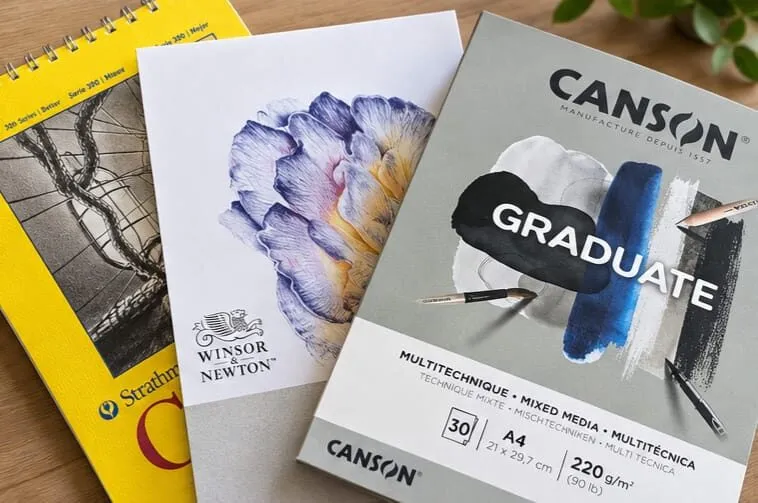
Key takeaways
- ◆GSM is grams per square metre: a measure of how much a sheet weighs, which is a rough guide to how thick and sturdy it is.
- ◆Lighter papers around 120 to 180 gsm are flexible and good for sketching, but can buckle or wear under heavy coloured pencil layering.
- ◆Heavier papers around 300 gsm behave like card: they stay flat, resist damage and take dozens of layers and repeated erasing.
- ◆Weight is not the same as quality or stiffness. Fibre, sizing and surface also matter, so check the paper as well as the number.
- ◆Lb (pounds) is the US way of stating weight. It is not directly comparable with gsm unless you convert it, and the converter tool does that for you.
Paper weight is the number printed on the cover of a pad or the wrapper of a block, and it is the spec most beginners either ignore or over-trust. Buy too light and your coloured pencil layers start to pill, the sheet ripples and the eraser leaves a dent. Buy too heavy for the job and you pay more than you need to for a quick sketch.
This guide explains what gsm actually measures, how it relates to the pounds (lb) you see on American paper, and which weights suit coloured pencil, graphite and everyday sketching. It also covers where weight stops being useful as a guide, because a heavy sheet with the wrong surface will still let you down. The weights apply to coloured pencil (colored pencil in the US) and graphite alike. Once you know your weight, check sheet dimensions in the paper sizes guide, such as A4 and A3, and see best drawing paper for beginners.
What gsm means
GSM stands for grams per square metre. Imagine cutting a sheet of paper one metre by one metre and putting it on a scale: the number is the weight in grams. Every sheet from a given paper will weigh the same per square metre, whatever size it is cut to, so gsm is a fair way to compare a small pad with a large sheet.
Because the same fibre and manufacturing method produces a thicker sheet when there is more of it, gsm works as a rough proxy for thickness and sturdiness. Photocopier paper is typically around 80 gsm. Sketchbook paper is often in the region of 100 to 150 gsm. Cartridge paper usually sits higher, and watercolour and mixed media papers higher again, up to 300 gsm and beyond.
Two things gsm does not tell you:
- Surface. A smooth sheet and a rough sheet can weigh exactly the same. See smooth versus textured paper for how the surface changes how pencil behaves.
- Quality. Cheap wood-pulp paper and cotton rag paper can share a weight. Fibre content, sizing and acid content decide how the paper ages and how it copes with abuse.
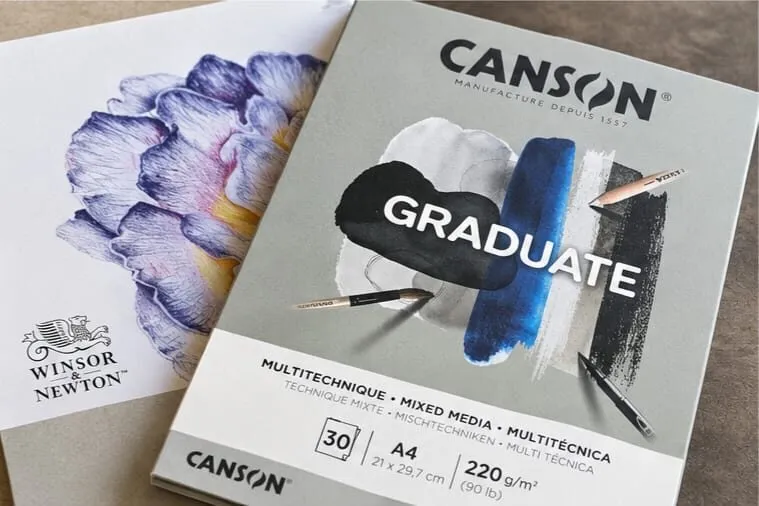
A grey mixed media paper pad beside a sheet with a purple flower drawing.
GSM versus lb
Weight in the United States is quoted in pounds (lb), and it is measured differently. It is the weight of a whole ream (typically 500 sheets) of the paper at its basic sheet size, which changes between paper types. That is why lb is awkward to compare with gsm without a conversion, and why you will occasionally see two very different lb figures for papers that feel the same.
For drawing and watercolour papers, a few approximations are widely used:
| US weight | Approximate gsm |
|---|---|
| 90 lb | 190 gsm |
| 140 lb | 300 gsm |
| 300 lb | 640 gsm |
Treat these as approximations, not exact conversions. If you are shopping across markets, use the paper size and weight converter rather than doing sums in your head, and when accuracy matters check the manufacturer’s stated gsm.
What weight suits which medium
There is no single correct weight. The right one depends on how much you ask of the paper.
Coloured pencil
Coloured pencil is a layering medium, and layering is hard on paper. Each layer presses pigment into the surface, and corrections involve erasing, lifting or scrubbing. Heavier paper takes that punishment better.
Michael works on heavy paper of around 300 gsm for exactly this reason. Lighter papers, around 120 to 180 gsm, are flexible and good for sketching, but they can buckle or wear down under heavy coloured pencil layering. Heavier papers feel more like card: they stay flat, resist damage and allow dozens of layers without the surface breaking down.
In practice:
- Around 250 to 300 gsm is the comfortable zone for finished coloured pencil work. Arches Hot Press is 300 gsm, Canson Mixed Media grey is around 300 gsm and Stonehenge is around 250 gsm.
- Around 200 to 250 gsm is mid-weight. It is a little more flexible and easier to blend on, but less resilient if you erase repeatedly. Grey sketchbook papers such as Art Gecko sit in this range.
- Around 180 to 220 gsm is typical for white cartridge paper, which is softer and more absorbent. It blends smoothly but scuffs and dents more easily, so it rewards planning. Our guide to when to use cartridge paper covers the trade-off.
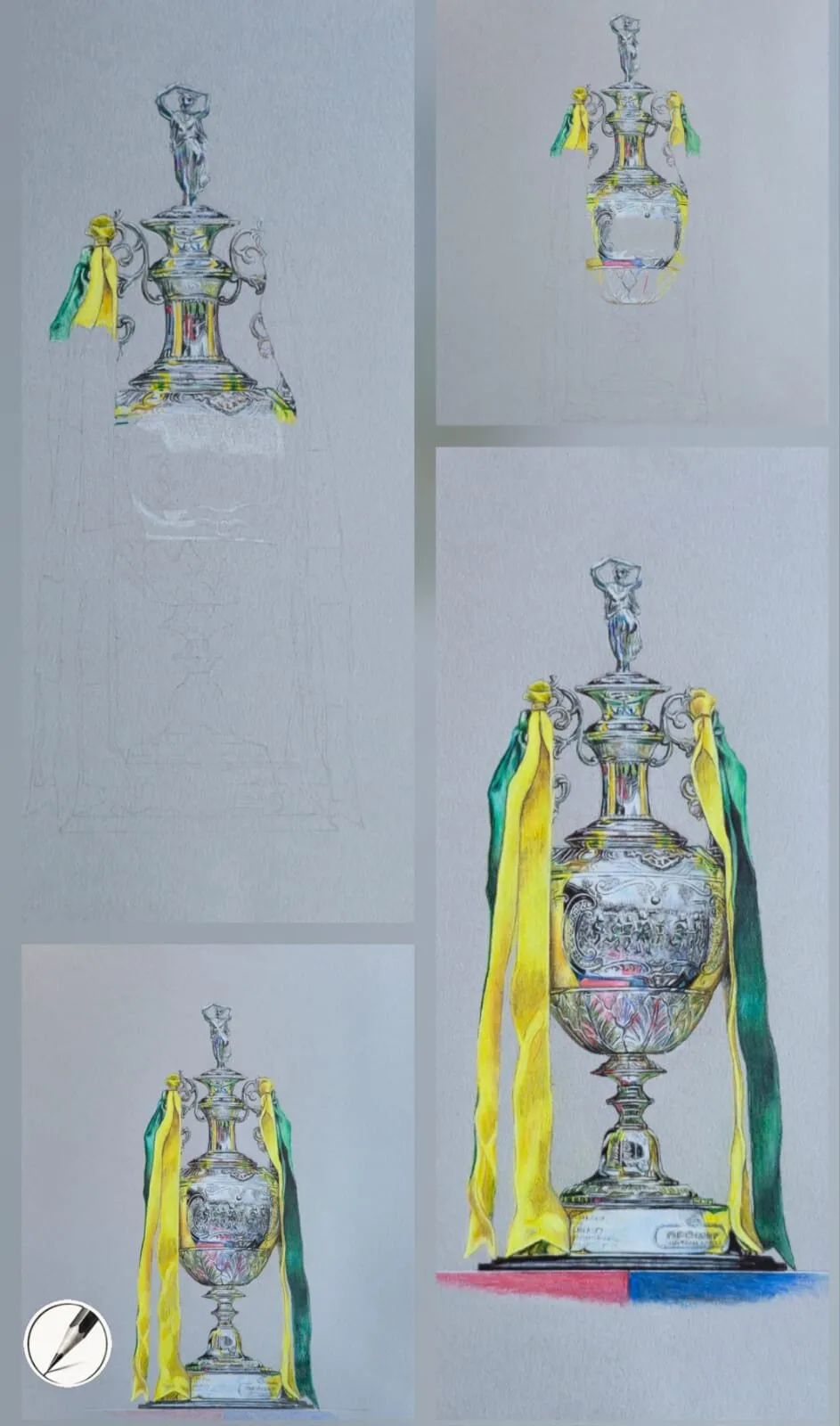
Heavy grey paper takes the many layers that shiny metal needs.
Graphite
Graphite is gentler on paper than a heavily layered wax pencil, because you are not building thick pigment. A weight of roughly 150 to 200 gsm handles most graphite work comfortably. Go heavier if you use a lot of pressure, work large, or erase and rework highlights. Heavier sheets also cope better if you want to lift out tone with a kneaded eraser. For specific recommendations see the best paper for graphite drawing.
Sketching and studies
Quick sketches, thumbnails and notes do not need heavy paper. Around 100 to 150 gsm is fine and keeps costs down. The problem arrives when you push a light sketchbook page past its limits: wet media, heavy layering or repeated erasing will show through or ripple the page. If you want to do colour studies in the same book, aim for the upper end of the range.
Stiffness is not the same as thickness
Two papers of the same gsm can feel different in the hand. A dense, tightly compressed sheet feels stiff and thin; a fluffy, bulky sheet of the same weight feels thicker and softer. What matters for drawing is how the paper behaves under the pencil:
- Stiffness determines whether the sheet stays flat on the board as you work and whether it dents when you press.
- Bulk and softness affect how much pigment the surface can absorb, and how easily the surface scuffs.
- Sizing (the treatment that controls absorbency) affects whether pigment sits on top or sinks in.
This is why the same 300 gsm number can give very different results on a smooth pressed watercolour paper and a grainy mixed media sheet. Weight tells you about strength. It does not tell you about feel.
Pads, blocks, sketchbooks and loose sheets
Format changes how weight behaves in practice.
- Loose sheets give you the widest choice of paper and the best value per sheet. Heavy papers stay flat on a board, but very light sheets need taping down to stop rippling.
- Pads are glued at one edge. They are convenient and portable and suit medium weights. Tear off finished sheets carefully so you do not dent the next page.
- Blocks are glued on all four sides, which holds the sheet flat while you work. They were designed for wet media, so they matter less for dry pencil, but they are a neat way to keep a sheet clean and flat when travelling.
- Sketchbooks trade weight for convenience. Most have lighter pages, so choose one with a heavier stated gsm if you plan to layer colour. Our list of the best sketchbooks for coloured pencil picks out what to look for.
Weight and cost
Heavier paper generally costs more per sheet because there is more material in it, and the premium papers in this range tend to be cotton based. That is not a reason to always buy the cheapest option, but it is a reason to match paper to purpose:
- Use inexpensive lighter paper for practice, thumbnails, swatches and colour tests.
- Use the heavier, more resilient paper for finished pieces where you will layer, erase and rework.
- Buy a single sheet or small pad first to test a new paper before committing to a large quantity.
If you plan to sell or exhibit, weight is only one of the things to weigh up: archival paper for selling your drawings explains the others.
How to choose a weight in three steps
- Decide how many layers you need. Many layers and reworking mean heavy paper. A few light layers or a quick study can go lighter.
- Decide how much you will erase or lift. Frequent correction favours heavier, more resilient sheets.
- Decide the format. A sketchbook for portability, a loose sheet on a board for finished work.
The short version
For finished coloured pencil work, buy heavy paper of around 250 to 300 gsm. For graphite and everyday drawing, around 150 to 200 gsm works well. For sketching and colour tests, light paper is fine. Convert lb to gsm before comparing, and remember that weight is only half the story: surface and fibre decide the rest. If you want the full picture, start with the paper hub or the guide to the best paper for coloured pencils.
Where to buy
Recommended products
Affiliate links. We may earn a small commission if you buy, at no extra cost to you. Why?
Paper · Canson
Canson Mixed Media Grey Paper
A toothy mid-tone grey paper that grips pigment and makes highlights glow.
Paper · Arches
Arches Hot Press Paper
Smooth, archival paper prized for portraits, fine detail and subtle blending.
Quick answers
Frequently asked questions
What does gsm mean on drawing paper?+
Gsm stands for grams per square metre. It is the weight of one square metre of the paper, so a higher number means a heavier, generally thicker sheet. It is a quick way to compare sturdiness between papers, but it says nothing about surface texture, fibre quality or whether the paper is acid free.
What gsm is best for coloured pencil?+
For serious layered work, heavier paper of around 250 to 300 gsm is the safe choice because it resists pilling, buckling and repeated erasing. Mid-weight papers of roughly 200 to 250 gsm are more flexible and blend easily but are less resilient. Light sketching paper is fine for quick studies and colour tests.
Is 200 gsm paper good enough for drawing?+
Yes, for many jobs. Around 200 gsm suits graphite, sketching, studies and lighter coloured pencil work. Expect it to be softer and less forgiving if you erase heavily or apply many layers, so plan your marks more carefully than you would on a heavier sheet.
How do I convert lb to gsm?+
Multiply pounds by roughly 2.1 for the common watercolour and drawing sizes, so 140 lb is about 300 gsm and 90 lb is about 190 gsm. These are approximations because lb depends on sheet size and paper type. The paper size converter on this site handles the sums for you.