Paper & Surfaces
Best Paper for Coloured Pencils: Four Papers Worth Buying
The best paper for coloured pencils (colored pencils in the US): Canson Mixed Media grey, Arches Hot Press, Stonehenge White and Clairefontaine Paint'On Gris.
This guide contains affiliate links. If you buy through them we may earn a small commission at no cost to you. How this works.
Jump to recommended products
Key takeaways
- ◆Canson Mixed Media grey is the pick for glossy, reflective still life; Arches Hot Press is the pick for portraits and fine detail.
- ◆Stonehenge White suits soft realism such as skin, fur, feathers and botanical work; Clairefontaine Paint'On Gris suits moody, atmospheric drawings.
- ◆Look for heavyweight paper of roughly 250 to 300 gsm, a tooth that matches your finish, and archival status if you sell.
- ◆Choose grey for shine and drama, white for warmth and softness.
- ◆Test any new paper on a small swatch before committing to a large drawing.
The best paper for coloured pencils is the one that lets your pencils do their job: accept many layers, hold colour and survive corrections. Four papers do that better than most, and each suits a different kind of drawing. Canson Mixed Media grey is best for glossy, reflective subjects, Arches Hot Press for portraits, Stonehenge White for soft realism and Clairefontaine Paint’On Gris for atmosphere.
This list explains what to look for, gives each paper a fair hearing including where it falls short, and finishes with picks by subject and level plus a quick-reference table. For a point-by-point comparison, see Canson vs Arches vs Stonehenge vs Clairefontaine. For the full overview, start at the paper for coloured pencil and drawing guide. Coloured pencils, called colored pencils in the US, behave the same way on all four. Once you have a paper, the pencil set quiz helps you pick pencils, and best white pencils for drawing on grey paper covers highlights.
What to look for in coloured pencil paper
Coloured pencil is built up in layers, sometimes dozens. That places specific demands on a sheet.
- Weight. Lighter papers, around 120 to 180 gsm, are flexible and fine for sketching but can buckle or wear down under heavy layering. Heavier sheets feel like card, stay flat and let you build layers without the surface breaking down. Look for roughly 250 to 300 gsm for finished work. Our guide to paper weight explained goes deeper.
- Tooth. Strong tooth grips pigment and keeps colour vibrant, so it suits layered, punchy drawings. Smooth surfaces give a finer, creamier finish but fill faster. See smooth versus textured paper.
- Colour. Grey starts you in the middle so you build both lights and darks; white starts you at the lightest point.
- Archival quality. Acid-free paper lasts. It matters most if you plan to sell, which our guide to archival paper for selling your drawings covers.
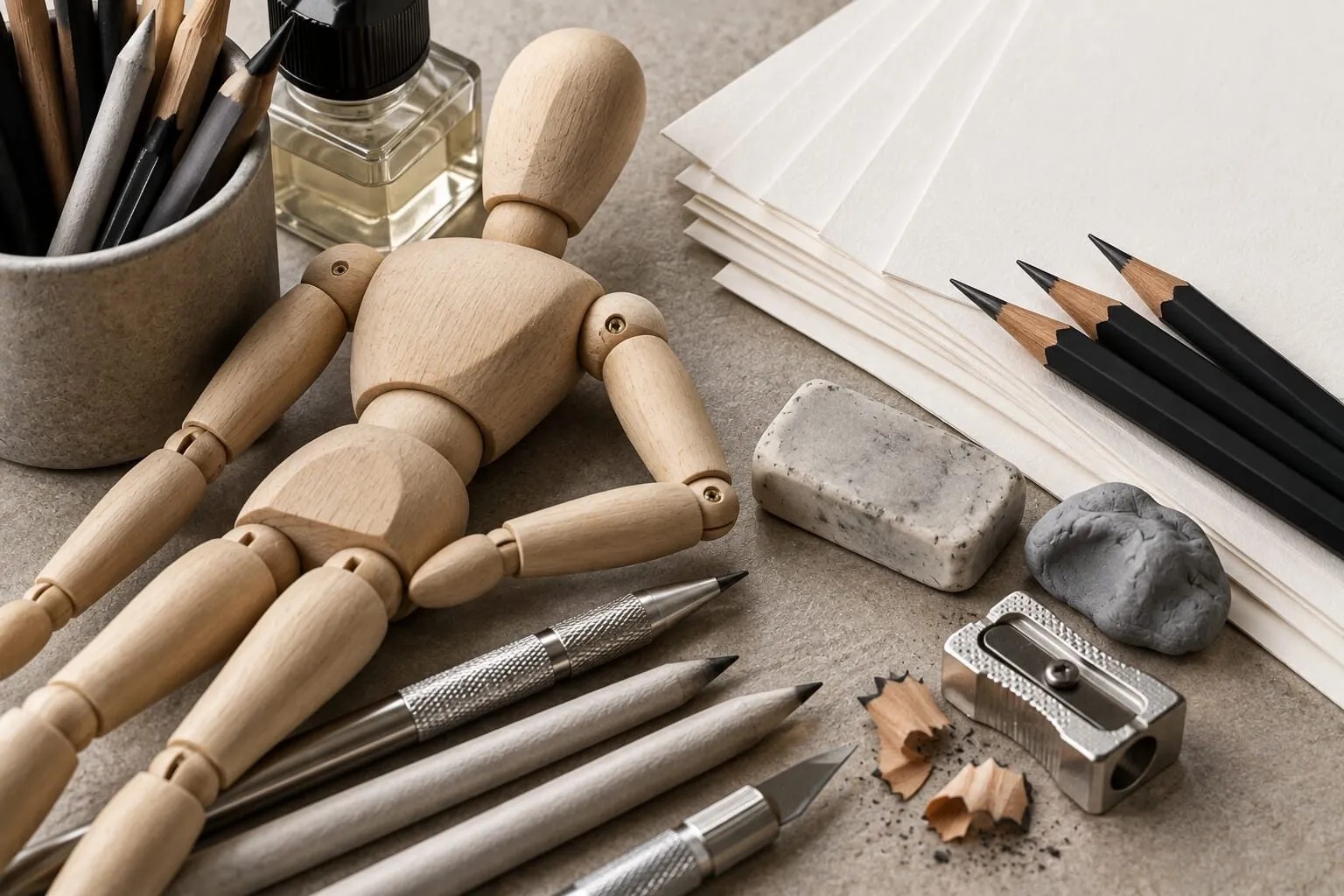
Drawing materials on a table: sheets of paper, pencils, a wooden mannequin, an eraser and a sharpener.
1. Canson Mixed Media grey: best for glossy still life
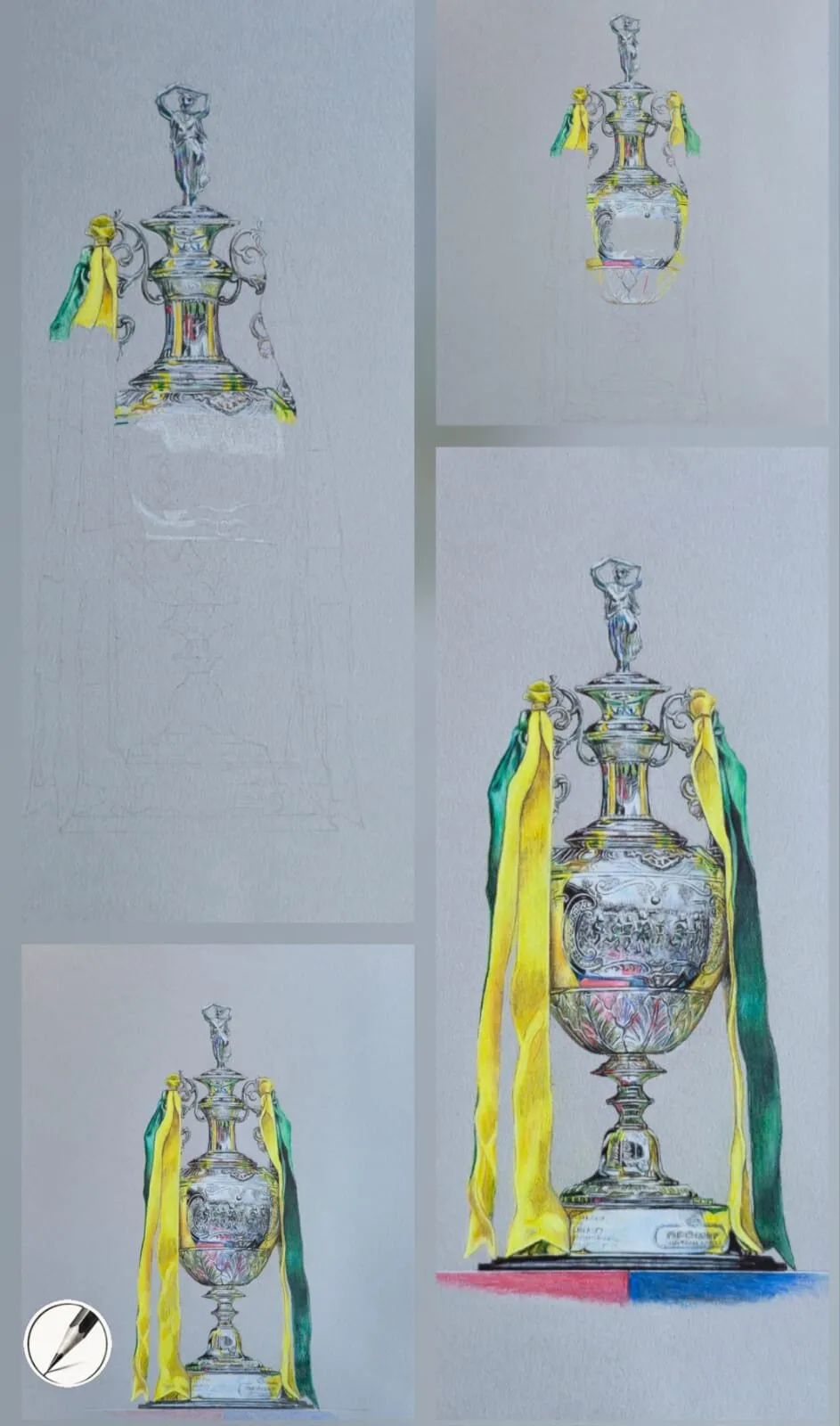
Canson is the bold one: textured, grainy and robust. Michael’s summary is that the grain, or teeth, lets pencils layer well and maintain their colour. It grips pigment firmly and leaves a slightly toothy finish that suits reflective surfaces, glossy cakes, metal objects and anything that needs punchy highlights.
Because it is a mid-tone paper, you are not starting from zero; you build up and pull back light. Colour lifts well thanks to the strong tooth, which is why highlights on metal and icing come out cleanly, and it burnishes boldly, though heavy burnishing flattens the tooth quickly. Michael works on paper of around 300 gsm for this kind of drawing.
Who it suits: anyone drawing shiny, wet or dramatic subjects, and beginners who benefit from a paper that lifts easily and forgives corrections.
Trade-offs: it is durable but not always fully archival, so it is better for practice, studies and still life than for work you intend to sell without checking the current spec. The pronounced texture also limits very fine skin detail.
Read why use grey paper for coloured pencil for the reasoning behind grey.
2. Arches Hot Press: best for portraits and fine detail
Arches is the elegant one. It is a premium watercolour paper with a smooth, consistent surface that coloured pencil artists love for portraits because it allows subtle transitions and delicate shading. It is strong enough for heavy layering but smooth enough for fine detail, and it handles solvents and burnishing well. Michael describes it as around 300 gsm; check the label for the current spec.
The tooth is minimal, almost creamy. That is wonderful for blending and skin, but you need more layers to reach deep colour and your pressure must stay gentle. Pigment sinks into the smooth surface, so it is harder to lift from. Plan highlights and edges in advance instead of relying on the eraser. Our explanation of hot press versus cold press paper shows why the surface behaves this way.
Who it suits: portrait and botanical artists, and anyone after a soft burnish and a smooth finish.
Trade-offs: premium price, less forgiving of mistakes and not the paper to choose for punchy, high-tooth highlights.
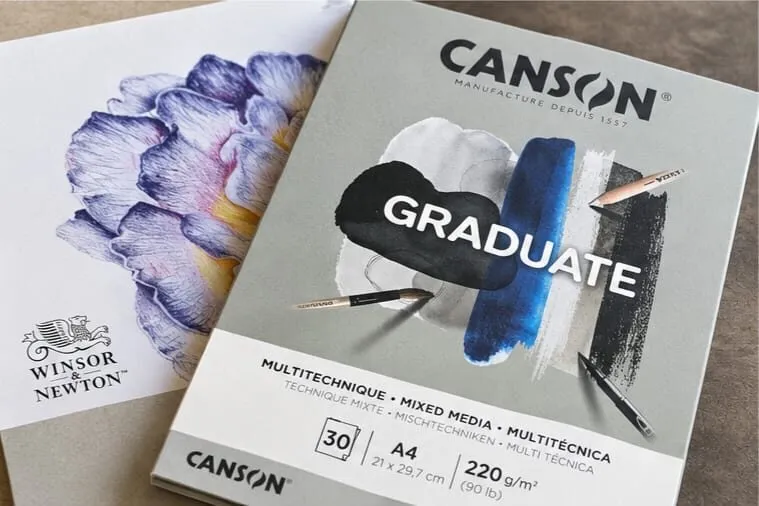
A grey mixed media paper pad beside a sheet with a purple flower drawing.
3. Stonehenge White: best for soft realism
Stonehenge is the soft one: velvety, gentle and forgiving. It allows deep layering without feeling scratchy, and colours sink into the fibres in a way that creates a natural, painterly softness. That makes it ideal for skin, fur, feathers and botanical work. It lifts gently without damaging the fibres, which suits subtle highlights, and it burnishes smoothly without streaking. It is fully archival, acid-free and museum-grade.
Michael describes it as roughly 250 gsm, slightly lighter than Canson or Arches but still robust, so gentle layering works best.
Who it suits: realists who want depth without harsh texture, and artists moving between animals, botanicals and portraits.
Trade-offs: the softer feel means heavy-handed erasing is not advised, and the lower tooth needs patience for very dark, saturated areas.
4. Clairefontaine Paint’On Gris: best for atmosphere
Clairefontaine is the dramatic one: darker, atmospheric and slightly smoother than Canson, with a subtle drag under the pencil that feels almost like paint. It has fine tooth, enough grip for layering but smooth enough for painterly effects, and it burnishes with a paint-like finish. It sits in the midweight range, around 250 gsm, so it is flexible and expressive but slightly less resilient if you erase repeatedly.
Who it suits: artists drawing moody still life, expressive portraits and pieces where the paper should contribute to the overall tone.
Trade-offs: it can stain slightly with heavy pigment, and archival status varies by line, so check before selling work.
Picks by subject
| Subject | Best pick | Runner-up |
|---|---|---|
| Metal, chrome, trophies | Canson Mixed Media grey | Clairefontaine Paint’On Gris |
| Glossy food, icing, glaze | Canson Mixed Media grey | Clairefontaine Paint’On Gris |
| Skin tones and portraits | Arches Hot Press | Stonehenge White |
| Fur and feathers | Stonehenge White | Arches Hot Press |
| Botanical work | Stonehenge White | Arches Hot Press |
| Moody, dramatic scenes | Clairefontaine Paint’On Gris | Canson Mixed Media grey |
| Animals, athletes, film-still compositions | White cartridge or Stonehenge | Arches Hot Press |
For the white alternative, see when to use cartridge paper.
Picks by level
Beginners benefit from papers that lift easily and tolerate mistakes: Canson Mixed Media grey is the friendliest, and heavier sheets forgive more. Developing artists can add Stonehenge White for softer blending and start learning how tooth affects layering. Experienced and exhibiting artists tend to choose by finish and archival needs, which usually means Arches Hot Press or Stonehenge White, with grey papers reserved for work where the ground is part of the design. If your goal is finished realism, see best paper for realistic drawing.
Quick-reference table
| Paper | Colour | Tooth | Approx. weight (Michael) | Archival | Best for |
|---|---|---|---|---|---|
| Canson Mixed Media grey | Grey | Heavy | About 300 gsm | Durable, not always fully archival | Glossy still life |
| Arches Hot Press | White | Minimal | About 300 gsm | Fully archival | Portraits, botanical |
| Stonehenge White | White | Soft | About 250 gsm | Fully archival | Soft realism |
| Clairefontaine Paint’On Gris | Dark grey | Fine | About 250 gsm | Generally archival, varies by line | Atmosphere |
Grey or white: choosing the colour first
Before comparing brands, decide on colour. Grey suits shiny, wet or dramatic subjects because the paper supplies the mid-tone and white pencil sits on top as a highlight. White suits warm, soft or high-key subjects where the lightest tones need to be genuinely pale. Two of the four papers here are grey and two are white, so this one decision usually halves your shortlist.
How to test a paper
- Swatch your main pencils on a corner, pressing lightly, then layer five to seven times.
- Try to lift a highlight with a putty rubber or eraser.
- Burnish one patch and blend another.
- Note whether the surface starts to pill or refuse pigment.
Each paper changes how your pencils behave, so testing is worth ten minutes. If you want to go further, our how to layer coloured pencils guide explains how layering interacts with tooth, and the best coloured pencils list helps you pair pencils with paper.
The short version
For glossy, reflective subjects, buy Canson Mixed Media grey. For portraits and fine detail, buy Arches Hot Press. For soft realism, choose Stonehenge White, and for atmosphere, Clairefontaine Paint’On Gris. Pick heavier paper, test it, and check the current specification before you buy in bulk.
Where to buy
Recommended products
Affiliate links. We may earn a small commission if you buy, at no extra cost to you. Why?
Paper · Canson
Canson Mixed Media Grey Paper
A toothy mid-tone grey paper that grips pigment and makes highlights glow.
Paper · Arches
Arches Hot Press Paper
Smooth, archival paper prized for portraits, fine detail and subtle blending.
Paper · Clairefontaine
Clairefontaine Paint On Gris
A darker grey paper with a painterly drag - atmospheric for dramatic lighting.
Buy on AmazonAffiliate link · opens Amazon
Paper · Stonehenge
Stonehenge Paper
Soft, velvety, forgiving paper loved for realism and deep layering.
Quick answers
Frequently asked questions
What is the best paper for coloured pencils overall?+
For glossy still life, Canson Mixed Media grey is Michael's first choice. For portraits, Arches Hot Press is the favourite. If you can only buy one, pick by subject: grey for shiny and dramatic work, a smooth white such as Arches Hot Press or Stonehenge for soft, warm subjects.
Can I use ordinary printer or sketchbook paper for coloured pencil?+
You can for quick sketches, but thin paper buckles and wears under layering, and colour stops taking after a few passes. For serious drawings, use heavyweight paper of around 250 to 300 gsm so the surface survives layering, erasing and reworking.
Is Arches Hot Press good for coloured pencil?+
Yes, particularly for portraits. It is a premium watercolour paper with a smooth, consistent surface that allows subtle transitions and delicate shading. Pigment sinks into it, so it is harder to lift from, and it rewards planning and gentle pressure.
Which coloured pencil paper is archival?+
Arches and Stonehenge are acid-free and museum-grade. Canson Mixed Media is durable but not always fully archival, and Clairefontaine varies by line. If you plan to sell or exhibit, choose an archival paper and check the manufacturer's current specification.
Are colored pencils and coloured pencils the same?+
Yes. Coloured pencils is the UK spelling and colored pencils is the US spelling, and they are the same product. Everything on this page applies whichever you call them.