Paper & Surfaces
When to Use Cartridge Paper for Coloured Pencil and Graphite
White cartridge paper suits animals, figures and soft work in coloured pencil (colored pencil in the US) and graphite. Learn when it beats grey.
This guide contains affiliate links. If you buy through them we may earn a small commission at no cost to you. How this works.
Jump to recommended products
Key takeaways
- ◆White cartridge paper suits subjects that need warmth: animals, figures, athletes, musicians and full-frame compositions that resemble film stills.
- ◆It absorbs pencil differently, giving deeper tones and softer blends, which is ideal for chiaroscuro and blurred effects.
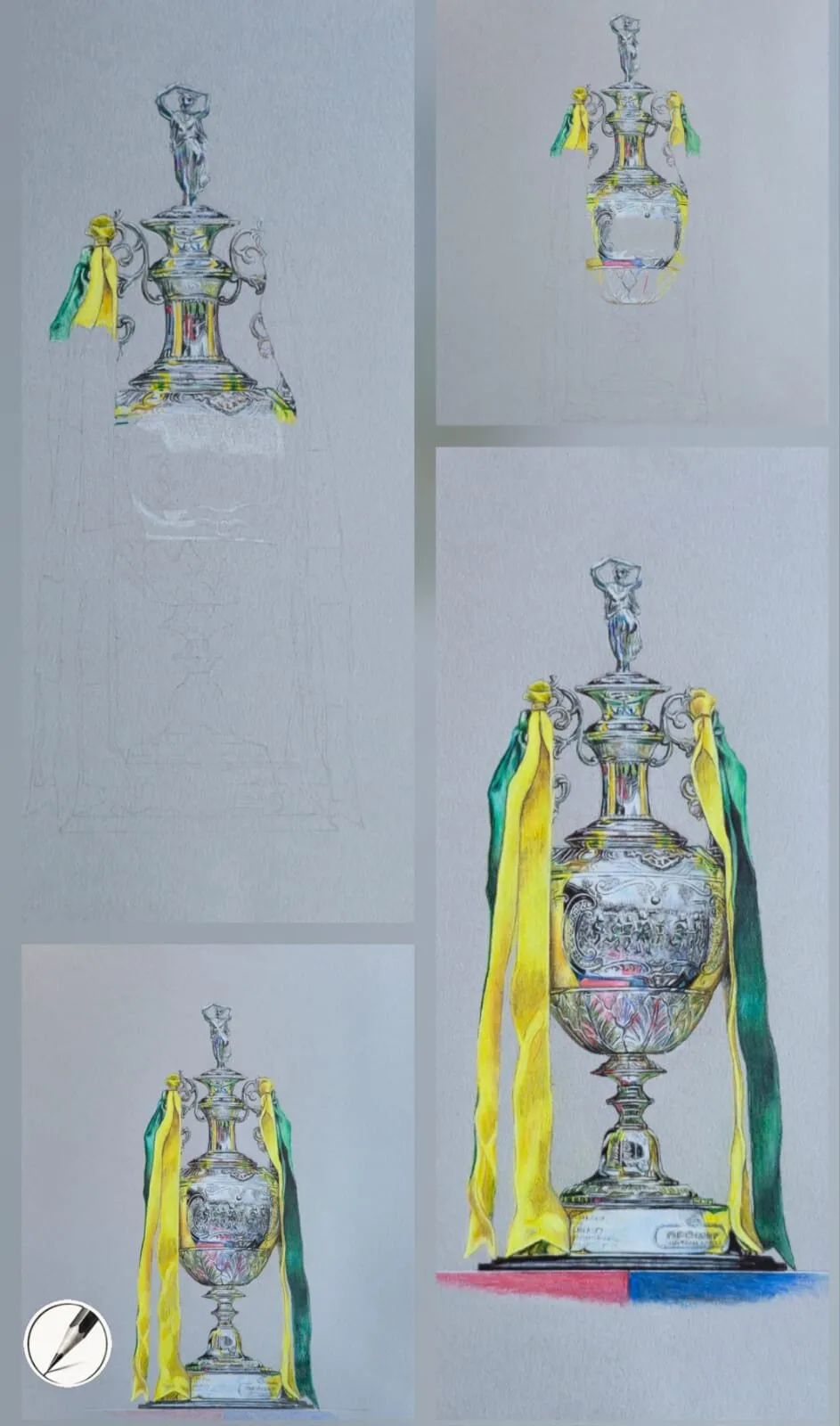
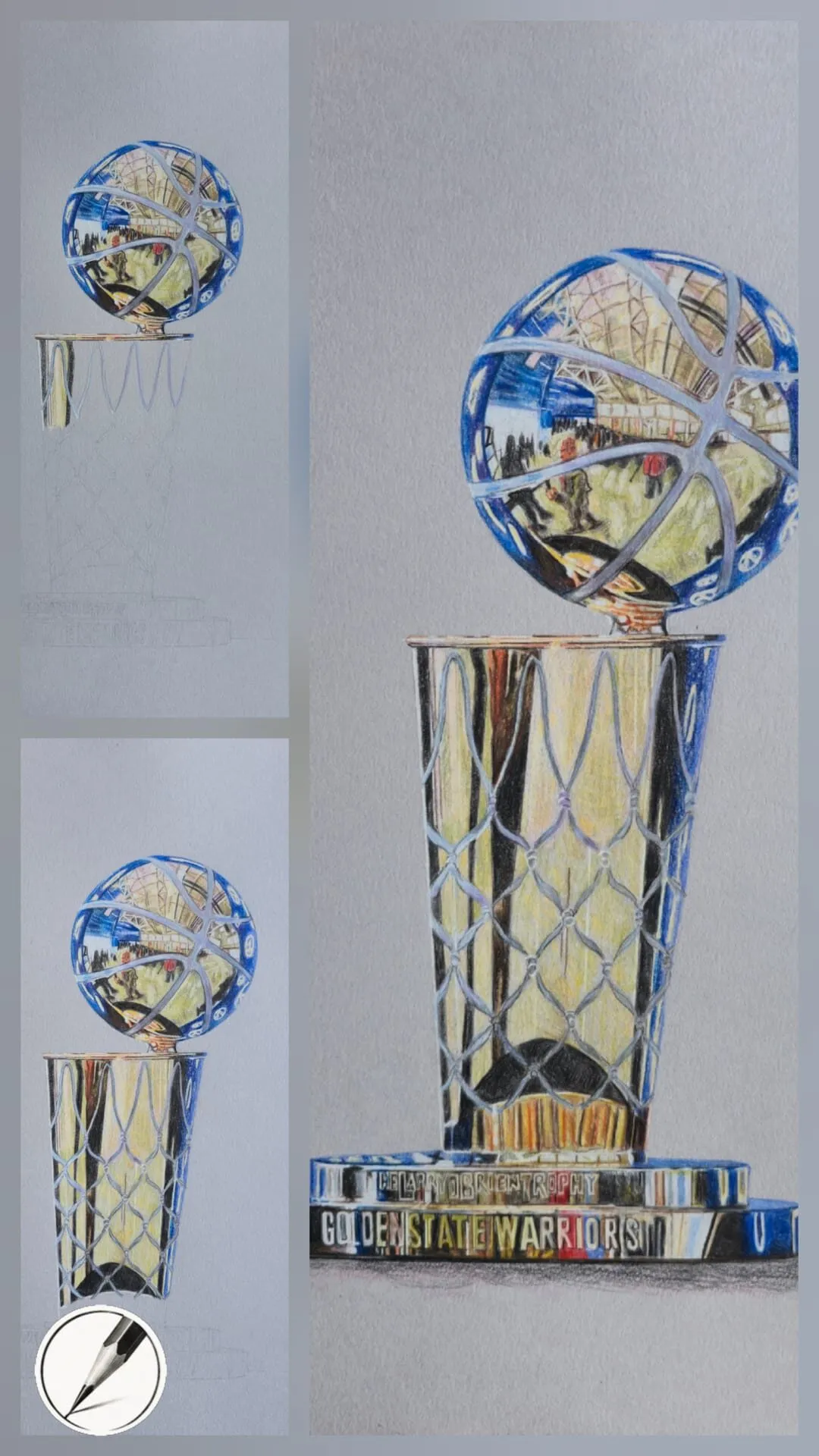
- ◆It is less suited to high-gloss finishes; grey paper is the better choice for shine.
- ◆Cartridge usually sits around 180 to 220 gsm, so it scuffs more easily and forgives erasing less; plan accurately from the start.
- ◆For graphite, Arches Cold Press and Winsor and Newton cartridge paper give the tooth for rich shadows and crosshatching.
Grey paper gets most of the attention for coloured pencil, but a good white sheet is the better tool for a long list of subjects. If your drawing is warm, soft or atmospheric, a page of white cartridge paper can do more for it than any grey. The catch is that it behaves differently, and it is less forgiving when things go wrong.
This guide explains when white cartridge paper is the right call, what it does to pencil, where it falls short and how to work with its limits. For the full landscape, see the paper for coloured pencil and drawing guide. This holds for coloured pencils, called colored pencils in the US. If you are starting out, compare it with our best drawing paper for beginners and the best drawing supplies for beginners.
The short answer
Use white cartridge paper for animals, figurative work, athletes, musicians and full-frame compositions that resemble movie stills. Choose it when you want deeper tones, softer blends, chiaroscuro or blurred effects. Avoid it for high-gloss finishes, where grey is the better choice, and plan your drawing carefully because cartridge is less forgiving to erase.
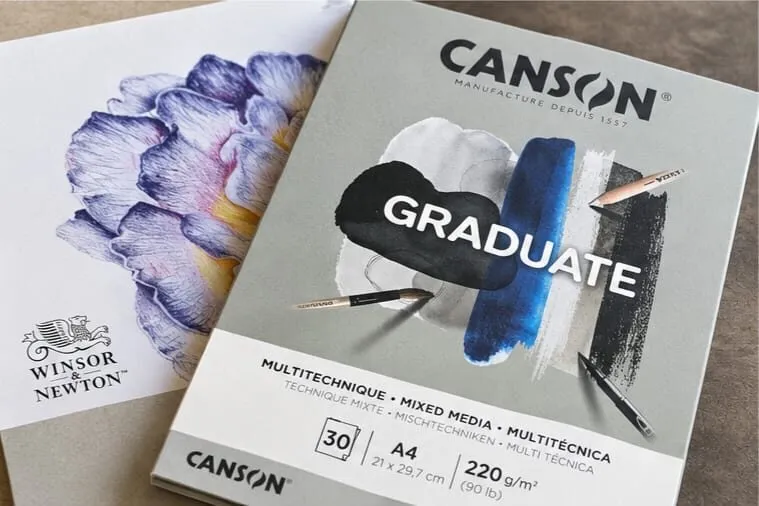
A grey mixed media paper pad beside a sheet with a purple flower drawing.
Subjects that suit cartridge paper
Animals. Fur is built from warm underlayers and soft transitions, which cartridge handles well. See how to draw animal fur.
Figures and portraits. Skin needs delicate, warm tones and gradual shifts, so soft absorbent paper helps.
Athletes and musicians. Figurative work with movement and dramatic light benefits from the deep tones and soft edges cartridge produces.
Full-frame compositions. Drawings that fill the page like a film still, with no negative space, suit white paper because the paper is not part of the design.
What cartridge paper does to pencil
Cartridge paper absorbs pencil differently from heavier, toothier sheets. Pigment sinks in more readily, which creates deeper tones and softer blends with fewer layers. That makes it a natural home for two looks:
- Chiaroscuro, the dramatic play of light and dark, where soft-edged shadows melt into strong light.
- Blurred and atmospheric effects, where edges dissolve instead of staying crisp.
The trade-off is that highlights are not held on the surface. White pencil does not sit on top as it does on grey, so bright, crisp, high-gloss highlights are harder. For shiny subjects, read why use grey paper for coloured pencil.
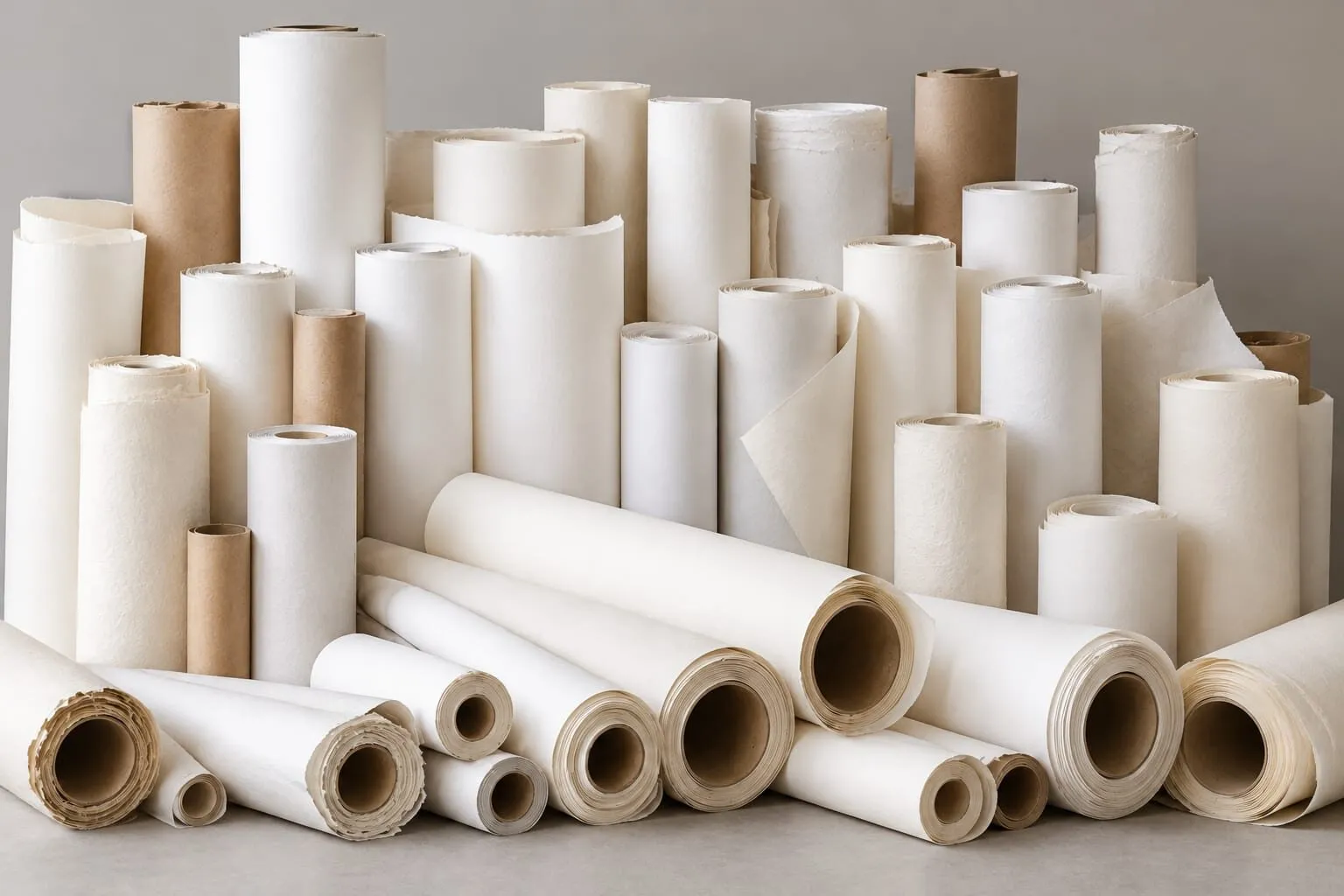
A collection of white and brown paper rolls.
Weight and durability
Cartridge paper usually sits in the 180 to 220 gsm range, softer and more absorbent than the heavier grey papers around 300 gsm that Michael uses for still life. Lighter and mid-weight papers take on pigment quickly, which is why they are great for smooth blending and atmospheric effects.
The trade-off is durability. Softer papers can scuff or dent more easily, and they tolerate heavy erasing less well. Weights vary between products, so check the label. For the numbers behind this, see paper weight in gsm explained, and use the paper size converter if your pad lists sizes in other units.
How to work with its limits
- Get the drawing right in light lines. Build the layout and proportions with a faint line that can be lifted or absorbed.
- Work light to dark. Since dark pigment is hard to remove, add it gradually.
- Use a light hand. Softer paper dents; avoid pressing hard early.
- Protect the whites. Leave paper untouched where you need the brightest lights, because cartridge cannot fake them with white pencil the way grey can.
- Blend deliberately. The absorbency helps; use it for soft edges and atmospheric depth.
Chiaroscuro in practice
Chiaroscuro means strong contrast between light and dark, with forms modelled by shadow. Cartridge paper suits it because dark pigment sinks in and blends softly, so shadow can melt into light without hard edges. A workable approach:
- Decide where the light comes from and keep it consistent across the drawing.
- Block in the largest shadow shapes first with light pressure, treating them as one connected mass.
- Deepen gradually. Add layers until the darkest accents read strongly, keeping edges soft where form turns away from the light.
- Leave the paper for the brightest areas. On white paper, the untouched sheet is your lightest tone, so protect it.
- Check the value range in greyscale before finishing.
The same softness makes cartridge good for blurred effects, such as a figure emerging from a dark background or an animal dissolving into mist. Because you cannot easily correct heavy darks, build them slowly and stop when the contrast is convincing.
Common mistakes on cartridge paper
- Pressing hard too early. Soft paper dents and fills quickly, so early heavy pressure limits later layers.
- Expecting glossy highlights. Cartridge cannot hold white pencil on top the way grey can. If the subject is shiny, pick another paper.
- Heavy erasing. Repeated erasing scuffs the surface. Use a light touch, or plan so you rarely need it. Our guide to lifting and erasing coloured pencil covers gentler approaches.
- Skipping the layout. With little tolerance for correction, a wrong proportion is expensive. Measure first.
- Ignoring the pad’s spec. Cartridge varies. Read the weight and finish on the label, and test a corner.
Cartridge paper for graphite
Cartridge is also a graphite paper. Michael points to Arches Cold Press and Winsor & Newton cartridge paper, because their tooth gives the grip needed for rich shadows and crosshatching. For finely blended graphite work, smoother papers such as Arches and Stonehenge also suit. Our guide to the best paper for graphite drawing compares the options, and the pencil grade chart helps you choose grades.
Cartridge versus grey versus premium white
| Question | White cartridge | Grey (Canson-type) | Premium white (Arches, Stonehenge) |
|---|---|---|---|
| Best for | Animals, figures, soft scenes | Glossy, reflective subjects | Portraits, soft realism |
| Typical weight | 180 to 220 gsm | Around 250 to 300 gsm | Around 250 to 300 gsm |
| Blending | Soft, absorbent | Tooth-driven | Smooth and seamless |
| Erasing | Less forgiving | Robust | Depends on surface |
| Highlights | Leave paper white | White pencil on mid-tone | Plan or lift gently |
Michael also uses Arches Hot Press and Stonehenge White for coloured pencil, which suit seamless blending with an almost oil-paint depth and are heavier, often 250 to 300 gsm, for multiple layers without pilling. See the best paper for coloured pencils for the full set.
Matching cartridge to a subject
Here is how the principles look across the subjects Michael names.
Animals. Warm underlayers of ochre, russet or grey-brown go down first, then darker tones are layered over to describe the direction of the coat. The absorbent surface lets these layers merge into a soft, believable pelt. Leave the brightest whiskers and eye highlights as untouched paper, or lift them very gently.
Figurative work and athletes. Movement is often conveyed through soft edges and a controlled range of value. Cartridge lets you model form with shadow and leave the lit planes clean. Establish the pose and proportions accurately in the layout, because a corrected limb is difficult to hide on softer paper.
Musicians and dramatic portraits. Stage light and deep shadow are chiaroscuro subjects by nature. The paper takes deep tones with fewer layers, which helps you reach a strong contrast without overworking the surface.
Full-frame compositions. When the drawing runs edge to edge like a movie still, there is no paper left showing to help, so the whole surface must be built. That is easier on a white sheet that behaves predictably than on a grey whose tone you would have to cover.
For coloured pencil specifically, it also helps to think about the ground colour of the subject. Warm subjects lose nothing on white, whereas cool, metallic or glassy subjects tend to gain from a grey ground. If you are unsure which category yours falls into, draw a small test of the trickiest area on each paper before committing.
Choosing well
Reach for cartridge when the subject is warm, the light is dramatic and the edges are soft. Reach for grey when the subject is shiny. Reach for a premium white such as Arches Hot Press when you want maximum control and archival quality. If you are torn between them, Canson vs Arches vs Stonehenge vs Clairefontaine sets the main alternatives side by side.
The short version
White cartridge paper is for warmth, softness, chiaroscuro and atmosphere. It absorbs pencil quickly and blends easily, but it scuffs more, forgives erasing less and does not hold crisp, high-gloss highlights. Plan carefully, work light to dark, and choose grey when the subject shines.
Where to buy
Recommended products
Affiliate links. We may earn a small commission if you buy, at no extra cost to you. Why?
Paper · Winsor & Newton
Winsor & Newton Cartridge Paper
Classic white cartridge paper with enough tooth for graphite and cross-hatching.
Quick answers
Frequently asked questions
Is cartridge paper good for coloured pencil?+
Yes, for the right subjects. White cartridge absorbs pencil differently, creating deeper tones and softer blends, which suits animals, figures and atmospheric work. It is softer and less durable than heavy grey paper, so it tolerates heavy erasing less well and needs careful planning.
What weight is cartridge paper?+
Cartridge paper usually sits in the 180 to 220 gsm range, though products vary, so check the label. That makes it softer and more absorbent than the heavier grey papers around 300 gsm used for glossy still life.
Should I use cartridge paper for graphite?+
It works well. Michael recommends Winsor and Newton cartridge paper and Arches Cold Press for graphite because their tooth supports rich shadows and crosshatching. Smoother options such as Arches Hot Press and Stonehenge suit finely blended graphite work.
Why is cartridge paper worse for shiny subjects?+
High-gloss finishes rely on crisp highlights against a mid-tone, and cartridge absorbs pigment into a soft blend rather than holding white on top. Grey paper lets white pencil sit brightly over the mid-tone, so it makes glossy surfaces easier.
Are colored pencils and coloured pencils the same?+
Yes. Coloured pencils is the UK spelling and colored pencils is the US spelling, and they are the same product. Cartridge paper suits either.