Coloured Pencils
Best Drawing Supplies for Beginners
The complete beginner drawing starter kit: graphite grades, erasers, sharpener, paper, blending tools and a coloured (colored) pencil set, by budget tier.
This guide contains affiliate links. If you buy through them we may earn a small commission at no cost to you. How this works.
Jump to recommended products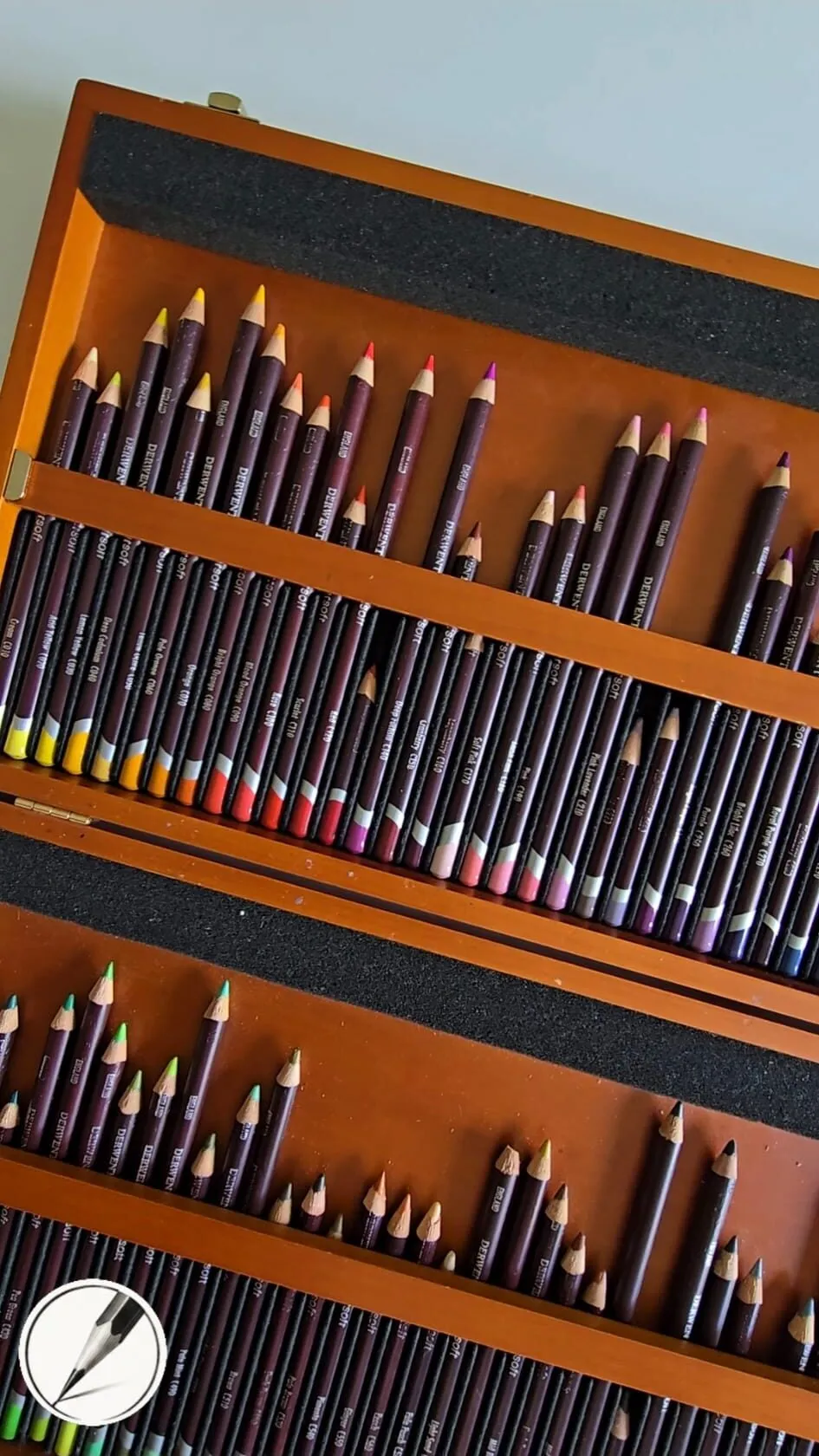
Key takeaways
- ◆A beginner needs surprisingly little: a few graphite grades, a kneaded eraser, a good sharpener, decent paper and one small coloured pencil set.
- ◆Spend more on paper and a sharpener than on the number of pencils, because they affect every mark you make.
- ◆Start with 2H, HB, 2B, 4B and 6B graphite grades and add more only when you find a gap.
- ◆Choose a budget tier - low, medium or high - by how often you draw, and upgrade one item at a time.
- ◆The starter kit table below lists each item, what it is for and what to look for.
The art shop can feel overwhelming when you start: aisles of pencils, dozens of erasers, paper in every weight. The good news is that a beginner needs very little, and buying the wrong things costs more than buying too few. A small, well-chosen kit teaches more than a giant boxed set.
This guide lists the essentials in the order they matter, explains what to look for in each and gives a summary table you can shop from. If you also want the reasoning behind each piece, the drawing for beginners where to start guide is the natural companion, and the best drawing pencils for beginners article goes deep on graphite.
The starter kit at a glance
| Item | What it is for | What to look for |
|---|---|---|
| Graphite pencils | Sketching, shading, line work | A range from light to dark, such as 2H to 6B |
| Kneaded eraser | Lifting graphite and softening tone | Soft and pliable, easy to shape |
| Plastic or pencil eraser | Clean removal, small highlights | Precise, non-smearing |
| Sharpener | Keeping points clean and accurate | A quality sharpener that does not snap cores |
| Paper or sketchbook | Practice and finished work | Mid-weight, some tooth, cartridge or similar |
| Blending tools | Softening graphite | Paper stump or tortillon |
| Coloured pencil set | Adding colour | Small set of 12 to 24, a forgiving line |
| Drawing board | Steady, flat surface | Lightweight board plus clips |
| Ruler | Straight edges, measuring | A simple clear ruler |
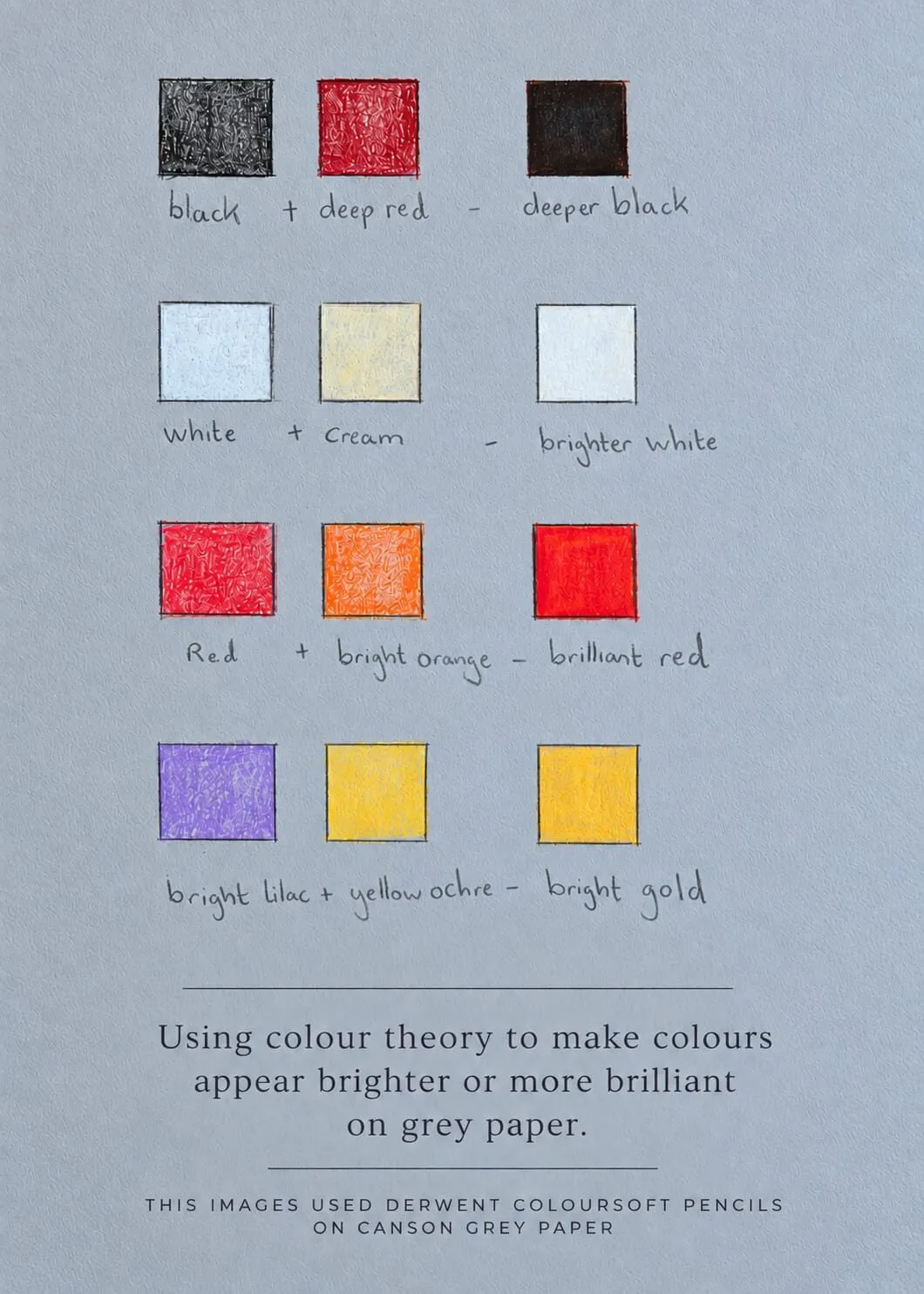
A hand-drawn swatch card on grey paper showing colour pairings: black with deep red, white with cream, red with bright orange, and bright lilac with yellow ochre. Drawing by Michael Brace.
Graphite pencils
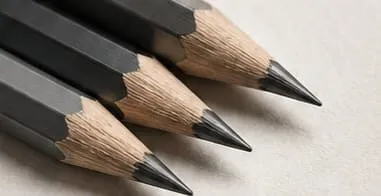
Graphite pencils are graded by hardness. H pencils are hard and make pale, precise lines; B pencils are soft and make darker, smoother marks; HB sits in the middle. A beginner rarely needs the full range. A practical starting kit is:
- 2H for light construction lines
- HB for general sketching
- 2B for soft mid-tones
- 4B for deeper shading
- 6B for the darkest darks
Our pencil grade chart lets you compare grades, and graphite pencil grades explained covers what each letter and number means. Derwent Sketching pencils are a good example of an accessible graphite range for learning how grade changes tone, and our best graphite pencils for drawing compares options.
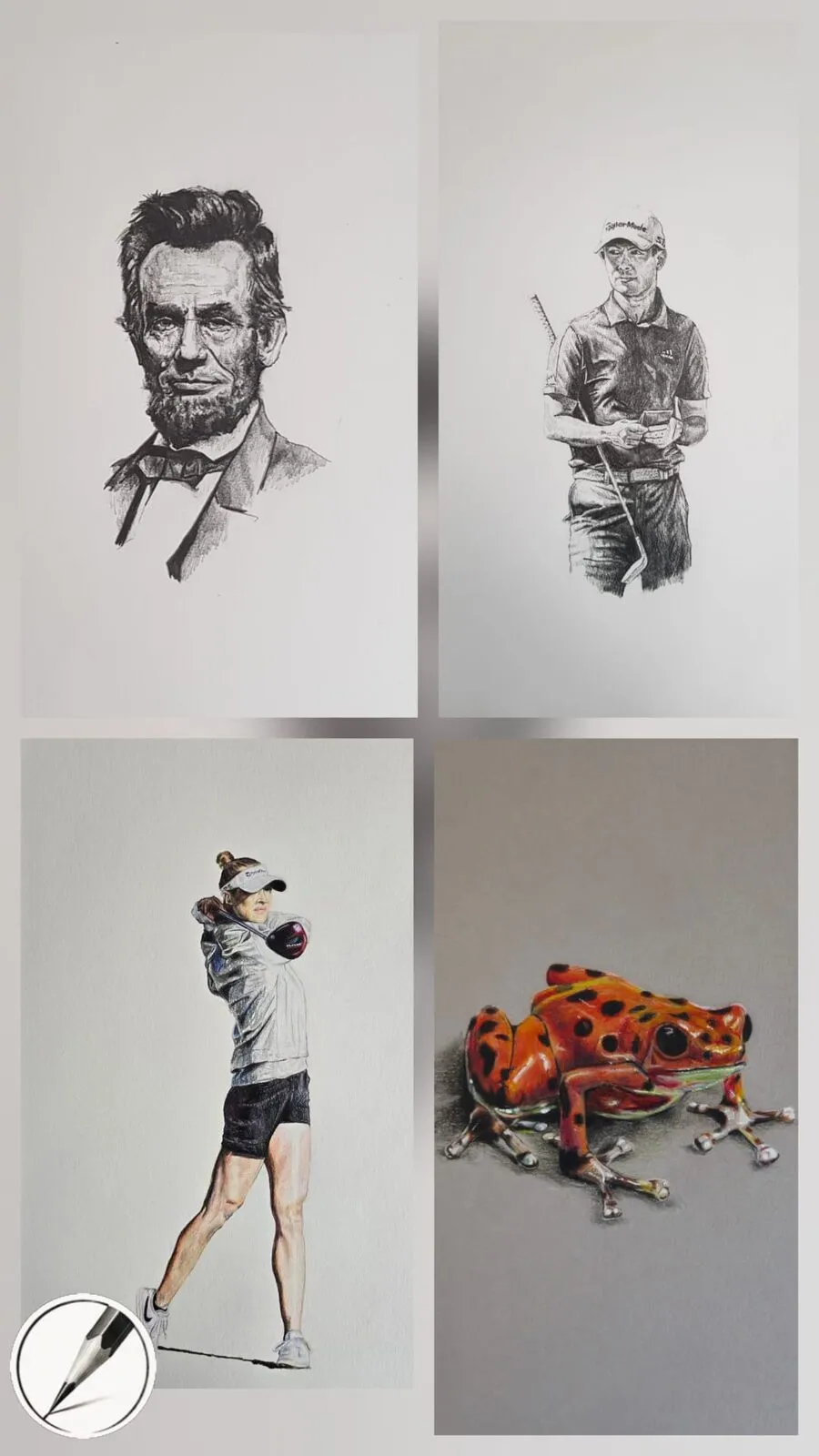
A small range of graphite grades, used with care, is enough for portraits, animals and textured studies.
Mechanical pencils have their place for fine detail, but wooden pencils give you a wider range of marks, particularly when you use the side of the point for shading.
Erasers
Erasers are not only for mistakes; they are also drawing tools.
- Kneaded eraser. Soft and mouldable, it lifts graphite without abrading the paper and can be pinched to a point for highlights. It is the beginner’s best friend.
- Plastic or vinyl eraser. Cleaner and firmer for erasing whole lines and shapes.
- Pencil-style erasers. Precise for small details and tight corners; Pasler eraser pencils are one example.
- Electric erasers. Useful for precision later, but not a first purchase.
For coloured pencil, correction is harder, so see best erasers for coloured pencils. For graphite, best erasers for graphite goes deeper.
Sharpener
A sharp pencil draws better, and a poor sharpener wastes pencils by snapping cores. Buy a decent one rather than the cheapest bin sharpener. A quality manual sharpener, such as the Derwent pencil sharpener, gives clean points and works with most wooden pencils. Long points are useful for shading; short, sturdy points suit bold lines. For more on sharpening coloured pencils, read best pencil sharpeners for coloured pencils.
Keep blades sharp and replace them when they begin to chew the wood.
Paper and sketchbooks
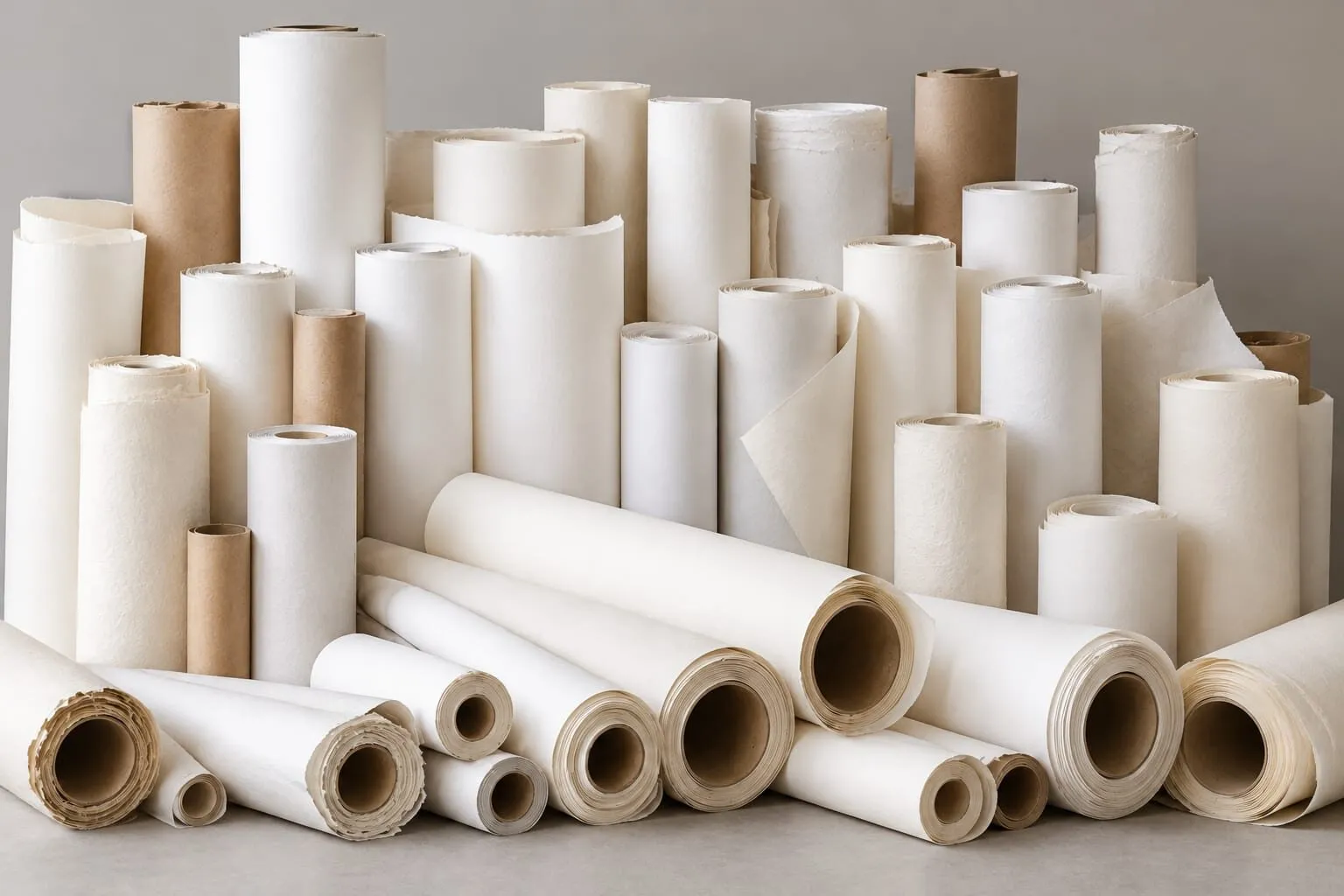
Paper affects every drawing, and thin, slick paper is one of the most common reasons beginners get discouraged. Weight refers to the thickness and sturdiness of the sheet: lighter papers around 120 to 180 gsm are flexible and good for sketching, while heavier ones handle more work.
For practice, a pad of mid-weight cartridge paper is a low-cost, sensible choice. Winsor & Newton cartridge paper is a familiar example that gives graphite enough tooth for rich shadows. Keep the best paper for drawings you want to finish. Our guides on best drawing paper for beginners and when to use cartridge paper help you choose, and paper weight in gsm explained clarifies the numbers.
Size
A4 is a comfortable working size for beginners because it is easy to carry and easy to finish. See our A4 paper size guide for dimensions, and use the paper size converter if you work between metric and US sizes.
Blending tools
Graphite can be smoothed with a paper stump or tortillon, a tightly rolled paper stick, or with a soft tissue or cloth. They are inexpensive and useful. Do not rely on blending to fix uneven shading; layer light strokes first. The how to blend graphite and how to shade with pencil guides cover technique.
A coloured pencil starter set
Add colour when you are ready, and buy small. A set of 12 to 24 good pencils is plenty, because you can mix new colours by layering. Derwent Chromaflow is vibrant, soft and easy to blend, which makes it a friendly first set; alternatives are compared in best coloured pencils for beginners. If you are unsure how many to buy, how many coloured pencils do you need explains the logic, and the which pencil set quiz recommends a set for your subject and budget.
Extras that help
- Drawing board and clips. A lightweight board keeps paper flat and lets you angle your work.
- Ruler. For measuring and straight edges.
- A scrap sheet to rest your hand on. It prevents smudging finished areas.
- Fixative or a sheet of tracing paper. Protects finished drawings; use fixative in a ventilated space and follow the manufacturer’s instructions.
- A simple pencil case. Keeps points from breaking in your bag.
Budget tiers
You do not need to buy everything at once. Think in three tiers.
| Tier | What it means | Typical approach |
|---|---|---|
| Low | Learning and testing whether you enjoy drawing | A small graphite set, kneaded eraser, basic sharpener, cartridge pad |
| Medium | Drawing regularly | Add a better sharpener, a graphite set with more grades, a small coloured pencil set, a drawing board |
| High | Serious, ongoing practice | Premium paper for finished work, artist-grade coloured pencils, specialist erasers and blending tools |
Upgrade one item at a time. A better sharpener and paper often improve drawings more than a larger pencil set. Compare pencil quality in professional versus student coloured pencils when you are ready to spend more.
What to skip
- Enormous boxed sets. They are mostly duplicates and gimmicks.
- Very thin, glossy sketch paper. It buckles and resists layering.
- Children’s coloured pencils. They are often hard and pale, which frustrates beginners.
- Too many blending tools. One paper stump is enough.
- Fancy accessories. Wait until you know what you actually need.
A first-week plan
- Swatch each graphite grade on a page, from 2H to 6B, and label them.
- Draw a value ramp with three grades, from light to dark.
- Draw a simple sphere with a light source, a core shadow and a cast shadow.
- Try the same sphere in two or three coloured pencils.
- Practise a small subject from a reference photo, using the grid drawing tool to check proportions.
For ideas that build the habit, see how to practise drawing daily.
The short version
A beginner’s kit is a handful of graphite grades, two erasers, a proper sharpener, decent cartridge paper, a paper stump, and one small coloured pencil set, with a board, ruler and scrap sheet as extras. Buy paper and a sharpener first, stay in the low tier until you are drawing regularly, and upgrade one item at a time.
Where to buy
Recommended products
Affiliate links. We may earn a small commission if you buy, at no extra cost to you. Why?
Pencils · Derwent
Derwent Sketching Pencils
A graphite sketching range for tonal studies and everyday drawing.
Buy on AmazonAffiliate link · opens Amazon
Pencils · Derwent
Derwent Chromaflow Pencils
Vibrant, smooth and forgiving - a friendly set for learning layering and blending.
Tool · Derwent
Derwent Pencil Sharpener
A dependable sharpener for keeping soft cores intact.
Buy on AmazonAffiliate link · opens Amazon
Tool · Pasler
Pasler Eraser Pencils
Pencil-style erasers for pin-point corrections and crisp highlights.
Buy on AmazonAffiliate link · opens Amazon
Paper · Winsor & Newton
Winsor & Newton Cartridge Paper
Classic white cartridge paper with enough tooth for graphite and cross-hatching.
Quick answers
Frequently asked questions
What drawing supplies do I need as a beginner?+
A small range of graphite pencils (for example 2H, HB, 2B, 4B and 6B), a kneaded eraser and a plastic eraser, a sharpener, a sketchbook or pad of cartridge paper, and a paper stump for blending. Add a coloured pencil set when you want colour.
What is the best pencil for beginner drawing?+
A pencil set covering light to dark grades, such as Derwent Sketching pencils, teaches you how grade changes the mark. HB is the everyday pencil, 2B to 6B give darker tones and 2H gives light, precise lines.
Do I need expensive paper as a beginner?+
No, but do not use the thinnest paper either. A mid-weight cartridge paper is a good, low-cost place to practise. Save premium paper for finished drawings, and buy a larger pad only once you know your preferred surface.
Are colored pencils and coloured pencils the same?+
Yes. Colored is the US spelling and coloured the UK spelling of the same pencils. A small beginner set of good coloured pencils is a sensible extra once you are comfortable with graphite.