Graphite & Charcoal
Best Drawing Pencils for Beginners
The graphite pencils a beginner really needs: 2H, HB, 2B, 4B and 6B, wooden versus mechanical, Derwent Sketching, erasers, sharpeners and what to skip.
This guide contains affiliate links. If you buy through them we may earn a small commission at no cost to you. How this works.
Jump to recommended products
Key takeaways
- ◆Five grades - 2H, HB, 2B, 4B and 6B - cover almost everything a beginner needs, from pale construction lines to deep shadows.
- ◆Wooden pencils give a wider range of marks than mechanical pencils, which are better for consistent fine lines and technical detail.
- ◆A sketching set such as Derwent Sketching pencils is a sensible way to learn how grade changes tone.
- ◆A kneaded eraser and a good sharpener improve your drawings as much as the pencils.
- ◆Skip large boxed sets, very hard pencils you will not use and cheap pencils with gritty, uneven cores.
Graphite pencils look simple, but the range on offer can leave a beginner staring at a shelf of numbers and letters. The reality is reassuring: a handful of grades and two or three accessories will take you a long way. A few well-chosen pencils, kept sharp and used with care, will teach you more than a giant box of grades you never learn to use.
This guide lists the pencils a beginner needs, explains what each grade is for, compares wooden and mechanical pencils, and covers erasers, sharpeners and what to skip. For the science behind the letters and numbers, read graphite pencil grades explained, and compare grades yourself with the pencil grade chart.
The short answer
Buy 2H, HB, 2B, 4B and 6B, plus a kneaded eraser and a good sharpener. That kit handles construction lines, general sketching, soft shading and deep darks.
| Grade | Feel | Use it for |
|---|---|---|
| 2H | Hard, light, precise | Construction lines, faint guidelines, pale detail |
| HB | Middle, balanced | Everyday sketching and outlines |
| 2B | Soft, smooth | Mid-tone shading and soft lines |
| 4B | Softer, darker | Deeper shading and rich tone |
| 6B | Very soft, very dark | Darkest darks and expressive marks |
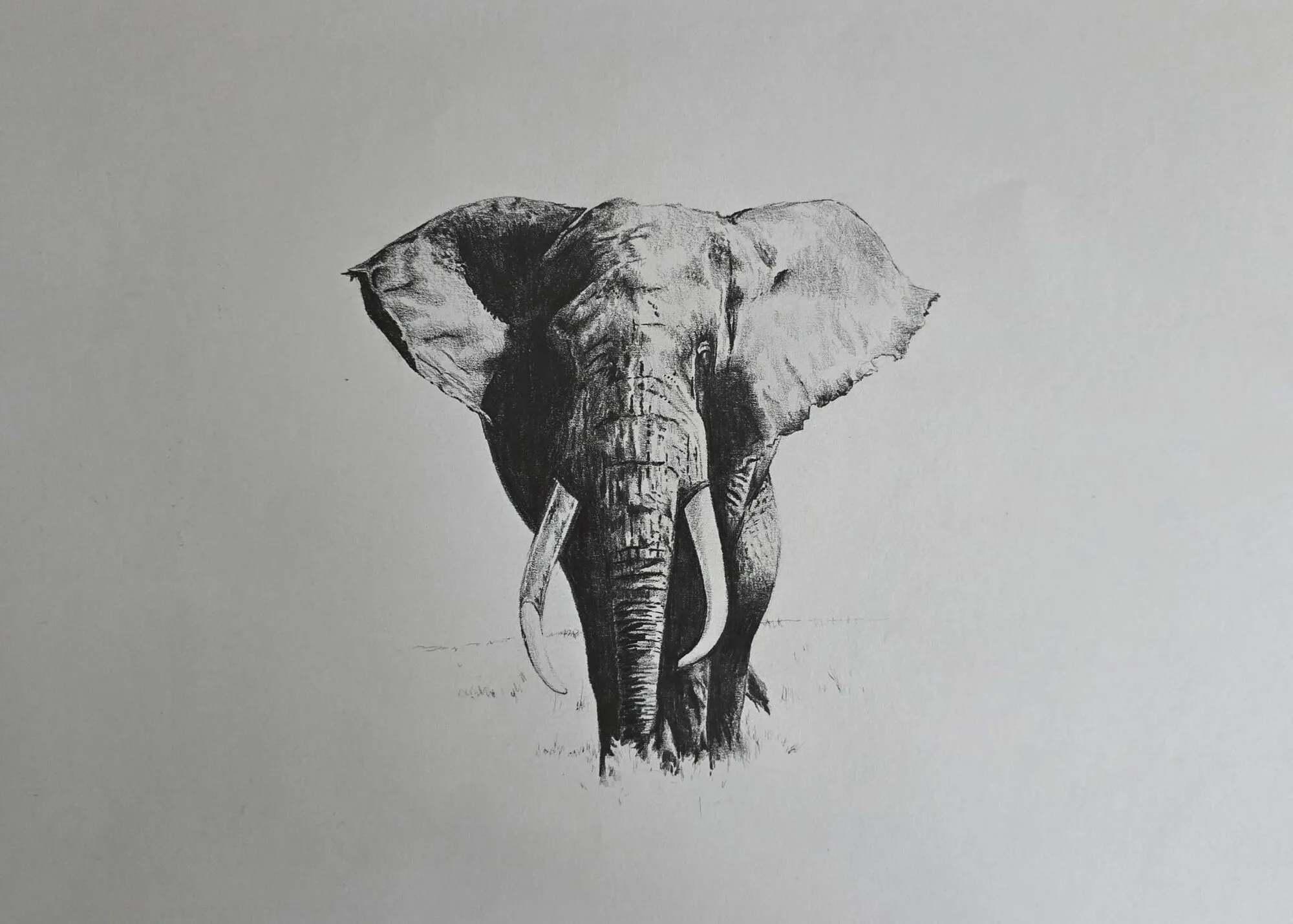
An elephant walking forward drawn in graphite pencil. Drawing by Michael Brace.
What the letters and numbers mean
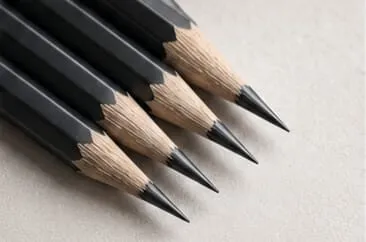
H stands for hard and B for black or soft. H pencils use more clay in the graphite mix, so they make paler, finer marks and hold a point longer. B pencils use less clay, so they are softer and darker, but they smudge more easily and wear down faster. HB is the middle of the scale, and F sits between HB and H.
Precisely how a grade looks varies between manufacturers, so an HB from one maker can be slightly different from another. Treat the grade as a guide and check on your own paper. Our graphite pencil grades guide goes into this.
The five grades explained
2H
A hard pencil for light, precise lines. Use it to plan compositions and construction lines that you will later cover, because it leaves faint marks that are easy to correct. Avoid pressing hard, since hard pencils can dent the paper.
HB
The all-rounder. HB is dark enough to be visible and hard enough to hold a point, so it suits sketching, outlines and gentle shading. If you owned only one pencil, this would be it.
2B
Soft and smooth. It shades easily with light pressure and makes a good first pencil for mid-tones. Many beginners find they reach for 2B more than any other.
4B
Softer and darker again. It lays down rich tone quickly, which suits shadows and bolder areas. It smudges more easily, so keep a scrap sheet under your hand.
6B
Very soft and dark, for the deepest shadows and expressive strokes. Use it sparingly and last, because heavy soft graphite can be difficult to erase and can shine if pressed too hard.
To learn how grades combine, read how to shade with pencil, which shows how to build tone gradually rather than jumping straight to a dark pencil.
Wooden versus mechanical pencils
Wooden pencils are the standard for drawing. You can sharpen them to different points and use the side of the lead for broad shading, giving a wider range of marks. They come in every grade.
Mechanical pencils hold a consistent fine line and never need sharpening. They are good for technical detail, small text and fine hatching. They give less variety of mark, since the lead is thin and usually only comes in a few grades.
For a beginner, a wooden set is the more flexible choice. Add a mechanical pencil later if you want consistent fine lines.
Sketching sets and Derwent Sketching pencils
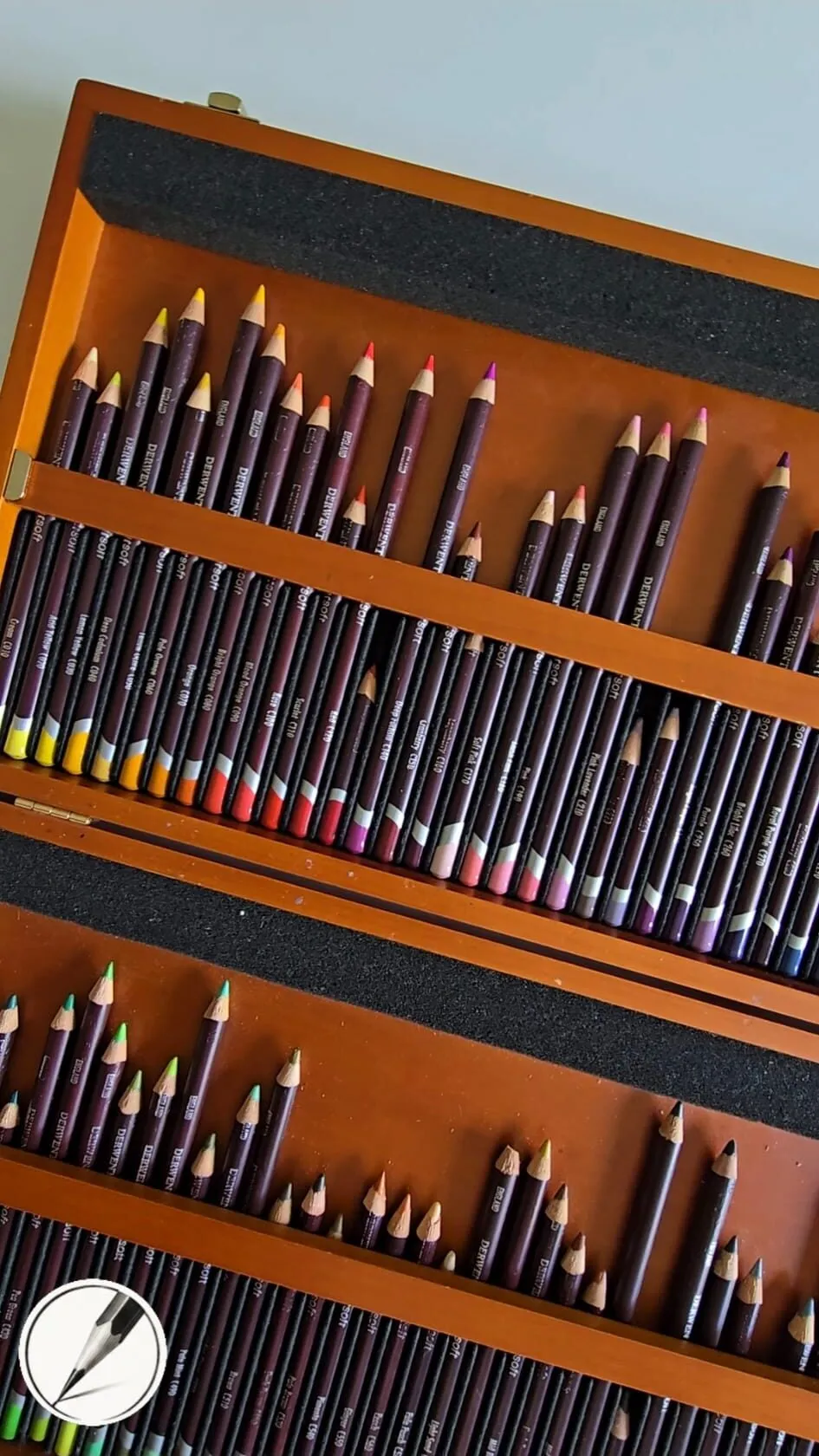
A boxed sketching set is a convenient way to try several grades. Derwent Sketching pencils are an accessible example: a range of grades in one set, which makes it easy to compare how each one behaves. Many beginners prefer a small set to buying individual pencils, since it keeps grades together and often costs less per pencil.
Check the current contents of any set before buying, since ranges and grade selections can change. For a wider comparison, see best graphite pencils for drawing.
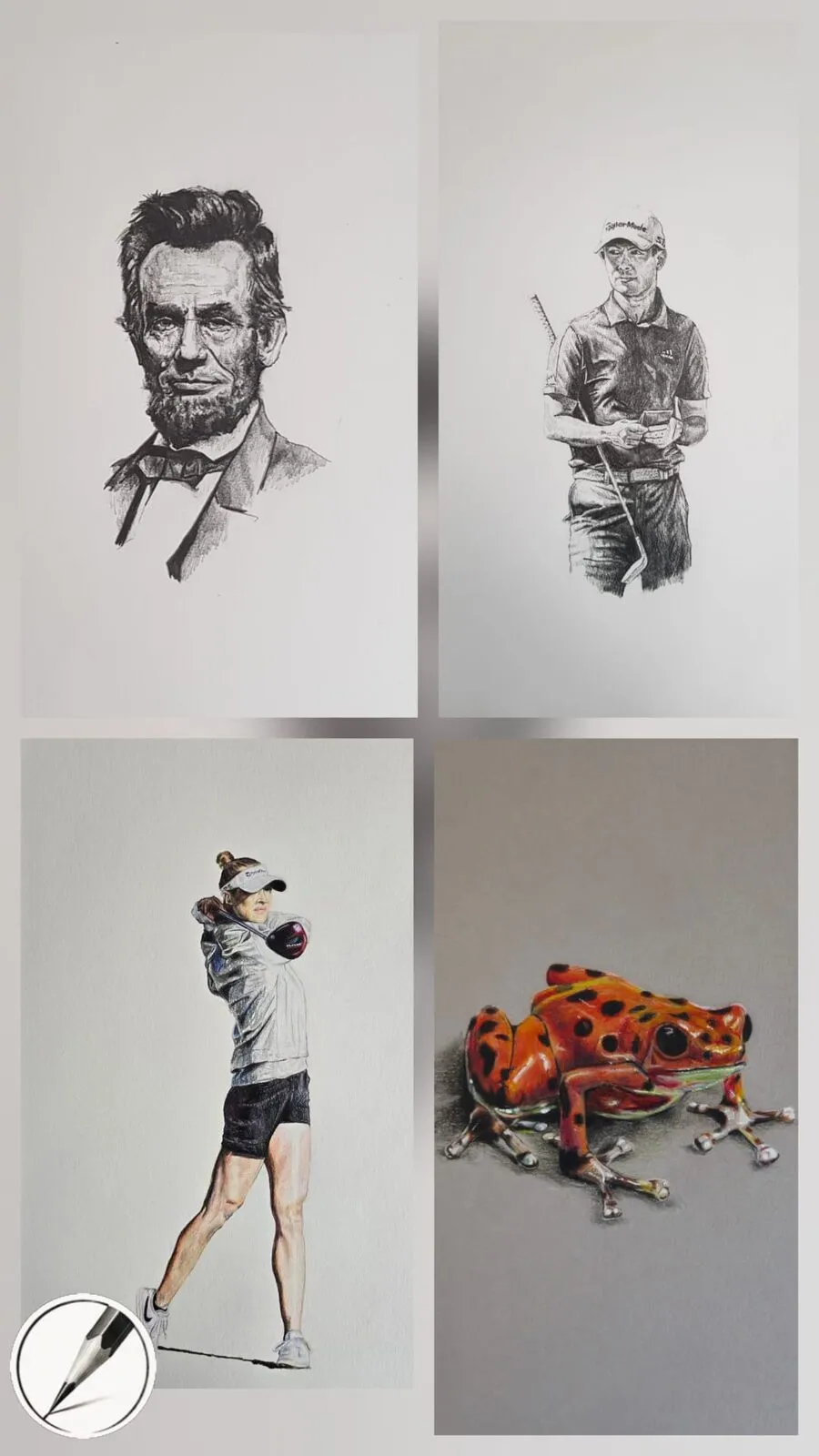
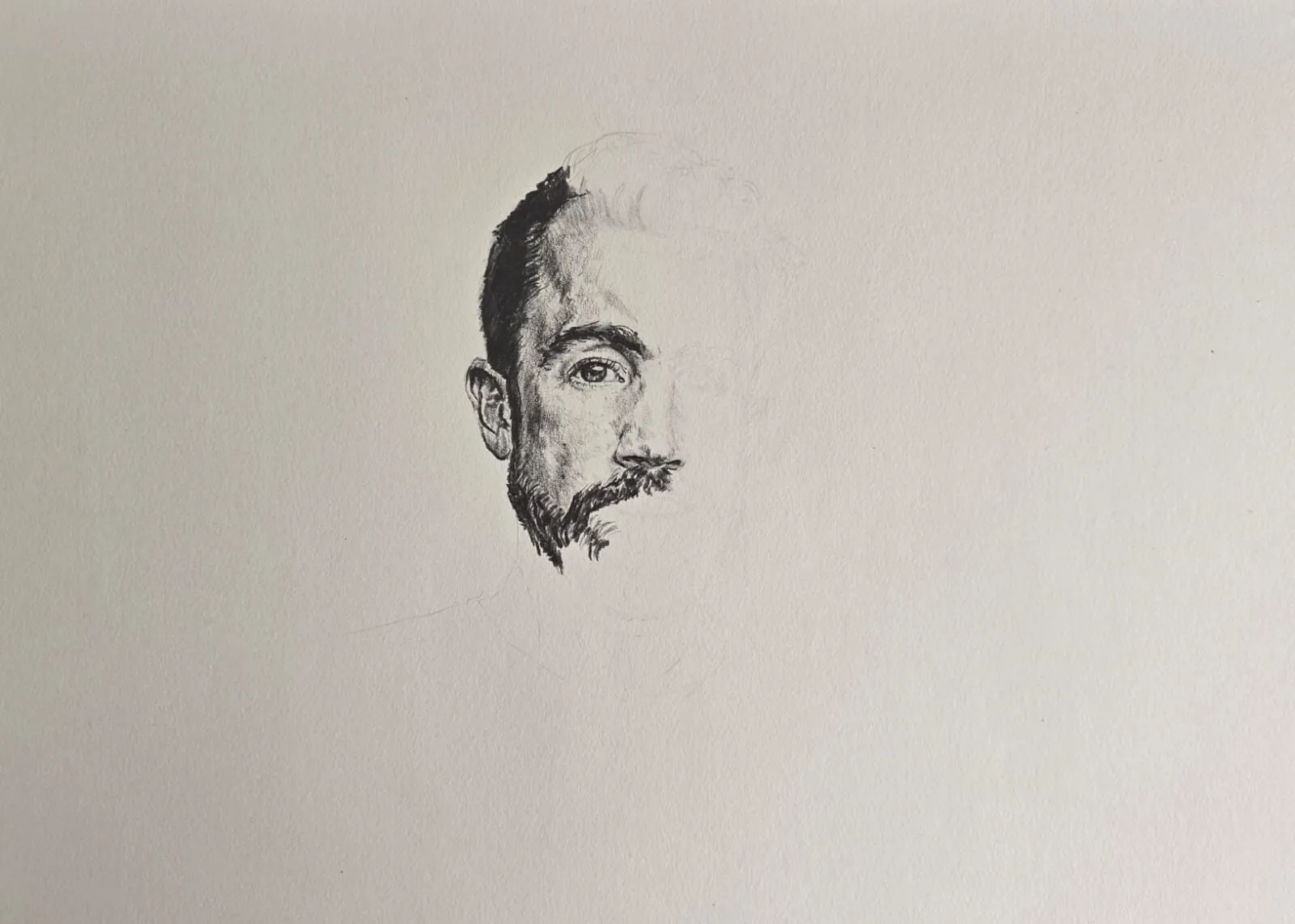
A small range of grades is enough for portraits, animals and head studies. Skill in shading matters more than the number of pencils.
Erasers
Erasers are drawing tools as well as correction tools.
- Kneaded eraser. Soft and mouldable, it lifts graphite gently without damaging the paper, and can be shaped to a point for highlights. It is the essential beginner eraser.
- Plastic eraser. Firmer and cleaner for larger corrections.
- Pencil-style eraser. Good for small details and tight areas.
- Electric eraser. An electric eraser such as the Derwent electric eraser gives precise, fast lifting and is useful for fine highlights and clean edges. It is a useful upgrade rather than a first purchase.
Compare options in best erasers for graphite.
Sharpener
A sharp point matters. A dull pencil gives thick, uneven lines, and a poor sharpener wastes the pencil by snapping the lead. A good manual sharpener gives clean points. Some artists sharpen with a craft knife and sandpaper for a long point, but a quality sharpener is best for beginners. Keep a spare blade and replace it when it starts to chew the wood. For more on choosing, see best pencil sharpeners for coloured pencils, which also applies to wooden graphite pencils.
Paper
Even the best pencils will struggle on the wrong paper. Choose a mid-weight cartridge paper with a little tooth, since it grips graphite and gives rich shadows. Our best paper for graphite drawing and best drawing paper for beginners guides explain the options.
Looking after your pencils
Graphite pencils are hardy, but a few habits keep them working well. Store them in a case or pot, point-up or flat, because dropped pencils can fracture the lead inside the wood without any sign, and the point then breaks every time you sharpen. Do not press the point into the paper to test it; a sharpened pencil tested on scrap is enough. Keep grades in order in your case so you always pick up the one you mean, and label any pencil whose grade stamp has worn away. Finally, sharpen at the start of a session rather than mid-shading, so you are not interrupted while building tone.
What to skip
- Large boxed sets from 9H to 9B. Most of the range is redundant for beginners.
- Very hard pencils. Grades above 2H rarely help a drawing and can dent paper.
- Cheap pencils with gritty cores. Gritty or uneven graphite scratches paper and frustrates practice.
- Too many blending tools. One paper stump or a soft cloth is enough.
- Fancy accessories. Wait until you know what you need.
For the wider beginner kit, including paper, boards and colour, see best drawing supplies for beginners.
Three exercises to learn your pencils
- Grade chart. Draw a row of squares and shade each with a different grade using the same pressure. You will see how much each grade changes tone.
- Value ramp. Using 2H, HB and 4B, shade a smooth gradient from light to dark. Practise gentle pressure, then build.
- A sphere. Shade a ball with a light source, a core shadow and a cast shadow. It teaches form and value. The value study tool helps you check tone.
Common mistakes
- Pressing hard too early. It flattens the tooth and limits later tone. Build slowly.
- Using only one pencil. Different grades give different marks; use them together.
- Skipping the eraser. A kneaded eraser is as important as the pencil.
- Neglecting the point. Sharpen often for clean lines.
- Smudging with your hand. Rest your hand on scrap paper.
Learn more about blending and preventing smudges in how to blend graphite and how to avoid smudging pencil drawings.
The short version
A beginner needs 2H, HB, 2B, 4B and 6B, a kneaded eraser and a good sharpener, plus mid-weight cartridge paper. Choose wooden pencils for range and mechanical pencils for fine, consistent lines. A set such as Derwent Sketching pencils is a convenient way to start, and an electric eraser is a helpful later addition. Skip huge sets and very hard grades, and spend your practice time on shading exercises.
Where to buy
Recommended products
Affiliate links. We may earn a small commission if you buy, at no extra cost to you. Why?
Pencils · Derwent
Derwent Sketching Pencils
A graphite sketching range for tonal studies and everyday drawing.
Buy on AmazonAffiliate link · opens Amazon
Tool · Derwent
Derwent Electric Eraser
A battery eraser for precise highlights and clean lifting of pigment.
Buy on AmazonAffiliate link · opens Amazon
Quick answers
Frequently asked questions
What pencils should a beginner use for drawing?+
Start with 2H, HB, 2B, 4B and 6B. HB is the everyday pencil, 2H gives light, precise lines, and 2B to 6B give progressively darker tones. Add a kneaded eraser and a good sharpener, and you have a complete beginner kit.
What is the difference between HB and 2B pencils?+
HB is the middle of the range, balanced between hard and soft. 2B is softer, so it makes darker, smoother marks with less pressure. A 2B is useful for shading and softer tones, while HB suits general sketching and outlines.
Are mechanical pencils good for drawing?+
They are good for consistent, fine lines and technical detail, and they never need sharpening. But a wooden pencil gives you a wider range of marks because you can use the side of the lead for shading. Many artists use both.
Do I need a full set of pencils from 9H to 9B?+
No. Hard pencils above about 2H are rarely useful for drawing, and very soft ones are only needed for the deepest darks. A handful of grades from 2H to 6B covers most beginner work, and you can add more later.