Graphite & Charcoal
How to Avoid Smudging Pencil Drawings
Why graphite smudges and how to stop it: slip sheets, hand position, working order for left and right-handers, fixative basics, storage and framing.
Key takeaways
- ◆Graphite smudges because it is loose flakes on the paper surface; the drawing hand is the main culprit.
- ◆Rest your hand on a clean slip sheet and never directly on finished tone.
- ◆Work from the side away from your drawing hand, generally top to bottom, so you never drag across finished areas.
- ◆Fixative can reduce smudging but may alter tone, so test first and rely on good habits as well.
- ◆Store drawings flat, interleaved with glassine or clean paper, and frame behind glass with a mount that keeps the glass off the surface.
Nothing is more disheartening than a clean, finished area of shading with a grey smear across it, especially one made by your own hand. Smudging is the most common frustration in graphite and charcoal drawing, and it is almost entirely preventable. The fixes are habits rather than gadgets.
This guide explains why graphite smudges, then covers slip sheets, hand position, working order for right and left-handed artists, the basics of fixative, and how to store and frame a finished drawing so it stays clean. For the bigger picture, see our graphite and charcoal guide.
Why graphite smudges
Graphite marks are made of tiny flakes that break off the pencil and lodge in the texture of the paper. They are held there only by friction and by the paper’s tooth. There is nothing binding them, so anything that rubs the surface, whether a hand, a sleeve, a sheet of paper or another drawing, moves them.
Several things make smudging worse:
- Soft grades. More graphite means more loose flakes. A 6B smudges far more than a 2H.
- Smooth paper. With less tooth to hold onto, flakes move more easily. Toothier paper holds graphite better.
- Heavy layers. A thick layer of graphite has more loose material on top.
- Skin oils. They both attract graphite and leave marks that later become visible.
- Pressure and dragging. Any sliding motion across finished tone lifts and moves it.
Understanding this suggests the solution: keep anything that could rub away from the surface, and keep your drawing hand off finished areas. Our guide to how to shade with pencil also explains why building tone in light layers, rather than pressing hard, reduces both smudging and shine.
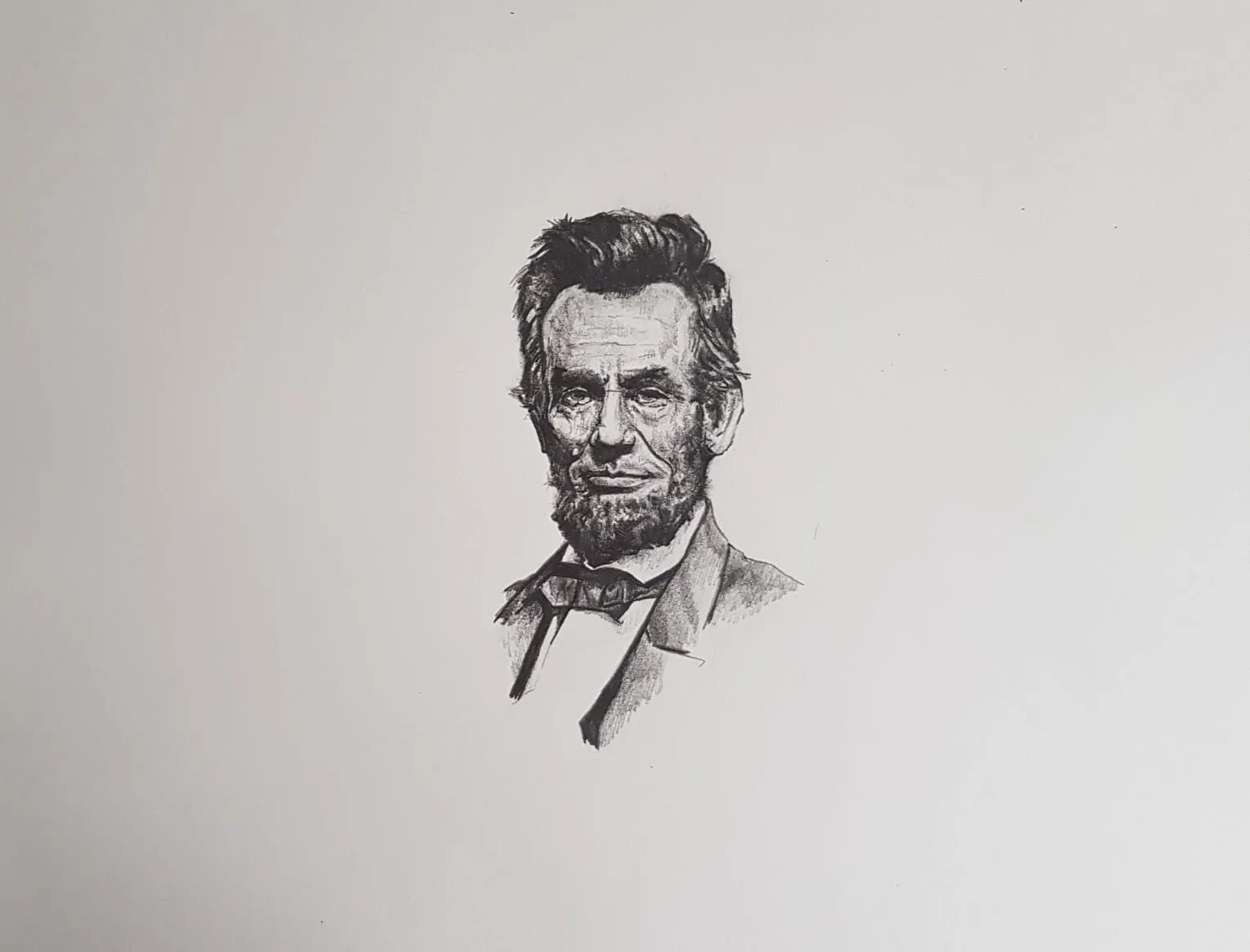
A graphite portrait of Abraham Lincoln. Drawing by Michael Brace.
Use a slip sheet
A slip sheet is a clean piece of scrap paper placed between your drawing hand and the drawing. It takes the friction and the skin oils instead of your artwork.
- Use smooth, clean paper, such as cartridge or plain printer paper. Avoid anything with a rough or embossed surface.
- Cover everything below and beside the area you are working on, leaving only the area you are drawing exposed.
- Move it as you work, and replace it when it becomes grey with graphite, since a dirty slip sheet deposits graphite back onto the drawing.
- Fix it in place with a small piece of low-tack tape if it keeps sliding.
This one habit removes most smudging. A slip sheet with a window cut in it can also act as a mask for tidy edges.
Hand position
How you hold your hand matters as much as the slip sheet.
- Rest the side of your hand lightly on the slip sheet, and avoid pressing down. The more weight, the more friction.
- Draw from the wrist and elbow, not just the fingers, so your hand glides over the sheet rather than dragging.
- Lift your hand when moving to a new area, instead of sliding it.
- Try a drawing bridge, a flat board or rigid strip that spans the drawing and lets your hand rest above the paper without touching it. It is inexpensive and can be made from a piece of card or a ruler, and it is especially useful for large drawings.
- Keep your sleeve out of the way, since cuffs drag across surfaces. Roll it up.
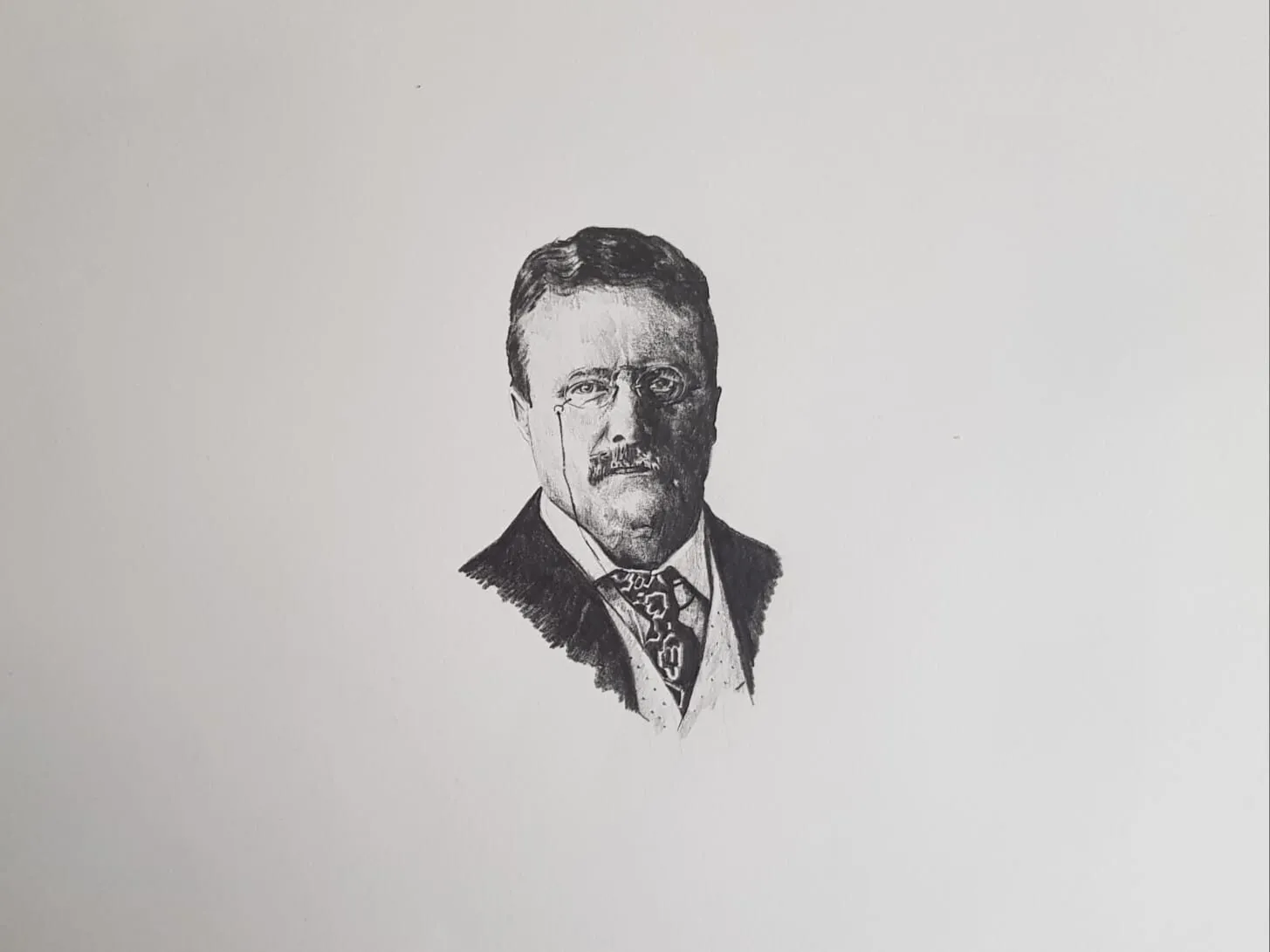
A graphite portrait of Theodore Roosevelt. Drawing by Michael Brace.
Working order
The order you work in decides whether your hand ever passes over finished tone.
Right-handed artists
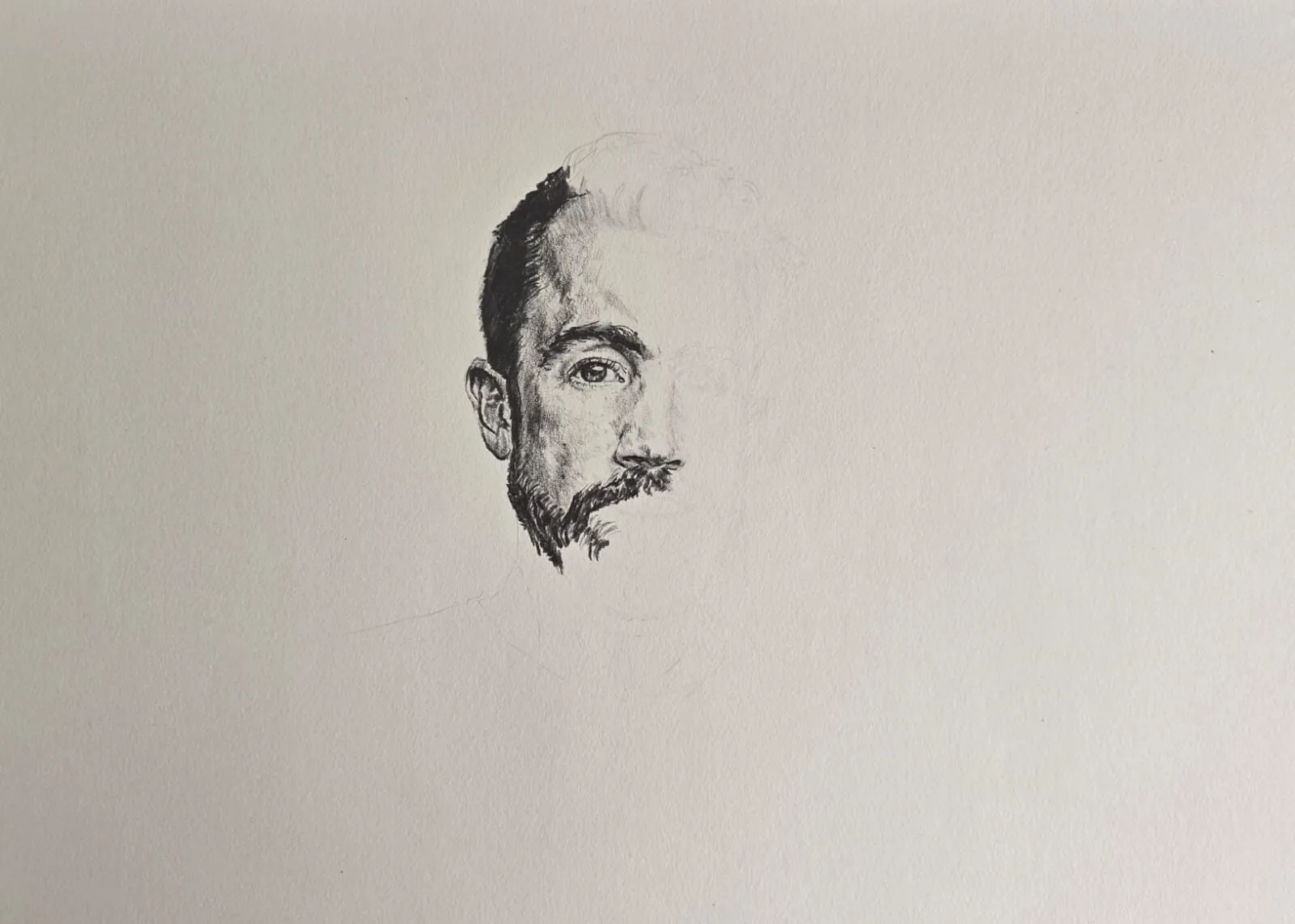
Start at the top left and work down and to the right, so your hand moves over areas that are still blank. When you finish a section, you never rest on it as you move away. In practice, many right-handers begin at the top and work down, moving from left to right within each section.
Left-handed artists
Reverse the order. Start at the top right and work down and to the left, so your hand always moves over the unfinished side. Left-handers are more prone to smudging because the hand naturally trails over finished areas when drawing left to right, so a slip sheet and a good working order are especially useful.
General principles
- Work top to bottom where you can, so the hand rests on the area below, which is still blank.
- Finish an area, then move away, rather than returning to it repeatedly.
- Turn the paper if you need to reach an area in a comfortable position without leaning on finished work.
- Keep dark, soft passages until last where possible, since they are the most likely to smudge.
Keep the working area clean
- Wash and dry your hands before starting, and again if they become greasy. Skin oils leave marks.
- Sweep away eraser crumbs and graphite dust with a soft brush, not your hand. Our guide to the best erasers for graphite covers eraser choices that leave fewer crumbs.
- Do not blow dust onto the drawing; tap the paper gently or brush it away.
- Tidy your desk. Loose pencils, cloths and tools can scrape across the drawing when you reach.
- Keep loaded blending tools away from finished areas. See how to blend graphite.
Fixative in general terms
Fixative is a light spray that forms a thin protective film over the drawing, holding loose particles in place. It is widely used with charcoal and pastel and is sometimes used with soft graphite.
Some general points about types and use:
- Workable fixative allows you to draw over the top afterwards, so you can use it in the middle of a drawing to lock in tone.
- Final fixative is meant for the finished drawing and may not accept more graphite.
- Spray or aerosol formats give an even mist; pump versions are also available. Follow the manufacturer’s directions.
- Ventilation matters. Use fixative outdoors or in a well-ventilated space, away from flames, and avoid breathing the spray.
- Test first. Fixative can darken or slightly change the tone and sheen, and can leave a slight film. Test on a scrap of the same paper with the same pencil.
- Apply light coats from the distance stated by the maker, letting each dry before the next.
Some graphite artists avoid fixative on fine drawings, because it can change the subtle qualities of the tone. If you use it, treat it as a supplement to careful handling rather than a substitute. Check the maker’s safety information for the product you choose.
Storage
A finished drawing is at its most vulnerable when it is put away.
- Store flat in a folder, portfolio or a drawer, not rolled. Rolling causes the surface to rub against itself.
- Interleave with glassine. A sheet of glassine or clean, smooth, acid-free paper laid over the drawing prevents contact and rubbing. Do not use tissue with a rough texture, which can pull graphite.
- Avoid stacking drawings directly on top of each other, especially soft-graphite work.
- Keep dry and cool, away from damp, direct sunlight and heat.
- Handle by the edges, and avoid touching the drawing surface.
- Transport carefully in a rigid folder, and do not slide sheets against each other.
Framing
Framing is the best long-term protection.
- Use a mount so that the glazing does not touch the drawing. Graphite can transfer onto glass that is in contact, and condensation can cause damage.
- Choose glazing appropriate to the setting, and keep the drawing away from direct sunlight.
- Use acid-free materials to avoid staining and discolouration over time.
- Seal the back of the frame against dust and moisture.
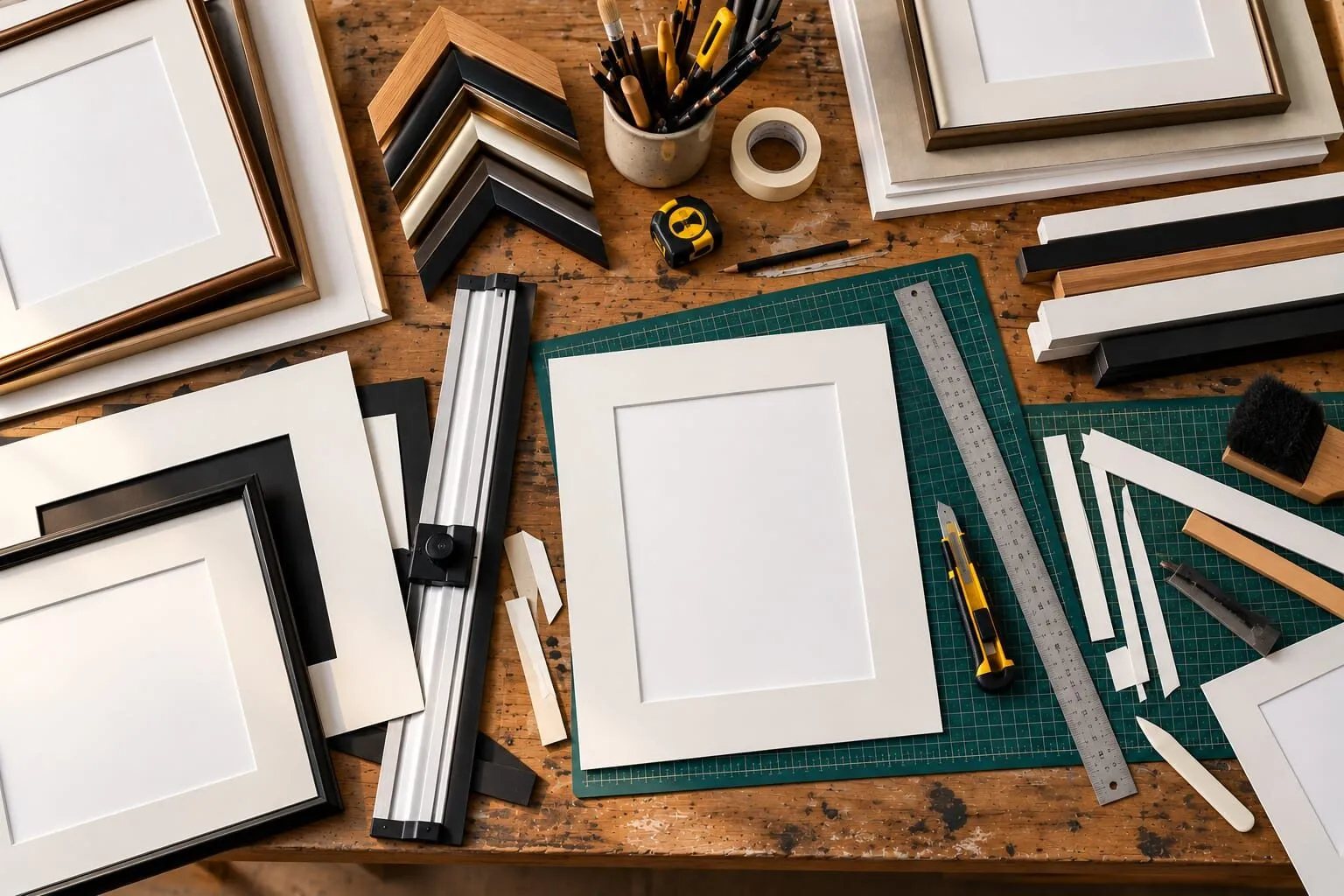
For detailed guidance on mounts and glazing, read how to frame and mount a drawing, and use the frame and mount calculator to work out sizes.
Fixing a smudge
If a smudge happens, act gently:
- Stop and do not rub. Rubbing spreads it and burnishes the paper.
- Lift with a kneaded eraser. Press and lift, repeating until the smudge fades.
- Rebuild the tone with a light layer of pencil to match the surrounding area.
- Use a precise eraser for stubborn edges if needed.
Prevention is better than repair, but a kneaded eraser can rescue most small accidents. Consider paper choice too: sturdier, toothier paper such as cold press holds graphite better and tolerates lifting. See the best paper for graphite drawing.
Common mistakes
- Resting a bare hand on the drawing. Always use a slip sheet.
- Working in the wrong order. Start away from your drawing hand and finish areas as you go.
- Blowing on the drawing. It moves dust onto clean areas and deposits moisture.
- Skipping fixative tests. A ruined drawing is a costly experiment.
- Stacking drawings unprotected. Interleave with glassine.
- Touching with greasy hands. Wash before you start.
Keep your workspace tidy while you practise the basic forms and shading lesson, and see the best drawing pencils for beginners for pencils that suit careful tone building.
The short version
Graphite smudges because its flakes only sit on the paper, so keep anything from rubbing them. Rest your hand on a slip sheet, work away from your drawing hand, keep your workspace clean, and test any fixative first. Store drawings flat with glassine between them, and frame with a mount so glass never touches the surface. For the full context, see the graphite and charcoal guide.
Quick answers
Frequently asked questions
Why does graphite smudge so easily?+
Graphite works by shedding thin flakes that sit on the paper's surface texture. Nothing binds them there, so friction moves them. Softer grades shed more and smudge more, and smooth surfaces hold less. Skin oils, pressure and any rubbing in later steps move flakes into areas you wanted clean.
Should I use fixative on a graphite drawing?+
It is optional. Fixative reduces smudging, and it is useful for soft-grade drawings that will be handled. However, it can slightly change the tone or sheen and may stop you from adding further graphite. Test it on a scrap of the same paper, use light coats in a ventilated space, and apply only when the drawing is finished.
How do I stop my hand smudging my drawing?+
Place a clean sheet of paper under your drawing hand as a slip sheet, moving it as you go. Work from the top down, or from the side away from your drawing hand, so you never rest on finished areas. Some artists also use a drawing bridge to lift the hand clear of the paper.
How do I store a graphite drawing without smudging it?+
Store it flat in a folder or portfolio, with a sheet of glassine or clean smooth paper laid over the drawing. Avoid stacking drawings directly, rolling them or leaving them where they can rub. Keep them away from damp, heat and direct sunlight, and handle them by the edges.