Coloured Pencils
Professional vs Student Coloured Pencils
What separates professional from student coloured pencils (colored pencils in the US), when student grade is enough, and how to upgrade without wasting money.
Key takeaways
- ◆Professional pencils differ in pigment concentration, lightfastness, layering behaviour, core strength, colour range and price.
- ◆Student pencils are perfectly good for learning, sketching and practice, and better technique matters more than a better pencil at the start.
- ◆Upgrading becomes worthwhile when you want cleaner layering, more accurate colour, or you plan to sell or exhibit work.
- ◆You do not need to replace everything at once: build a small core palette of professional pencils and keep student ones for the rest.
- ◆Always check a manufacturer's own lightfastness information rather than assuming a price tier guarantees permanence.
Walk into any art shop and you will see two shelves: student pencils at friendly prices, and professional pencils at prices that make you hesitate. The obvious question is whether the extra money buys anything real, or whether it is just branding.
It buys something real, but not always what you need first. This guide explains exactly what differs between student and professional coloured pencils (colored pencils to US readers), when student pencils are the smart choice, when upgrading is worth it, and how to move up without spending a fortune. The pencil set quiz and best coloured pencil sets help you pick a sensible first step, and Prismacolor vs Polychromos shows one common upgrade decision.
What actually differs
The label “professional” is not regulated, so brands use it differently. But the traits that define professional-grade pencils are consistent. Michael lists them as high pigment concentration, excellent lightfastness, smooth layering, predictable behaviour and strong cores that resist breakage.
Pigment concentration
Professional pencils pack more pigment into the core relative to filler and binder. In practice that means richer, more saturated colour from fewer layers, and better coverage over dark or toned paper. Student pencils may need more layers to reach the same depth, and can look weaker or chalky.
Lightfastness
Lightfastness is how well a colour resists fading under light. Professional lines are designed for artists who sell or exhibit work, and publish lightfastness information for their colours. Student lines may use less permanent pigments or not publish ratings for every colour. Our guide to coloured pencil lightfastness explains how to read those ratings.
Binder and layering
Binder is what holds the pigment together and determines whether a pencil is soft wax or firm oil-based. Professional pencils tend to layer more predictably, allowing cleaner, more subtle blending and more layers before the paper fills. Michael’s list of what professional pencils allow includes cleaner layering, more subtle blending, better colour accuracy, greater control over pressure and more predictable results across the whole range. See wax versus oil-based coloured pencils for the binder difference.
Core strength
A strong, well-bonded core resists breaking during sharpening and use. Cheaper pencils can have cores that are off-centre or brittle, which snaps points and wastes pencil. That said, sharpener quality matters as much as core quality; read the best pencil sharpeners for coloured pencils before you blame the pencil.
Colour range and accuracy
Professional lines usually offer a wider or more carefully chosen range, and their colours are more consistent from pencil to pencil. That saves mixing and helps with accurate colour matching. For instance, Polychromos offer a very wide range, while Luminance offer a smaller, curated one with exceptional skin tones.
Price
The price gap is real. Professional pencils cost significantly more per pencil, and sets add up quickly. That is the main reason not to upgrade everything at once.
| Trait | Student grade | Professional grade |
|---|---|---|
| Pigment | Lower concentration | High concentration |
| Lightfastness | Varies, may be limited | Designed for lasting work; check charts |
| Layering | Adequate, can clog sooner | Cleaner, more predictable |
| Core | Can be more brittle | Strong, resists breakage |
| Range | Often smaller | Wider or carefully curated |
| Price | Affordable | Premium |
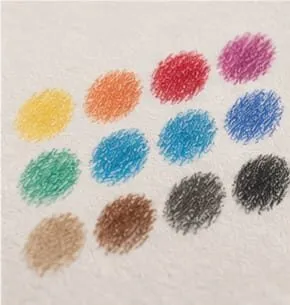
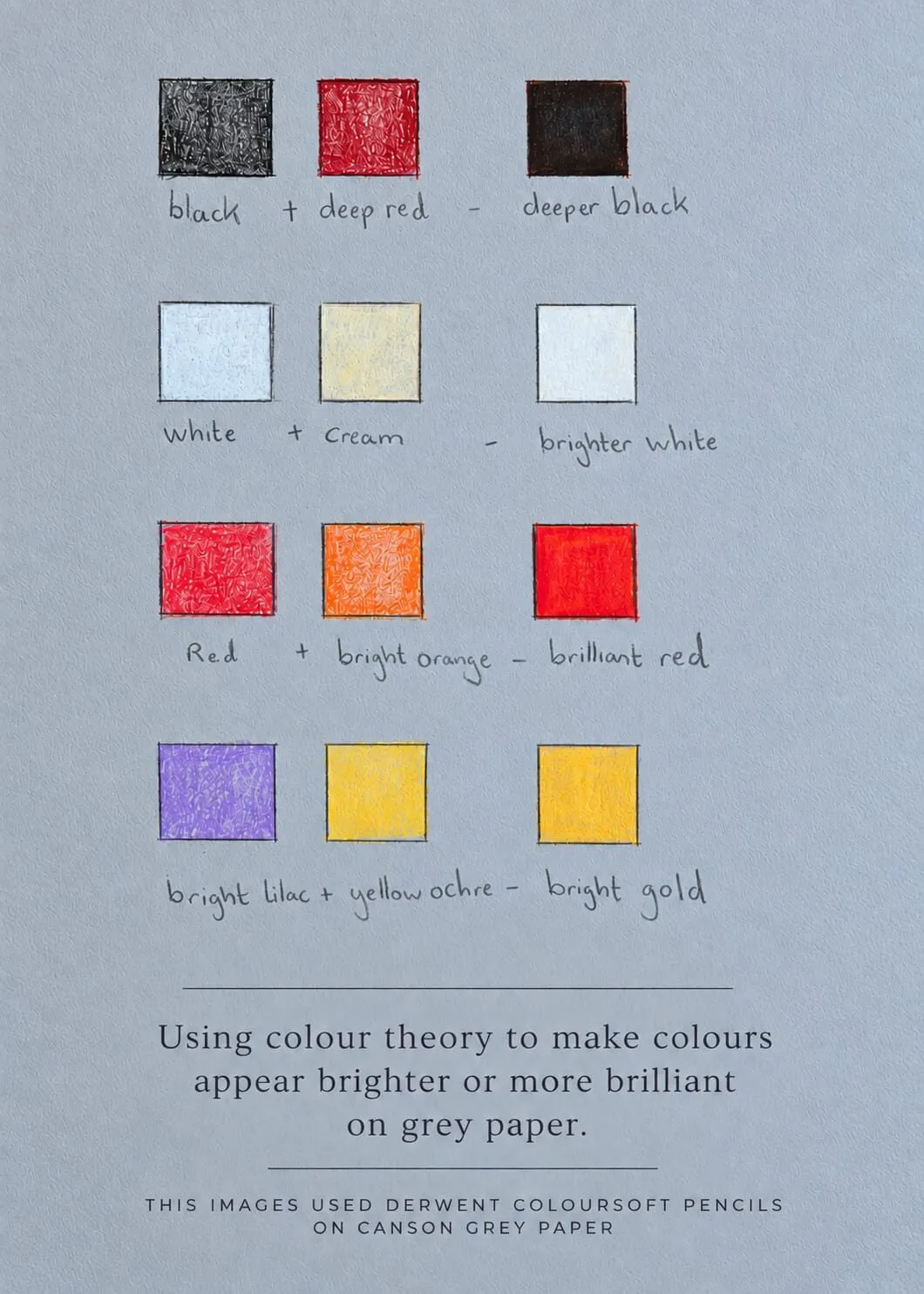
Round swatches of coloured pencil in yellow, orange, red, pink, green, blue, brown and black on cream paper.
When student pencils are fine
Student grade pencils are the right choice more often than the industry admits.
- You are learning. Pressure control, layering, edges and colour mixing are all learnable on any decent set. See best coloured pencils for beginners.
- You are sketching or studying. Colour notes, value studies and practice drawings do not need archival pigment.
- The work will not be sold or displayed for long. If permanence is irrelevant, so is the lightfastness premium.
- You are testing a subject and do not want to waste expensive pencils on a study.
Improving your drawing skills nearly always beats improving your kit. A stronger grasp of value, colour and layering will transform your work more than a new set will.
When upgrading is worth it
You should consider professional pencils when:
- You want to sell or exhibit. Buyers expect work that lasts, and framing a drawing in fading colours is a risk. Our archival paper guide covers the surface side of the same concern.
- Your colours look muddy or waxy. Michael notes that professional pencils solve most problems with muddy colours and waxy buildup.
- You need accurate colour, for realism, portraits or botanical work.
- You are moving into midcareer practice and want more nuance, subtle shifts in pressure and dozens of layers without breakdown.
If you are at that stage, our guide to the best coloured pencils compares the main professional choices, and Polychromos vs Luminance vs Lightfast helps you pick between them.
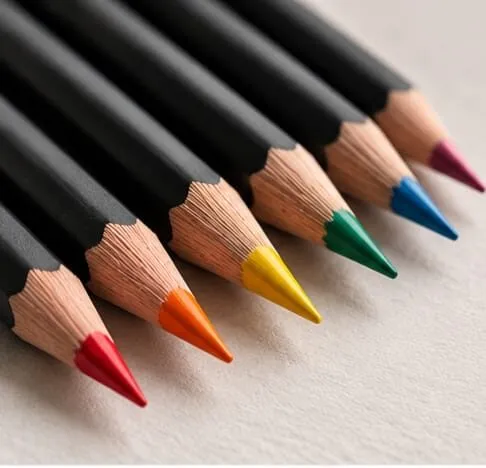
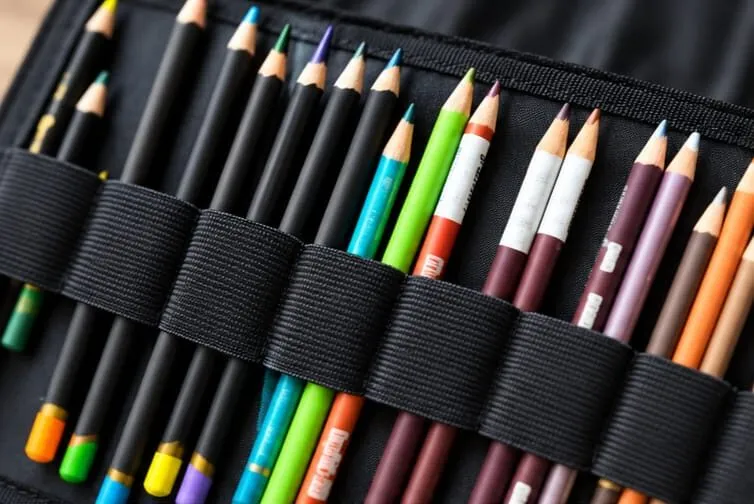
Close-up of a row of sharpened coloured pencils with red, orange, yellow, green, blue and magenta leads.
How to upgrade gradually
You do not need to replace every pencil. A phased approach keeps costs sensible and lets you learn each pencil properly.
- Buy a core palette. Choose around a dozen professional pencils in the colours you use most, including a strong white, some darks and the neutrals that appear in every drawing.
- Keep your student set for everything else. Use it for supporting colours and rarely used hues.
- Fill gaps as they appear. When you keep reaching for a colour that does not exist in your palette, buy it.
- Choose by subject. Portrait artists may start with skin tones from a creamy range; wildlife and still life artists may start with firm oil-based greens, browns and neutrals. See best coloured pencils for portraits.
- Test before committing. Swatch new pencils against your existing ones to see how they layer together.
Reviews of individual lines can help you decide where to start: Faber-Castell Polychromos, Caran d’Ache Luminance and Derwent.
What professional pencils will not fix
It is worth being clear about the limits. Professional pencils will not fix weak value structure, poor drawing or careless colour choices. They will not remove the need for good paper, either: the best pencil on thin, poor paper still disappoints. If you are unsure where your time and money should go first, this is a sensible order:
- Paper that can take layers, see the best paper for coloured pencils.
- A reliable sharpener, see the best pencil sharpeners for coloured pencils.
- Pencils in a core palette of professional-grade colours.
- Extras such as erasers and blending tools.
Skill also improves faster with deliberate practice than with equipment, so a routine like the one in how to layer coloured pencils is worth more than a new set.
A sample upgrade path
Here is one way a hobbyist might move up over time, without spending heavily in one go.
- Stage one: a decent student set, used to learn pressure, layering and colour mixing.
- Stage two: a handful of professional pencils for the colours that matter most: a white, a couple of darks, and the tones central to the subjects you draw.
- Stage three: extend the professional palette by subject, filling in the hues you keep needing.
- Stage four: for work you sell or exhibit, use professional pencils throughout and check lightfastness for every colour.
At each stage, the question to ask is not whether a pencil is professional, but whether it solves a problem you actually have.
Common questions people ask before buying
Is the most expensive set the best? Not automatically. The best pencil is the one that suits your subject, your paper and your working style. A firm oil-based pencil is a better fit for fur and glass than a creamy portrait pencil, and vice versa.
Should I buy a big set or a small one? A small set of well-chosen colours teaches more and costs less, provided you can buy open stock later.
Do professional pencils last longer in the tin? They tend to be used up more slowly per drawing because the pigment is stronger, but the real saving is fewer wasted layers and less rework.
Are the brands interchangeable? No. Each has its own feel, and a mixed set is fine so long as you test how they layer together.
The short version
Professional pencils have more pigment, better lightfastness, cleaner layering, stronger cores, better range accuracy and a higher price. Student pencils are the right choice for learning and practice. Upgrade when you want more control, cleaner colour or to sell and exhibit, and do it gradually with a core palette rather than a full set. Start with your technique, then let the pencils catch up.
Quick answers
Frequently asked questions
What is the difference between artist and student grade coloured pencils?+
Artist or professional grade pencils typically use more pigment, have better lightfastness, stronger cores and a wider, more accurate colour range, and they layer more predictably. Student grade pencils use less pigment and cost less. The exact differences vary by brand, so check the maker's own information.
Are student coloured pencils good enough for beginners?+
Yes. Beginners learn pressure, layering and colour mixing on any decent pencil, and technique improves results more than kit does. Student grade sets are affordable, forgiving and ideal for practice. Upgrade once you notice the pencils, not your technique, holding you back.
When should I upgrade to professional coloured pencils?+
Upgrade when you want cleaner layering, deeper colour, more predictable results, or when you plan to sell or exhibit and need reliable lightfastness. Signs include muddy colours, waxy buildup, cores that break, or colours that do not match what you intend to draw.
Can I mix student and professional pencils?+
Yes, and it is a sensible way to spread the cost. Use professional pencils for the colours you use most and for key passages, and student pencils for supporting or rarely used colours. Test on scrap paper first, because different pencils may layer differently.
Are colored pencils and coloured pencils the same?+
Yes. Coloured pencils is the British spelling and colored pencils is the American one, and both describe the same drawing medium: pigment in a wax or oil binder, set in a wooden barrel. Brands, sets and techniques do not change with the spelling, so advice about one applies equally to the other. Only shop listings and product names follow one spelling or the other.