Coloured Pencils
Derwent Coloured Pencils Reviewed
Derwent coloured pencils (colored pencils in the US) reviewed: Coloursoft, Chromaflow, Drawing, Lightfast, Inktense and Sketching, and which to buy first.
This guide contains affiliate links. If you buy through them we may earn a small commission at no cost to you. How this works.
Jump to recommended products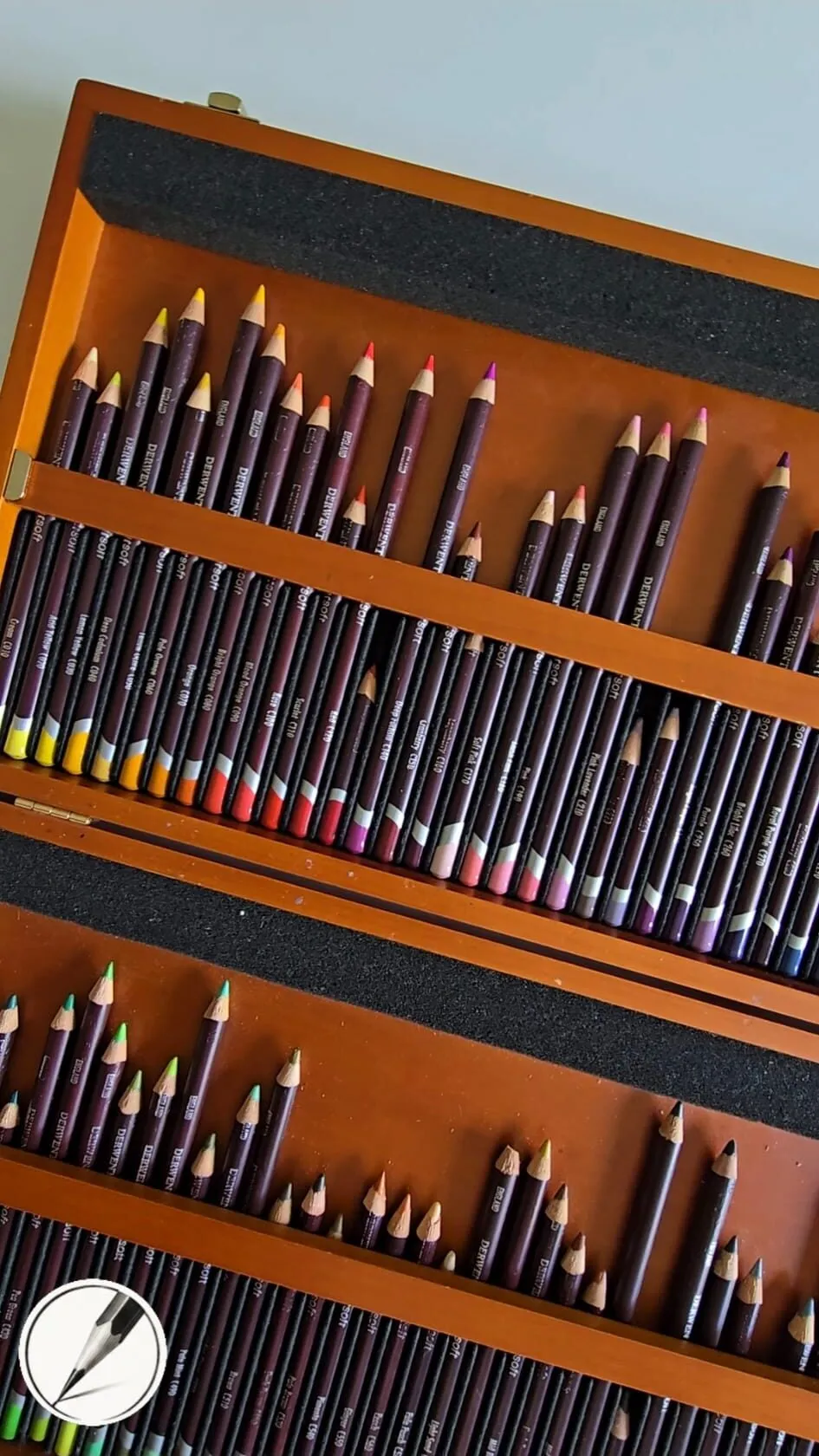
Key takeaways
- ◆Coloursoft is velvety and rich for soft blending; Chromaflow is vibrant and beginner-friendly; Drawing pencils are muted and earthy; Lightfast is premium, creamy and highly lightfast.
- ◆Inktense is a water-soluble ink pencil that becomes permanent when dry, so it is a different tool from dry coloured pencils.
- ◆Derwent Sketching is a graphite range, not a coloured one, so it belongs in a graphite kit.
- ◆Derwent covers artists at all stages, from first set to professional realism.
- ◆Choose the range by the job: learning, soft painterly work, wildlife and atmosphere, or exhibition-grade realism.
Derwent makes a wide family of pencils, and the names are easy to confuse. Coloursoft, Chromaflow, Drawing, Lightfast, Inktense and Sketching sit side by side on shelves but do very different jobs, and one of them is not a coloured pencil at all.
This review of Derwent’s coloured pencils (colored pencils in the US) explains what each range is for, who it suits and where it fits in a kit. Derwent pencils have a warm, expressive feel and are versatile and accessible enough for artists at every stage. For the wider picture, see our complete coloured pencil guide. Head to head, see Coloursoft vs Prismacolor Premier and Coloursoft vs Chromaflow, and for wet work the best watercolour pencils.
Derwent at a glance
| Range | Type | Character | Best for |
|---|---|---|---|
| Coloursoft | Soft wax-based coloured | Velvety, rich | Soft blending, painterly effects |
| Chromaflow | Soft coloured | Vibrant, easy to blend | Beginners learning technique |
| Drawing | Coloured, muted tones | Earthy, atmospheric | Wildlife, nature, mood |
| Lightfast | Premium coloured | Creamy, highly lightfast | Professional realism |
| Inktense | Water-soluble ink | Vivid, permanent when dry | Washes, mixed media |
| Sketching | Graphite | Tonal, monochrome | Studies and shading |
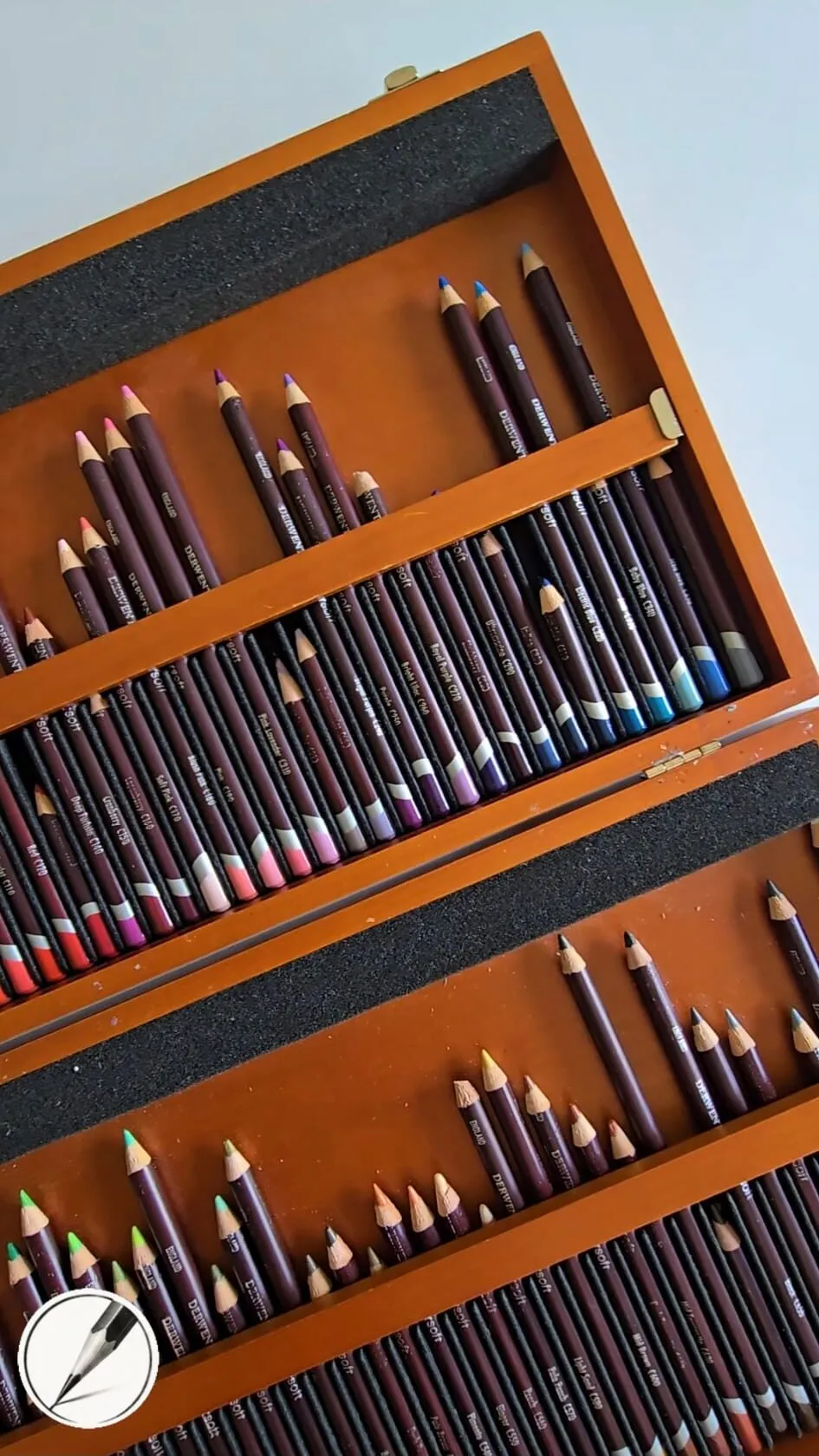
A wooden box of coloured pencils in trays, seen at an angle.
Derwent Coloursoft
Coloursoft is velvety and rich, and it is great for soft blending and painterly effects. It lays colour down generously, so large areas cover quickly and transitions feel smooth. It is a friendlier price point than the premium ranges, and it is the range Michael used for his colour-theory swatch card on grey paper.
The trade-off is that soft cores dull faster, so keep them sharp and press lightly at first to avoid filling the tooth. It is not the pencil for the finest hairline detail. See best coloured pencils for how it compares with professional favourites.
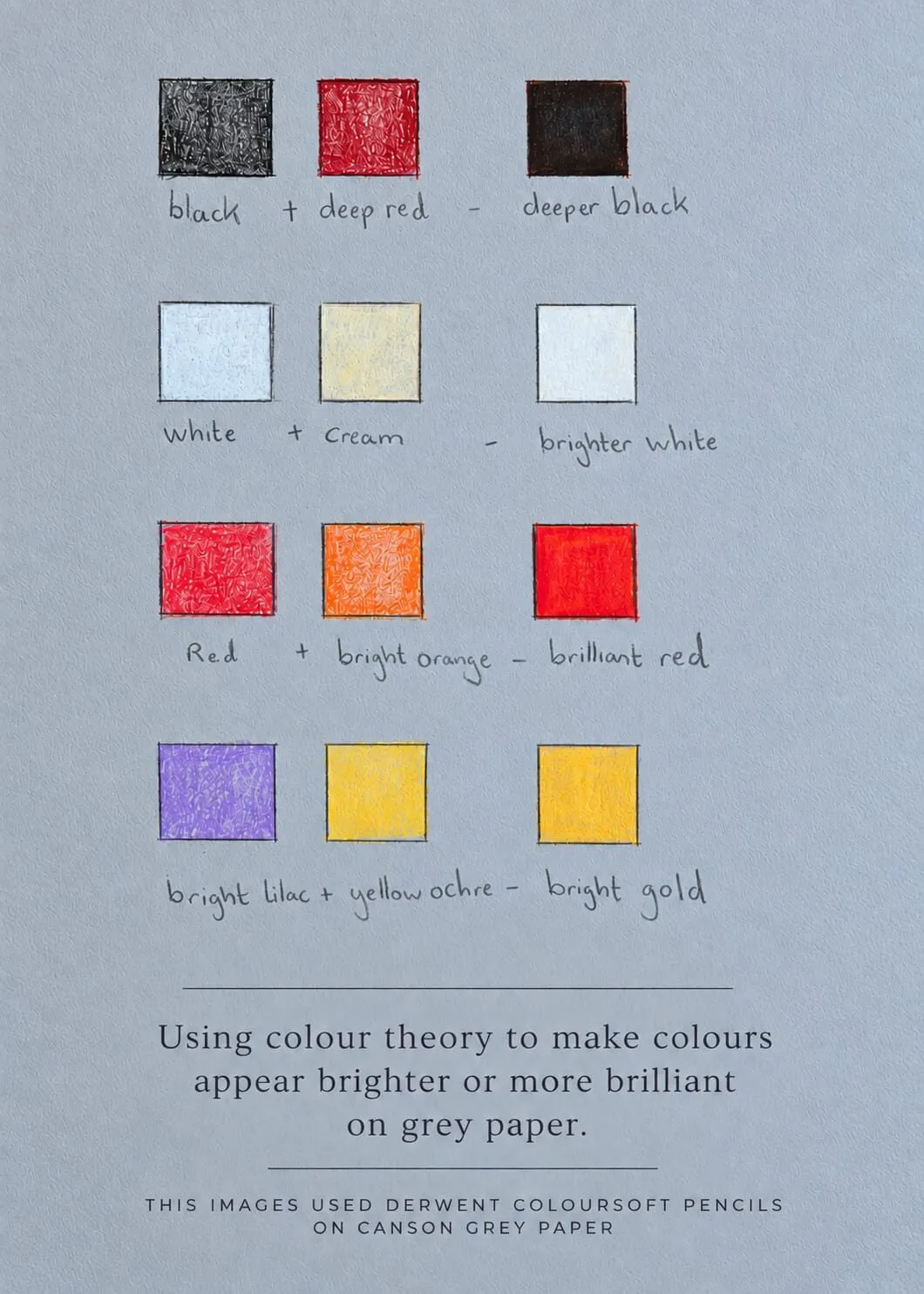
Michael’s Coloursoft swatch card on Canson grey: colour theory used to make colours look brighter.
Derwent Chromaflow
Chromaflow is vibrant, soft and beginner-friendly, and it is perfect for learning technique. The bold pigment gives quick, encouraging results, and it blends easily, so it teaches pressure control and layering well. It is a natural first set, and we include it in best coloured pencils for beginners.
It is a learning tool, not a substitute for artist-grade lightfastness, so check colour ratings if you plan to sell finished work.
Derwent Drawing
Drawing pencils are muted and earthy, ideal for wildlife, nature and atmospheric work. They lean towards natural tones rather than brilliant colour, which makes them a good companion to a brighter range. If you draw animals, landscapes or moody still life, the palette feels immediately useful. For fur technique, see how to draw animal fur.
Derwent Lightfast
Lightfast is the premium coloured range: creamy, smooth to layer and highly lightfast. It suits professional realism and is one of the three standards for serious work. Michael places it between Faber-Castell Polychromos and Caran d’Ache Luminance: smoother than the first, firmer than the second, with excellent burnishing and strong earth tones. It is the best choice for artists who want to sell or exhibit. See Polychromos vs Luminance vs Lightfast and best coloured pencils for portraits.
Derwent Inktense
Inktense is a water-soluble pencil. Used dry, it draws like a coloured pencil; touched with a wet brush, the pigment turns to vivid ink that is permanent once dry, so you can layer washes without lifting earlier ones. It is a mixed-media tool. Coloured pencil artists exploring water-soluble colour will find it bold, though it needs paper that can handle water. See using solvents with coloured pencils for related methods.
Derwent Sketching
Sketching pencils are graphite, not coloured pencils. They are for tonal drawing, studies and shading, and they belong in a graphite kit beside your coloured sets. If you use graphite, our graphite pencil grades explained and the pencil grade chart help you choose grades.
How the ranges fit together
Think of the Derwent family as a set of tools rather than a ladder. Chromaflow and Coloursoft are the soft, colourful end, where colour arrives quickly and blends easily. Drawing pencils are the quieter, earthier end, with muted tones for natural subjects. Lightfast is the premium option, with a creamy feel and strong lightfastness for professional work. Inktense sits apart as a water-soluble ink pencil, and Sketching sits apart again as graphite.
That means you are not obliged to climb from one range to the next. An artist might start with Chromaflow, add Drawing pencils for wildlife, and later collect Lightfast pencils for finished pieces. Many also combine Derwent with other brands, using a firm oil pencil such as Faber-Castell Polychromos for fine detail; see the Polychromos review.
Derwent versus the professional benchmarks
Derwent Lightfast is the only Derwent range among the three professional standards, alongside Polychromos and Luminance. Compared with them, it is smoother than Polychromos but firmer than Luminance, with clean burnishing and strong earth tones. The other Derwent ranges are best seen as accessible, versatile options rather than direct rivals to premium pencils. See best coloured pencils for the premium picks.
Practical advice for Derwent users
- Sharpen carefully. Soft cores such as Coloursoft can snap in a poor sharpener. See best pencil sharpeners for coloured pencils.
- Start with light pressure. Soft pencils fill the tooth of the paper quickly.
- Test on your paper. Colours look different on grey and white paper, so swatch first.
- Check ratings. For work you plan to sell, confirm lightfastness for the specific colours.
- Use tools sensibly. For lifting and cleaning colour, see best erasers for coloured pencils.
Who Derwent suits
Derwent tends to suit artists who enjoy a warm, expressive feel and want a range that grows with them. Beginners get an accessible entry through Chromaflow. Artists who love soft, velvety blending have Coloursoft. Nature and wildlife artists find a natural palette in the Drawing pencils, and those working at professional level can invest in Lightfast. Because the ranges share a brand, you can move between them without relearning everything, which makes Derwent a practical single-brand route through the medium.
It may be less suited to artists who want the firmest possible point for hairline detail. In that case a firm oil-based pencil is a better companion, and the wax versus oil-based guide explains why.
Which Derwent should you buy?
- Learning: Chromaflow.
- Soft, painterly blending: Coloursoft.
- Wildlife and natural tones: Drawing.
- Professional realism and exhibiting: Lightfast.
- Washes and mixed media: Inktense.
- Tonal studies: Sketching, alongside a coloured set.
Whatever you choose, paper matters. Heavy paper with tooth lets soft Derwent cores layer well; see the best paper for coloured pencils. Unsure whether to move up a tier? Read professional versus student coloured pencils.
Buying tips
Buy the smallest set that covers your subject and add open stock later, since single pencils are usually available. Compare set contents carefully, because tin sizes and colour lists vary and change over time. Read the range name on the box, not just the brand, and check the current lightfastness information for any colour you plan to use in work that will be sold or shown. If you are unsure, a small Chromaflow or Coloursoft set is an easy way to find out whether you enjoy soft, creamy pencils before spending more.
Using Derwent on different papers
Soft Derwent cores respond strongly to paper. On heavy grey paper with plenty of tooth, Coloursoft and Lightfast build many layers and highlights sit brightly, which suits glossy subjects such as the chocolate fondant above. On smoother white paper, the same pencils blend more seamlessly but fill the surface sooner, so lighter pressure is wise. Swatch each range on the paper you actually draw on before starting a large piece.
The short version
Derwent offers something for every stage: Chromaflow to learn, Coloursoft for soft richness, Drawing for earthy tones, Lightfast for professional work, Inktense for water-soluble colour, and Sketching for graphite. Match the range to the job, and remember only the first four are dry coloured pencils.
Where to buy
Recommended products
Affiliate links. We may earn a small commission if you buy, at no extra cost to you. Why?
Pencils · Derwent
Derwent Coloursoft Pencils
Soft, velvety and richly pigmented - excellent for painterly blending and bold colour.
Pencils · Derwent
Derwent Chromaflow Pencils
Vibrant, smooth and forgiving - a friendly set for learning layering and blending.
Pencils · Derwent
Derwent Drawing Pencils
Muted, earthy tones suited to wildlife, nature and atmospheric work.
Pencils · Derwent
Derwent Inktense Pencils
Water-activated pencils with intense, ink-like colour for mixed-media work.
Buy on AmazonAffiliate link · opens Amazon
Pencils · Derwent
Derwent Sketching Pencils
A graphite sketching range for tonal studies and everyday drawing.
Buy on AmazonAffiliate link · opens Amazon
Pencils · Derwent
Derwent Lightfast Coloured Pencils
Premium, creamy pencils with excellent lightfastness - well suited to professional realism.
Quick answers
Frequently asked questions
Which Derwent coloured pencils are best?+
It depends on your aim. Chromaflow is best for learning, Coloursoft for soft, painterly blending, Drawing pencils for muted natural tones, and Lightfast for premium professional realism. Inktense is water-soluble, so it suits a different, wash-based style of working.
Is Derwent Sketching a coloured pencil?+
No. Derwent Sketching is a graphite range, useful for tonal drawing and studies. The coloured ranges are Coloursoft, Chromaflow, Drawing, Lightfast and the water-soluble Inktense. Keep that in mind when you build a kit, as sketching pencils do not add colour.
Is Derwent Lightfast better than Coloursoft?+
Lightfast is the premium range, creamy and highly lightfast, designed for professional realism. Coloursoft is velvety and rich, loved for soft blending and painterly effects at a friendlier price. Lightfast is better for exhibition work, while Coloursoft is a lovely expressive choice.
What is Derwent Inktense?+
Inktense pencils are water-soluble pencils that behave like ink when wet. Once the marks are dry they are permanent, so they can be layered with washes. They can be used dry like a pencil or activated with water for bold, vivid colour.
Are colored pencils and coloured pencils the same?+
Yes. Coloured pencils is the British spelling and colored pencils is the American one, and both describe the same drawing medium: pigment in a wax or oil binder, set in a wooden barrel. Brands, sets and techniques do not change with the spelling, so advice about one applies equally to the other. Only shop listings and product names follow one spelling or the other.