Coloured Pencils
Best Watercolour Pencils
The best watercolour (watercolor) pencils, how water-soluble pencils differ from wax and oil pencils, plus techniques, paper needs and lightfastness cautions.
This guide contains affiliate links. If you buy through them we may earn a small commission at no cost to you. How this works.
Jump to recommended products
Key takeaways
- ◆Water-soluble pencils give you drawing control and wash-like colour in one tool, which suits sketching, travel and mixed media.
- ◆Derwent Inktense is intense and ink-like once activated, while Caran d'Ache Museum Aquarelle is water-soluble but highly pigmented, so they are our two reference points.
- ◆Water-soluble pencils behave differently from wax and oil pencils: they are designed to dissolve, which changes how they layer, blend and erase.
- ◆Use paper that tolerates water, and test a small patch first; ordinary thin drawing paper will buckle.
- ◆Check the manufacturer's lightfastness information before selling or exhibiting work made with any water-soluble pencil.
Water-soluble pencils sit between drawing and painting. You draw with a sharp point, then touch a wet brush to the marks and they melt into a wash. Watercolour pencils - watercolor pencils in the US - are popular for travel sketching, botanical studies, loose landscapes and mixed media, because one tool gives you line and colour without a palette.
This guide explains how they differ from wax and oil coloured pencils (colored pencils in the US), which lines to look at, the main ways to use them and what paper to choose. If you are new to pencil types generally, start with wax versus oil-based coloured pencils, and if you want a set of standard pencils instead, see best coloured pencils.
The short answer
For strong, saturated colour that behaves like ink, look at Derwent Inktense. For water-soluble pencils in a premium, highly pigmented range, look at Caran d’Ache Museum Aquarelle, which Michael describes as water-soluble but highly pigmented and well suited to mixed-media work.
| Line | Character | Best for |
|---|---|---|
| Derwent Inktense | Intense, ink-like when water is added | Bold washes, graphic work, mixed media |
| Caran d’Ache Museum Aquarelle | Water-soluble, highly pigmented | Refined, richly coloured mixed-media pieces |
| Other water-soluble ranges | Softer, more traditional watercolour behaviour | Sketching, travel, learning the technique |
We name these two because they are the ones this site covers. Other manufacturers, including Faber-Castell and Caran d’Ache’s own Supracolor line, make water-soluble pencils too, and the range and specification of every line changes over time, so check the current information before you buy.
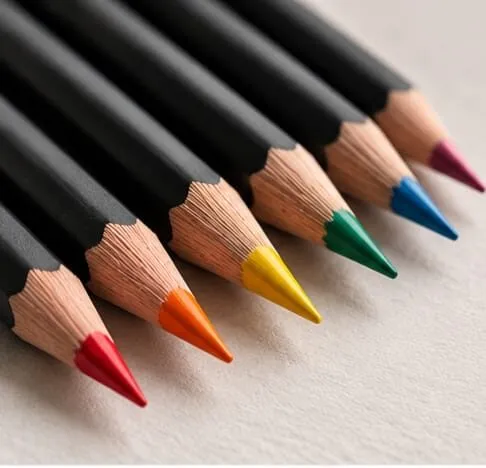
Close-up of a row of sharpened coloured pencils with red, orange, yellow, green, blue and magenta leads.
How they differ from wax and oil pencils
Standard coloured pencils use a wax or oil binder that holds the pigment in place. Water does not move it, so you build colour through layering and pressure. Water-soluble pencils use a binder that dissolves, so the pigment can be moved around with a wet brush.
Practical consequences:
- Blending. You can blend with a brush and water rather than only with pencil layers.
- Layering. Dry layers behave like ordinary pencil until you add water, so you can plan a drawing in stages, wetting only where you want a wash.
- Correction. Dry marks can often be lifted a little, but activated colour soaks into the paper and is harder to remove. The behaviour depends on the line, and Inktense in particular is designed to become permanent once dry.
- Sharpening. Water-soluble cores can be softer or more brittle in some ranges, so use a decent sharpener and light pressure.
Do not mix them up in storage or use: a wet brush on a wax-based drawing will not dissolve it, but it may repel and leave the paper patchy.
Our picks
Derwent Inktense
Inktense is the best-known water-activated pencil for artists who want vivid, deep colour. Dry, it behaves like a firm, slightly harder-edged pencil. Wet, it becomes bright and ink-like, and colours mix into new hues on the paper. Once dry, the colour is generally not moved by further water, which lets you layer washes without disturbing what is underneath. That permanence is the main reason artists choose it for illustrative and mixed-media work. It is less suited to gentle, easily reworked washes, because you get one good attempt and then you commit.
Best for: bold colour, graphic or illustrative work and combining pencil with washes. Less suited to: very delicate, reworkable watercolour effects, and artists who want to correct freely.
Caran d’Ache Museum Aquarelle
Museum Aquarelle is water-soluble but highly pigmented, which suits mixed-media work where you want rich colour from the pencil itself, not only from the wash. It sits at the premium end of the market, so it is aimed at artists who value refined results over economy. Michael groups Caran d’Ache among the luxurious pencil makers, with results that suit artists who value subtlety and richness.
Best for: pigment-rich mixed-media work. Less suited to: budget-conscious beginners, or anyone who only wants to try the medium.
Other water-soluble pencils
Traditional watercolour pencils often give gentler washes and are easy to soften, which is helpful for learning the technique and sketching. If you are new to the idea, a small, inexpensive set is a fair way to find out whether you enjoy the process before investing in a large range.
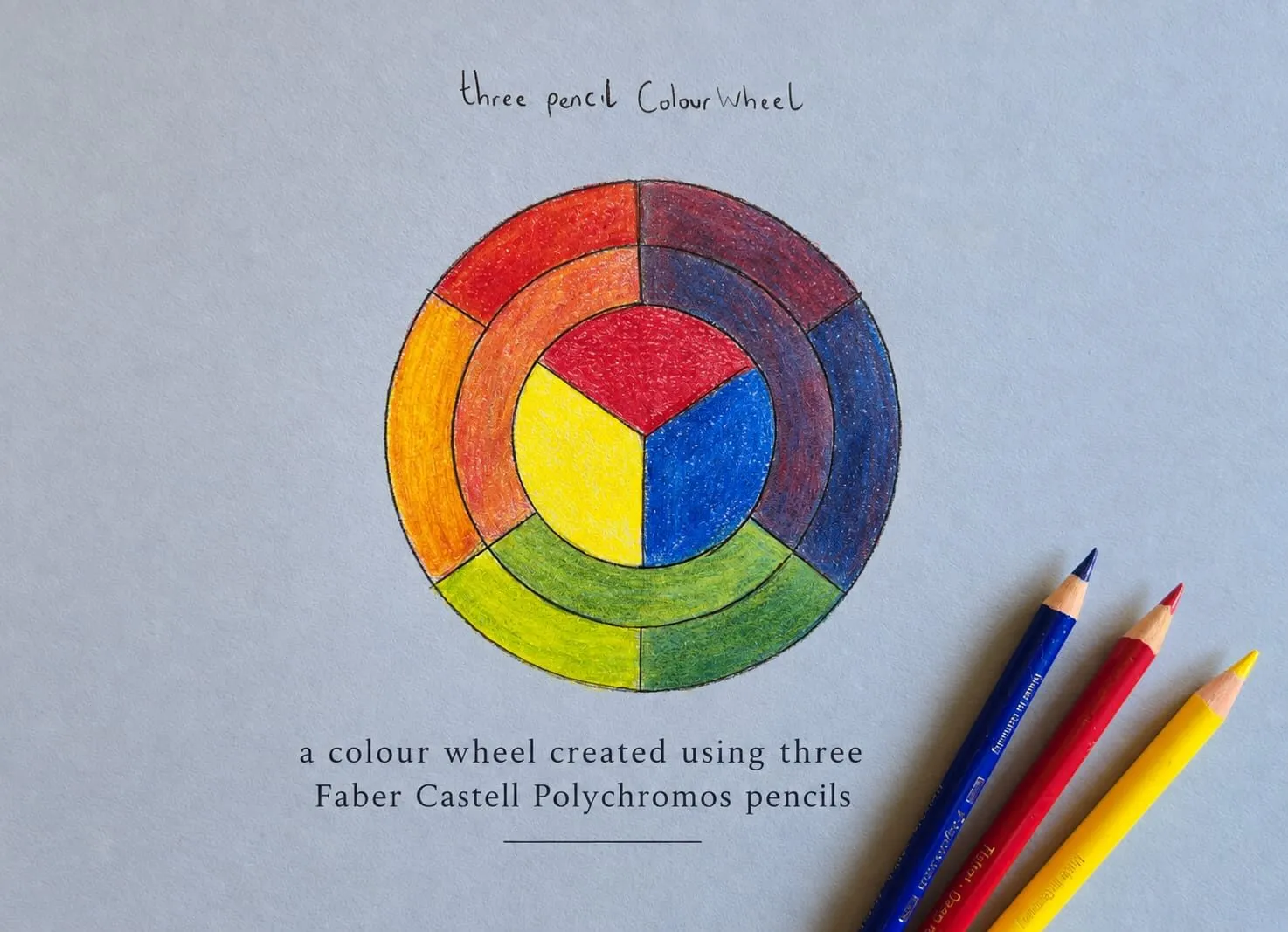
A hand-drawn colour wheel made with three Faber-Castell Polychromos pencils on blue-grey paper. Drawing by Michael Brace.
Three techniques to learn
1. Dry drawing
Draw exactly as you would with any pencil and leave it dry. This is a useful way to plan a drawing: block in the shapes and values, then decide where water is needed. Many artists find they need less water than they expect.
2. Wet brush
Draw dry, then run a damp brush over the marks. Keep the brush damp, not soaking, and move from light to dark so you do not drag dark colour into pale areas. You can also touch a wet brush to the pencil tip and paint with the pigment it collects.
3. Wet paper
Wet the paper first, then draw into it. The colour is instantly saturated and soft-edged, and the marks blur as the paper dries. It is the fastest route to bold colour, and also the hardest to control, so practise on scraps.
Paper for water-soluble pencils
Paper matters more here than with dry pencils, because water changes the sheet. Thin drawing paper buckles and can pill under a wet brush, so choose a heavier sheet designed to take water, or a mixed media paper. Weight, sizing and surface all affect how the colour spreads, and a rough surface will give a more textured wash than a smooth one. Our best paper for coloured pencils and paper weight in gsm explained guides help you choose, and the tooth guide explains what surface texture does to your marks.
Stretching or taping the paper down helps it dry flat. If you draw on a pad, work on the block or clip it to a board.
Mixing water-soluble pencils with other media
Combining media is one of the biggest reasons to own water-soluble pencils.
- Wash then dry pencil. Lay down colour with washes, let it dry completely and then add crisp detail with standard coloured pencils or graphite on top. This is a very common workflow.
- Pencil then wash. Draw with water-soluble pencils first and add a wash for the background, keeping the subject dry.
- With graphite. A graphite drawing can be tinted with light washes for a sketchbook look; see best graphite pencils for drawing for the pencil side.
Let the paper dry fully before adding wax or oil pencil, since damp paper is easy to dent, and remember that a wax layer will resist later water.
Lightfastness and cautions
Lightfastness is how well a pigment resists fading in light. It varies between lines and between individual colours, and water-soluble pencils are not automatically more or less lightfast than dry ones. Manufacturers publish their own information, and it can differ by colour, so check the current chart for the range you buy. Our lightfastness guide explains how to read it. For work you plan to sell or exhibit, use lightfast colours only, keep drawings out of direct sun and follow the guidance in archival paper for selling your drawings.
Other cautions:
- Avoid soaking thin paper; buckling is hard to reverse.
- Do not wet a drawing you have already layered heavily with wax, because the wax repels water.
- Water-soluble marks can lift or smear if the finished work later gets damp, so protect finished pieces and frame them behind glass.
Common mistakes
- Using too much water. It blooms, muddies and buckles the sheet. Start with a barely damp brush.
- Working dark to light. Dark pigment dragged into pale areas is difficult to clean. Work light to dark.
- Skipping the swatch. Colours shift on wetting, so guessing leads to surprises.
- Expecting a wax pencil result. Water-soluble pencils have their own feel; treat them as a hybrid rather than a substitute for artist-grade wax or oil pencils.
The short version
Choose Derwent Inktense for bold, ink-like colour you can layer and combine with other media, and consider Caran d’Ache Museum Aquarelle for pigment-rich, premium mixed-media work. Use paper that tolerates water, swatch before you start, work light to dark, and check lightfastness before you sell. If you are still deciding which type of pencil suits you, the which pencil set quiz is a good place to begin.
Where to buy
Recommended products
Affiliate links. We may earn a small commission if you buy, at no extra cost to you. Why?
Pencils · Derwent
Derwent Inktense Pencils
Water-activated pencils with intense, ink-like colour for mixed-media work.
Buy on AmazonAffiliate link · opens Amazon
Pencils · Caran d'Ache
Caran d'Ache Pencils
Premium artist pencils - Luminance is creamy and opaque for portraits, Pablo is firmer for detail.
Quick answers
Frequently asked questions
What is the difference between watercolour pencils and coloured pencils?+
Watercolour pencils are made with pigment and a binder that dissolves in water, so you can draw dry and then wet the marks to make a wash. Ordinary wax or oil pencils resist water, so they blend by layering, pressure or solvent instead.
Are Derwent Inktense pencils watercolour pencils?+
They are water-soluble, but they behave differently from traditional watercolour pencils. Inktense is intense and ink-like when activated with water and, once dry, is generally not lifted by re-wetting. Many artists treat it as a category of its own.
Can you use watercolor pencils on regular drawing paper?+
You can for dry drawing and light washes, but thin paper will buckle and pill when wet. Heavier watercolour or mixed media paper handles water far better. Test a small area first, especially if you plan several washes.
Are colored pencils and coloured pencils the same as watercolor pencils?+
No. Colored and coloured are two spellings of the same pencils, which are usually wax or oil based. Watercolor pencils are a different type designed to dissolve in water. Some artists combine the two in mixed media work.