
Paper & Surfaces
Canson Mixed Media Grey Paper Review for Coloured Pencil
A Canson Mixed Media grey paper review for coloured pencil (colored pencil): strong tooth, layering, lifting, glossy subjects, weight and archival limits.
This guide contains affiliate links. If you buy through them we may earn a small commission at no cost to you. How this works.
Jump to recommended products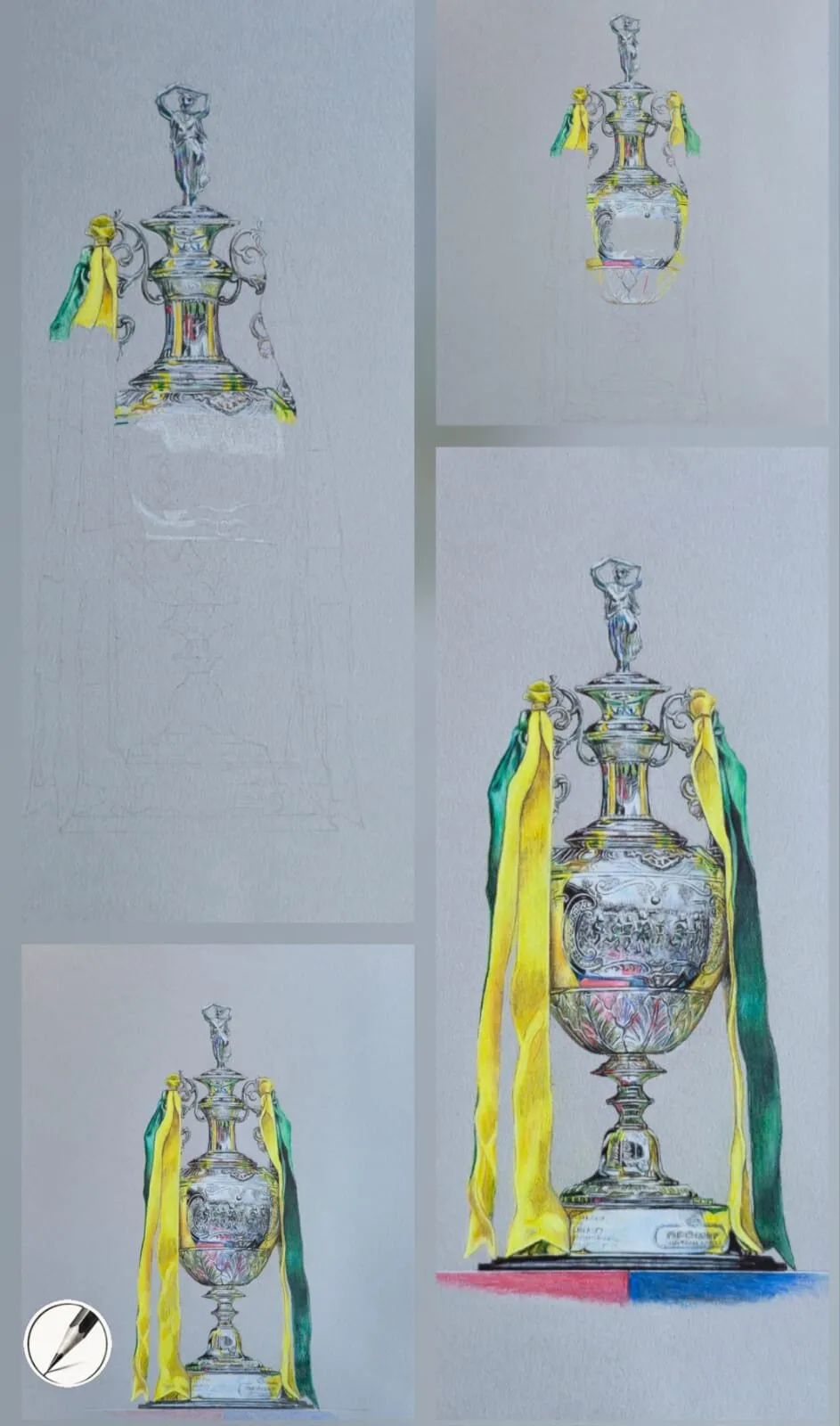
Key takeaways
- ◆Canson Mixed Media grey is textured, grainy and robust, with a strong tooth that holds layers and keeps colour vibrant.
- ◆That grain also lifts colour well, which is why highlights on metal, icing and glossy surfaces come out cleanly.
- ◆Michael works on paper of around 300 gsm for this kind of drawing; check the maker's current spec for your pad.
- ◆It is durable but not always fully archival, so it suits practice, studies and still life more than work you sell without checking.
- ◆Skip it for very fine skin detail or if you need museum-grade archival status; Arches Hot Press or Stonehenge White suit those jobs better.
Canson Mixed Media grey is the paper Michael reaches for most often when a subject is shiny, wet or reflective. It is the bold one of the four papers he compares: textured, grainy and robust. It grips pigment, forgives corrections and gives highlights somewhere to sit. It is also the paper with the biggest caveat for anyone planning to sell, and this review covers both sides.
Below we look at its tooth, weight, layering, lifting, burnishing, archival status and best subjects, and who should choose something else. Coloured pencils, called colored pencils in the US, behave the same on it whichever spelling you use. For the wider field, see the paper guide and the best paper for coloured pencils list.
What it is
Canson Mixed Media in grey is a toned, textured sheet. Michael’s description is that it grips pigment firmly and creates a slightly toothy finish, perfect for reflective surfaces, glossy cakes, metal objects and anything that needs punchy highlights.
Because it is a mid-tone paper, you are not starting from zero. You build up light and pull back shadows, which can make realism feel more intuitive. The reasoning is covered in why use grey paper for coloured pencil.
Drawing materials on a table: sheets of paper, pencils, a wooden mannequin, an eraser and a sharpener.
Tooth and texture
Tooth is the tiny hills and valleys in the paper that catch pigment. Canson has heavy tooth, and in Michael’s ranking it is the most textured of the four papers. It grabs pigment aggressively, which is perfect for multiple layers and strong highlights. You can draw over and over without losing grip.
The other side of that coin is that the texture shows. In smooth, soft areas such as skin you will see the grain, and very fine detail is harder than on a smoother sheet. The paper tooth guide explains how to match texture to subject.
Weight and durability
Michael describes it as around 300 gsm: strong, resilient and excellent for heavy layering and erasing. Heavy paper stays flat, resists damage and tolerates dozens of layers without the surface breaking down. He works on heavy paper for exactly that reason. Weights can vary by product and over time, so check the maker’s current spec on your pad. If gsm is new to you, see paper weight explained.
Layering
Canson allows many layers thanks to its grain, which suits artists who build colour slowly. To get the best from it:
- Start with light pressure. The grain does the work of grabbing pigment.
- Build in thin layers and change stroke direction. The method in how to layer coloured pencils applies.
- Put white pencil on last for highlights. On grey it sits brightly over the mid-tone. The best white pencils for drawing on grey paper guide helps you choose one.
- Avoid pressing hard too soon. Even toothy paper fills up if flattened early.
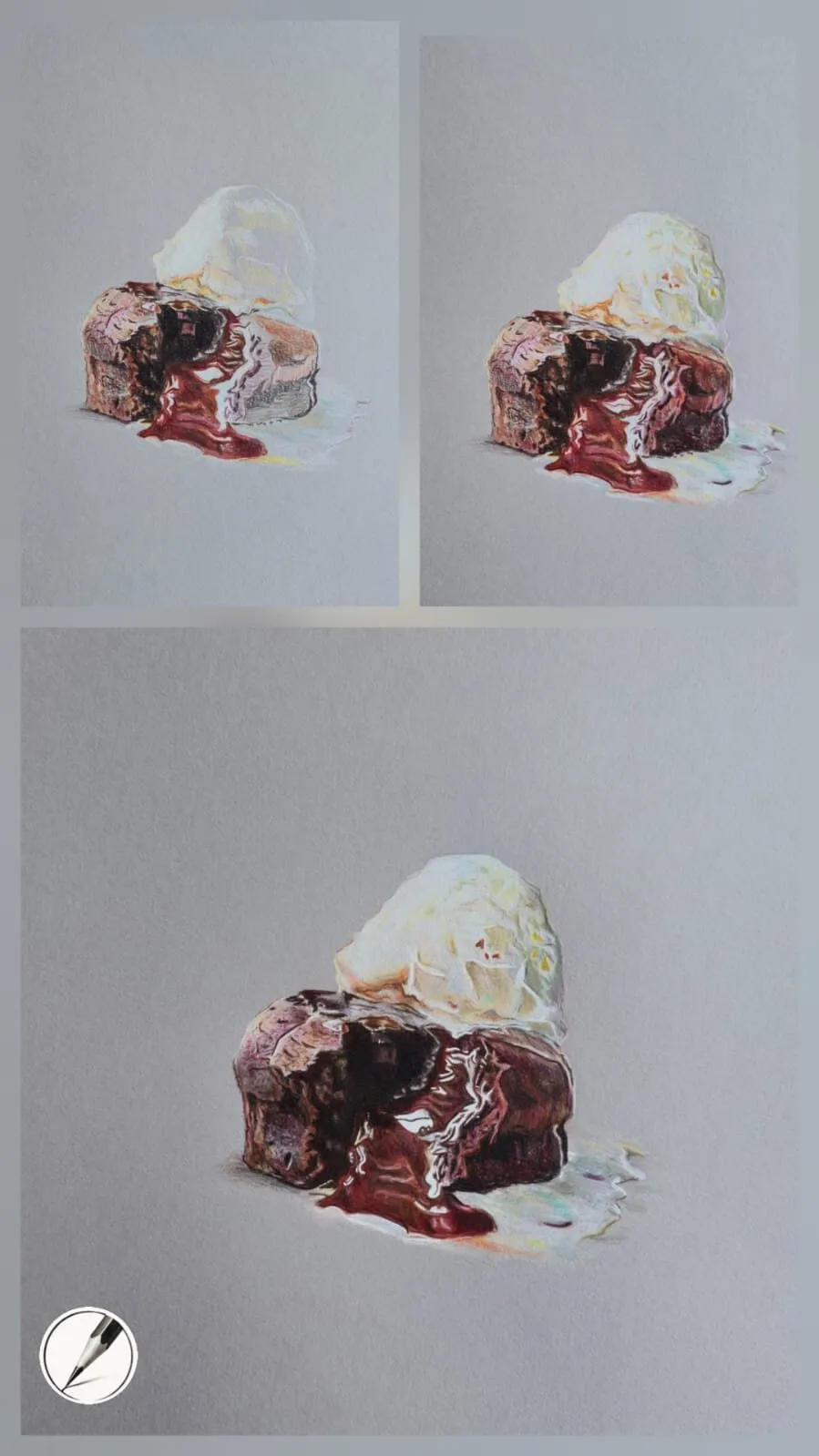
Layering builds shine in stages: base tones first, then sharper highlights on top.
Lifting
Lifting removes pigment for highlights and corrections, and Canson lifts excellently because its strong tooth holds pigment on top of the surface. That makes it a good choice for sparkle on metal, icing and glossy surfaces, and it is forgiving for beginners who need to correct. Different tools behave differently, so read lifting and erasing coloured pencil for eraser pencils, putty and battery erasers.
Burnishing and solvents
Michael notes that Canson burnishes boldly but flattens tooth quickly. Burnishing is pressing hard to create a smooth, glossy finish, and on textured paper it creates a dramatic sheen. Because it flattens the very tooth that makes the paper good, do it last. Solvents are also useful on textured papers like Canson, but use them sparingly; too much can warp paper or oversaturate pigment. See how to burnish coloured pencils.
Archival quality
Michael’s source is clear: Canson Mixed Media is durable but not always fully archival. It is great for practice, studies and still life. If you are selling or exhibiting work, choose archival papers, or check the maker’s current specification for your exact product. The wider picture is in archival paper for selling your drawings.
Best subjects
- Metal and reflective objects. Trophies, tokens and chrome benefit from punchy, liftable highlights. The shiny metal guide goes further.
- Glossy food and icing. A few sharp highlights on smooth mid-tones do the work; see how to draw glossy surfaces.
- Still life generally, where highlights glow and colours pop.
How it compares
| Quality | Canson Mixed Media grey | Arches Hot Press | Stonehenge White | Clairefontaine Paint’On Gris |
|---|---|---|---|---|
| Tooth | Heavy | Minimal | Soft | Fine |
| Lifting | Excellent | Hardest | Gentle | Good, may stain |
| Archival | Durable, not always fully archival | Fully archival | Fully archival | Generally archival, varies |
| Best for | Glossy still life | Portraits | Soft realism | Atmosphere |
For a point-by-point view, see Canson vs Arches vs Stonehenge vs Clairefontaine. For darker, more painterly work, read the Clairefontaine Paint’On Gris review, and for smooth portraits, the Arches Hot Press review.
Pencil pairings
Canson’s grain works with both main pencil types. Soft, wax-based pencils lay down colour quickly and fill the tooth fast, which is lovely for bold colour but means you should watch your pressure. Firm, oil-based pencils keep a point longer and build layers slowly, which suits detailed reflections. Michael’s own swatch card of Derwent Coloursoft on Canson grey shows how colours interact on the ground: black over deep red gives a deeper black, white over cream gives a brighter white, red with bright orange gives a brilliant red, and bright lilac with yellow ochre gives a bright gold. For the binder differences, see wax versus oil-based coloured pencils.
Common problems and fixes
- The surface stops taking colour. You have probably flattened the tooth with heavy early pressure. Stop layering in that area and switch to burnishing or a final glaze of a lighter pencil.
- Highlights look chalky. Too many white layers sitting over a busy mid-tone can look plasticky. A few sharp, high-contrast highlights on smooth, simple mid-tones read as shine far better.
- Grain shows in areas that should be smooth. Use lighter pressure with very sharp points and more layers, or accept the texture as part of the character, or choose a smoother paper for that subject.
- Colour looks dull on the grey. Try pairing colours so they appear brighter against the ground, as in the swatch combinations above, and swatch before you commit.
Who should skip it
Be honest about what you need. If your work is mostly fine skin detail, very soft blends or botanical precision, the heavy grain will work against you. If you need fully archival paper for every piece you sell, check the current spec or choose an archival sheet. And if you prefer to work on white and want the lightest tones to be genuinely pale, a white paper will give you that starting point. None of these is a flaw in the paper; they are simply different jobs.
Buying advice
- Check the current spec for weight, size and finish before buying in bulk.
- Buy a pad or a few sheets to start, then scale up once you like the feel.
- Think about format. The paper size converter and A4 sizes help plan drawings and framing.
- Test with your pencils, and use the pencil set quiz if you are still choosing a set.
A quick test before a big drawing
Cut an offcut and swatch your main pencils, including a white pencil, at light, medium and firm pressure. Layer one patch many times, lift a small highlight with an eraser pencil or putty, and burnish one corner to see how quickly the tooth flattens. The test takes a few minutes and shows you how your own pencils react to the grain, which is the whole point of choosing this paper.
The short version
Canson Mixed Media grey is textured, durable and forgiving. Its strong grain holds layers and colour, it lifts well for highlights, and the grey ground makes glossy subjects easier. It is not fully archival in every case and it is not the best choice for delicate skin. For shiny still life, it is the paper Michael trusts most.
Where to buy
Recommended products
Affiliate links. We may earn a small commission if you buy, at no extra cost to you. Why?
Paper · Canson
Canson Mixed Media Grey Paper
A toothy mid-tone grey paper that grips pigment and makes highlights glow.
Quick answers
Frequently asked questions
Is Canson Mixed Media grey paper good for coloured pencil?+
Yes. Michael considers it his most consistent paper. Its strong grain lets coloured pencil layer well and keep its colour, and it is robust enough for detailed corrections. It is especially good for glossy, reflective subjects such as metal, icing and doughnuts, where the mid-tone grey helps highlights read clearly.
Is Canson Mixed Media paper archival?+
Michael's notes describe it as durable but not always fully archival, making it great for practice, studies and still life. If you plan to sell or exhibit, check the maker's current specification for your exact product, or consider Arches or Stonehenge, which are described as fully archival.
What weight is Canson Mixed Media paper?+
Michael describes it as around 300 gsm, strong and resilient enough for heavy layering and erasing. Weights vary between products and can change, so read the current specification on the pad or label before you buy.
Why use grey paper for coloured pencil?+
Grey is a mid-tone, so you are not starting from zero: you build up lights and pull back darks. White pencil sits brightly on top of the grey, giving a wider value range for glossy subjects than white paper allows. Grey also helps colours read more vividly.
Are colored pencils and coloured pencils the same?+
Yes. Coloured pencils is the UK spelling and colored pencils is the US spelling. They are the same pencils, and this review applies to both.