Paper & Surfaces
Arches Hot Press Review for Coloured Pencil
An honest Arches Hot Press review for coloured pencil (colored pencil): smooth tooth, subtle portrait blends, burnishing, lifting limits and who should skip it.
This guide contains affiliate links. If you buy through them we may earn a small commission at no cost to you. How this works.
Jump to recommended products
Key takeaways
- ◆Arches Hot Press is smooth, refined and consistent, with minimal tooth, which makes it a favourite for portraits, skin and subtle transitions.
- ◆Michael describes it as around 300 gsm and museum-grade, so it is strong enough for heavy layering, solvents and burnishing; check the maker's current spec.
- ◆Pigment sinks into the smooth surface, so it is harder to lift from and needs more layers for deep colour: plan highlights and keep pressure gentle.
- ◆It is fully archival and acid-free, which suits work you intend to sell or exhibit.
- ◆Skip it if you want punchy grain, easy lifting for sparkly highlights or a mid-tone ground; Canson Mixed Media grey does that job better.
Arches Hot Press is the paper many coloured pencil portrait artists reach for when they want a clean, quiet surface that lets the pencil do the talking. It is smooth, consistent and strong, and it rewards patience. It is also not the easiest paper to be forgiving with, which is why it is worth knowing exactly what you are buying before you commit a long drawing to it.
This review covers how the paper feels, how it layers and burnishes, where it struggles, and who should choose it. Coloured pencils, called colored pencils in the US, behave the same way on it whichever spelling you use. For the wider context, see the paper for coloured pencil guide and the side-by-side Canson vs Arches vs Stonehenge vs Clairefontaine comparison.
What Arches Hot Press is
Arches is a premium watercolour paper, and the hot press version is its smooth face. Hot press simply means the sheet is pressed smooth during manufacture, leaving very little surface texture. Our explainer on hot press versus cold press paper covers the terms in detail.
Michael describes Arches as the elegant one of the four papers he compares: smooth, refined and beautifully consistent. Coloured pencil artists adore it for portraits because it allows subtle transitions and delicate shading. It is strong enough for heavy layering but smooth enough for fine detail.
A studio storeroom with shelves of paper rolls and sheets.
Feel and tooth
Tooth is the texture of the paper, the tiny hills and valleys that catch pigment. Arches Hot Press has minimal tooth. Michael’s word for it is almost creamy. The pencil glides, edges stay crisp, and there is very little paper texture breaking up soft tones.
That has two consequences worth understanding before you start.
- Smooth blends come easily. With little grain competing with your marks, skin, cloth and soft backgrounds can look seamless. See paper tooth and smooth versus textured paper for how this changes the finished look.
- Deep colour takes more layers. With fewer valleys to fill, the paper reaches saturation sooner than a toothy sheet, yet reaching a rich, dark value needs patient, thin layering rather than pressure.
Weight and strength
Michael describes Arches Hot Press as around 300 gsm, which puts it with the heavyweight papers he prefers for coloured pencil. Heavy paper stays flat, resists damage and lets you build many layers before the surface breaks down. His notes call it museum-grade in strength and say it handles solvents and burnishing beautifully.
Exact weights vary between products and can change over time, so check the maker’s current spec on the label. If the gsm figures are unfamiliar, paper weight explained translates them into practical terms.
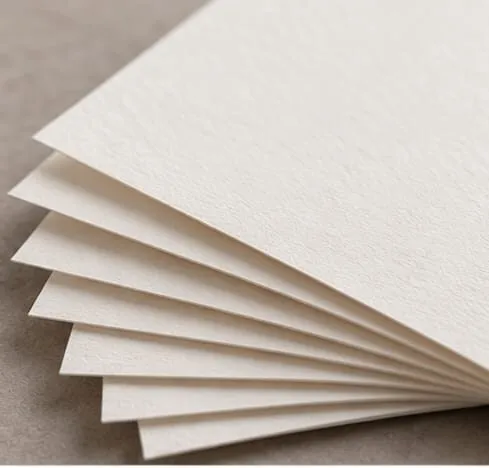
A fanned stack of heavyweight white paper showing the thick edges.
Layering on Arches
Layering is the backbone of coloured pencil realism, and on Arches it is controlled rather than aggressive. You can build many layers, but pressure has to stay gentle. A few practical points follow from that.
- Start light. Use the side of a sharp point and a low pressure, building value in stages. The method in how to layer coloured pencils applies directly.
- Keep points sharp. On smooth paper a blunt point leaves visible streaks. Sharpen often.
- Vary stroke direction between layers so the tone stays even.
- Hold back the heavy pressure. Pressing hard early flattens what little tooth there is and shuts the door on later layers.
Because the surface is so smooth, you will feel the paper begin to refuse more pencil sooner than you might on a grainy sheet. That is the signal to stop adding colour or to switch to a different technique, not to press harder.
Blending and burnishing
Blending is where Arches shines. Soft transitions, smooth gradients and subtle shifts in skin tone are all natural here. Lighter pencils, colourless blenders or simply more layers all work, and the paper takes solvents well. Blending is built through layers, not pressure. The how to blend coloured pencils guide covers the options.
Burnishing is the final polish: pressing hard, usually with a light pencil, to create a smooth, glossy finish. On Arches Hot Press Michael describes the burnish as soft, which is perfect for portraits. The heavy sheet copes with the pressure. Burnish only when the layers are complete, as it flattens the tooth. See how to burnish coloured pencils.
Lifting and corrections
This is the paper’s weak point. Pigment sinks into the smooth surface, so it is harder to lift colour back out, and Michael rates it the hardest of the four to lift from. Highlights and edges therefore need planning before you lay down colour, rather than relying on an eraser afterwards.
Archival quality
Michael’s notes call Arches fully archival: acid-free, museum-grade and designed to last decades without yellowing. If you sell or exhibit your drawings, that matters. Read more in archival paper for selling your drawings, and confirm the maker’s current specification for the exact product you buy.
Best subjects
- Portraits and skin. The smooth surface supports delicate shading and gentle transitions. Michael lists it among his portrait recommendations, and the portrait guide shows the layering approach.
- Botanical art and fine detail. Crisp edges and a clean surface suit petals, veins and small structures.
- Smooth, soft subjects such as cloth, skin and gentle backgrounds.
It is a less natural choice for glossy, reflective still life, where a textured grey paper with strong tooth gives punchier highlights. For that, see Canson Mixed Media grey.
Hot press or cold press?
Both are Arches, but the surface differs. Hot press is smoother, better for fine detail and subtle blends. Cold press has more texture and more grip. Michael uses Arches Cold Press for graphite, where tooth helps build rich shadows, and Hot Press for coloured pencil. If you want to try the other surface, swatch both with your own pencils and compare how many layers each accepts.
How it compares
| Quality | Arches Hot Press | Canson Mixed Media grey | Stonehenge White |
|---|---|---|---|
| Tooth | Minimal | Heavy | Soft |
| Finish | Smoothest | Most textured | Velvety |
| Lifting | Hardest | Excellent | Gentle |
| Archival | Fully archival | Durable, not always fully archival | Fully archival |
Stonehenge is the nearest relative: also white and archival but softer and more forgiving, which suits fur and feathers. Read the Stonehenge paper review if you are choosing between the two.
Buying advice
- Start small. Buy a few sheets or a small pad before committing to a large, long drawing.
- Check the current spec. Weight, size and finish vary by product, and the label is the final word.
- Mind the size. Plan your format with the paper size converter, and see A3 and A4 dimensions for common formats.
- Match your pencils. Firm pencils keep a point longer on smooth paper; the pencil set quiz can help you choose.
A quick test before a big drawing
Cut an offcut and swatch your main pencils at light, medium and firm pressure. Layer one patch many times to find where the paper stops taking colour, try to lift a small highlight, and burnish one corner. Because the surface is so smooth, this test shows you very quickly how many layers your pencils and pressure can build, and how much lifting you can expect. Keep the swatch beside your drawing as a reference.
The short version
Arches Hot Press is a smooth, strong, fully archival paper that excels at portraits, skin and subtle transitions. Its minimal tooth rewards light pressure, sharp points and planning, and punishes heavy hands and late corrections. If that matches your style, it is one of the best surfaces you can draw on. If you want grain, easy lifting or a grey ground, look elsewhere. Also see the best paper for coloured pencils for the full shortlist.
Where to buy
Recommended products
Affiliate links. We may earn a small commission if you buy, at no extra cost to you. Why?
Paper · Arches
Arches Hot Press Paper
Smooth, archival paper prized for portraits, fine detail and subtle blending.
Quick answers
Frequently asked questions
Is Arches Hot Press good for coloured pencil?+
Yes, especially for portraits and fine detail. It is a premium watercolour paper with a smooth, consistent surface that allows subtle transitions and delicate shading. The trade-off is that pigment sinks in, so lifting is harder and deep colour takes more layers applied with gentle pressure.
Is Arches Hot Press paper archival?+
Michael's notes describe Arches as fully archival, acid-free and museum-grade, designed to last decades without yellowing. Specifications can change between product lines and over time, so check the maker's current specification on the pad or label, particularly if you plan to sell or exhibit.
Should I use hot press or cold press Arches for coloured pencil?+
Hot press is smoother and suits portraits, botanical work and fine detail. Cold press has more texture and gives more tooth for grip, which some artists prefer for graphite or looser work. Try a small swatch of each with your own pencils before committing.
Can you burnish coloured pencil on Arches Hot Press?+
Yes. It gives a soft burnish that suits portraits, and the heavy, strong sheet handles the pressure well. Burnish only when your layers are finished, because it flattens the tooth and locks the pigment in, leaving little room for further colour.
Are colored pencils and coloured pencils the same?+
Yes. Coloured pencils is the UK spelling and colored pencils is the US spelling. Both names describe the same pencils, and this review applies to either.