Paper & Surfaces
Best Sketchbooks for Drawing
How to choose a drawing sketchbook for graphite and dry media: binding, size, paper weight, toned versus white, hardback versus spiral, and how to use it.
This guide contains affiliate links. If you buy through them we may earn a small commission at no cost to you. How this works.
Jump to recommended products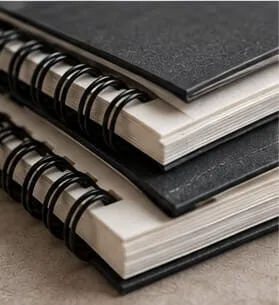
Key takeaways
- ◆Paper weight and surface matter more than the cover: choose a sketchbook whose paper suits your medium, then worry about binding.
- ◆Hardback sketchbooks protect pages and give you a surface to draw on; spiral books open flat and are easier for working on the page.
- ◆Toned paper such as a grey sketchbook suits studies with white highlights, while white cartridge paper suits graphite and warm subjects.
- ◆A mid-size sketchbook (roughly A5 to A4) is the best balance between portability and room to work.
- ◆Use a sketchbook for practice and studies, and keep finished, heavier drawings for loose sheets.
A sketchbook is where most drawing skill is built. It is the place for value ramps, quick studies, bad drawings and the occasional good one, and the right book is the one you pick up every day. That has more to do with paper, size and how it feels in your hand than with the brand on the cover.
This guide covers sketchbooks for graphite and mixed dry media: what to look for in binding, size and paper, how toned and white books differ, and how to use them. If you draw mostly in coloured pencil - colored pencil in the US - our separate best sketchbooks for coloured pencil guide covers those needs, and the best drawing paper for beginners explains the paper itself.
The short answer
For graphite, choose a mid-weight, white cartridge-style sketchbook with a little tooth. For studies with white highlights, try a grey or toned sketchbook. Pick a size around A5 to A4 and a binding that suits how you work.
| Type | Paper | Suits | Trade-off |
|---|---|---|---|
| White cartridge sketchbook | Soft, moderate tooth | Graphite, general sketching | Less durable under heavy erasing |
| Grey or toned sketchbook | Mid-weight, softer surface | Studies, portraits, white highlights | Less resilient under repeated erasing |
| Hardback | Firm cover | Travel, outdoor work | Does not fold flat |
| Spiral | Folds flat | Studio, working across the page | Less protection, pages can bend |
Ranges change over time, so check the current weight and specification of any sketchbook before you buy.
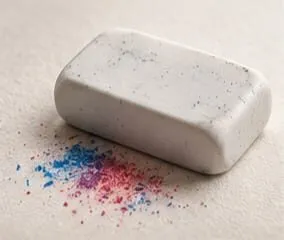
A white eraser on paper with coloured pencil dust beside it.
Paper matters most
Look at the paper first and the cover second. The main points are weight, surface and colour.
Weight
Paper weight measures how thick and sturdy the sheet is, in gsm. Lighter paper around 120 to 180 gsm is flexible and good for sketching, but it can buckle or wear down under heavy layering. Mid-weight paper around 200 to 250 gsm is more flexible and easier to blend on, but a little less resilient if you erase repeatedly. See paper weight in gsm explained.
Surface
A sketchbook with a little tooth holds graphite and gives rich shadows; a very smooth or glossy surface smudges and limits layers. Cartridge paper suits graphite well, as best paper for graphite drawing explains, and our tooth guide shows how surface changes the mark.
Colour: white or toned
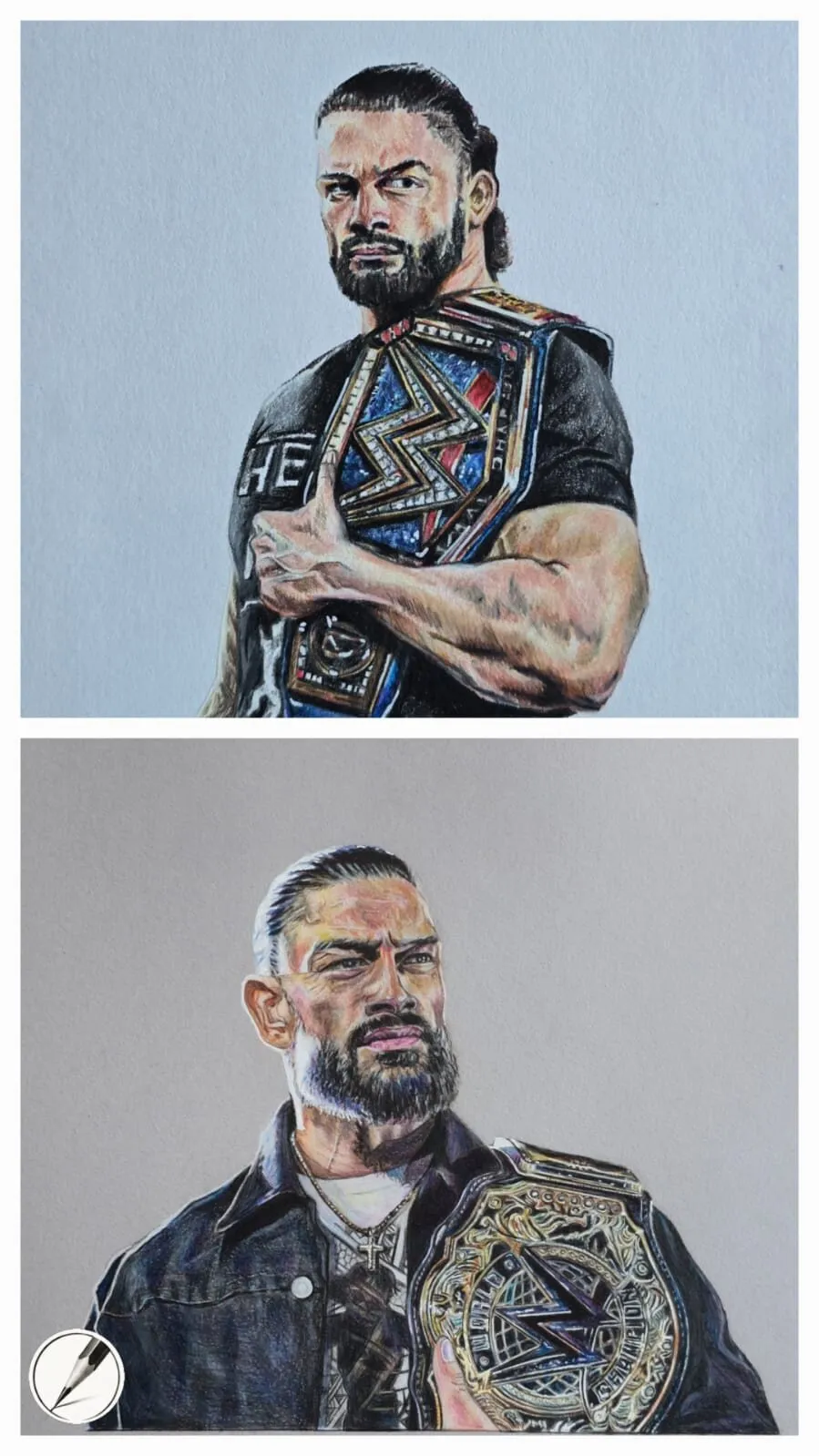
White paper gives you the widest range of tones for graphite and suits warm subjects such as portraits and animals. Toned paper, such as grey, gives you a mid-tone to work from. Michael notes that Art Gecko grey sketchbooks are softer, allowing looser, more expressive marks, which suits studies and portraits where a paintlike finish works well. Mid-weight papers like this are easier to blend on but less resilient if you erase repeatedly. See why use grey paper for coloured pencil for how toned paper changes your approach.
Binding
- Hardback (case-bound). Durable, protects pages, and gives a firm surface, which suits travel and drawing on your knee. They do not always fold flat, so the gutter can swallow some of the page.
- Spiral or wire-bound. Opens flat and lets you fold the cover back. It is comfortable for working across a spread. Pages can bend and the spiral can dent when packed in a bag.
- Sewn or softcover. Lightweight and flexible; suits quick studies, though the cover offers less protection.
- Glued pads. Good for loose sheets, less so for keeping a continuous record.
There is no universal winner. Hardback suits mobility; spiral suits studio work.
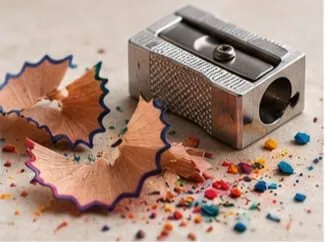
A metal pencil sharpener with coloured pencil shavings.
Size
Size shapes how you draw.
- A6 to A5. Pocket-sized. Easy to carry, but restricts detail. Suited to quick sketches and travel.
- A5 to A4. The best balance for most people: enough room to work and still portable. Our A4 paper size guide gives the dimensions, and the paper size converter compares metric and US sizes.
- A3 and larger. Studio use. Heavier and less portable.
The best size is the one you will actually use every day.
Travel versus studio
Travel. Choose a durable, hardback or well-covered book that fits a bag, with paper heavy enough that pencil does not show through. Keep it small enough that you carry it.
Studio. You can afford a larger, heavier book, and spiral binding can be a benefit. Because you have more time, consider heavier paper for finished studies.
If you draw in both places, one pocket-sized book for travel and one larger book at home is a comfortable arrangement.
Our picks in general terms
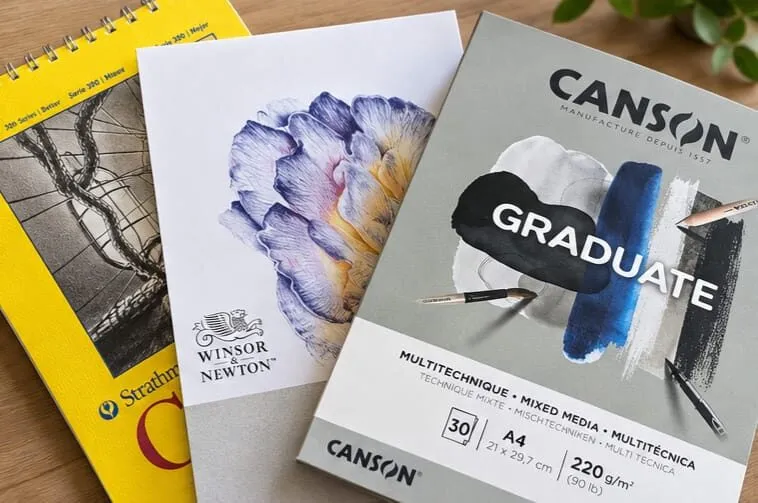
- A white cartridge sketchbook with a mid weight and a little tooth: the safe default for graphite. Winsor & Newton cartridge paper is a familiar example of paper that gives the tooth needed for rich shadows and crosshatching.
- A grey or toned sketchbook for studies with white highlights. The Art Gecko grey sketchbook is one example, softer for looser, more expressive marks.
- A heavier mixed media sketchbook if you plan to layer or mix media. Check the current weight and surface.
The right choice depends on medium, subject and budget.
How to use a sketchbook
A sketchbook works best when you use it in a way that keeps you drawing.
- Draw every day, even for ten minutes. See how to practise drawing daily for ideas.
- Date your pages. It makes progress visible.
- Do not tear out pages. Bad drawings are part of the record and usually teach the most.
- Use it for studies. Try value ramps, a single subject drawn several ways, and drawings from life or photographs.
- Test materials. Write down what pencil and grade you used next to the drawing.
- Use the spread. Composition practice and thumbnails fit well on double pages.
- Keep finished work separate. Use loose, heavier sheets for finished drawings, and sketchbooks for learning.
Try grades against the pencil grade chart, and use the grid drawing tool to practise proportion.
Filling a sketchbook without fear
Many people buy a beautiful sketchbook and then never dare to draw in it. The fix is to lower the stakes. Start with a cheap book for warm-ups, and give yourself rules that make drawing easy: one page per subject, a fixed time limit, or a single pencil for the whole book. Fill the first pages with swatches, grade tests and scribbles, so the blank white intimidation disappears. When a book is full, flip back through it. Progress is easiest to see in a sequence of pages made months apart, and it is a far better motivator than any single finished drawing.
Protecting a graphite sketchbook
Graphite smudges. Slip a sheet of clean paper or glassine between pages, keep a scrap sheet under your hand, and use a fixative if you want to preserve important pages, following the manufacturer’s directions. Our guide to how to avoid smudging pencil drawings covers habits that keep pages clean.
Common mistakes
- Choosing by cover. Check the paper weight and surface.
- Buying a large book too soon. If it is too big to carry, you will not draw in it.
- Paper that is too thin. Pencil ghosts through and erasing tears the sheet.
- Treating it as precious. A sketchbook you are afraid to spoil does not teach you anything.
- Expecting one book to do everything. A finished drawing needs better paper.
The short version
Pick a sketchbook for its paper, then its size and binding. For graphite, choose a mid-weight white cartridge-style book with a little tooth; for studies with highlights, try a grey sketchbook. Choose A5 to A4, hardback for travel and spiral for the studio, and use it daily. For coloured pencil, use the dedicated sketchbooks for coloured pencil guide, and for the wider paper picture see the paper guide.
Where to buy
Recommended products
Affiliate links. We may earn a small commission if you buy, at no extra cost to you. Why?
Paper · Art Gecko
Art Gecko Grey Sketchbook
A grey-toned sketchbook that suits looser, expressive studies and portraits.
Buy on AmazonAffiliate link · opens Amazon
Paper · Winsor & Newton
Winsor & Newton Cartridge Paper
Classic white cartridge paper with enough tooth for graphite and cross-hatching.
Quick answers
Frequently asked questions
What is the best sketchbook for graphite drawing?+
Look for white cartridge-style paper with a little tooth and a mid weight, so it holds shading and tolerates erasing. Winsor & Newton cartridge paper is a familiar example. Avoid very thin or glossy paper, which smudges and scuffs.
Should I choose a hardback or spiral sketchbook?+
Hardback sketchbooks protect pages and give a firm surface, which suits travel and outdoor drawing. Spiral sketchbooks fold flat, which is easier for working across a page or drawing near the spine. Choose by how you like to hold the book.
What size sketchbook is best?+
A5 to A4 is a good range for most people. Smaller books are portable but restrict detail, while larger books give room to work but are heavy to carry. Buy the size you will actually use every day.
Is a toned sketchbook better than white?+
It depends on your subject. Toned paper such as grey lets you add white highlights, which suits studies and glossy subjects. White paper gives the widest tonal range for graphite and warm subjects such as portraits and animals.