Colour Theory
What Colours Make Brown? Mixing Brown with Coloured Pencils
What colours make brown with coloured pencils (colored pencils in the US): layer complements or the three primaries, then steer warm, cool, light or dark.
This guide contains affiliate links. If you buy through them we may earn a small commission at no cost to you. How this works.
Jump to recommended products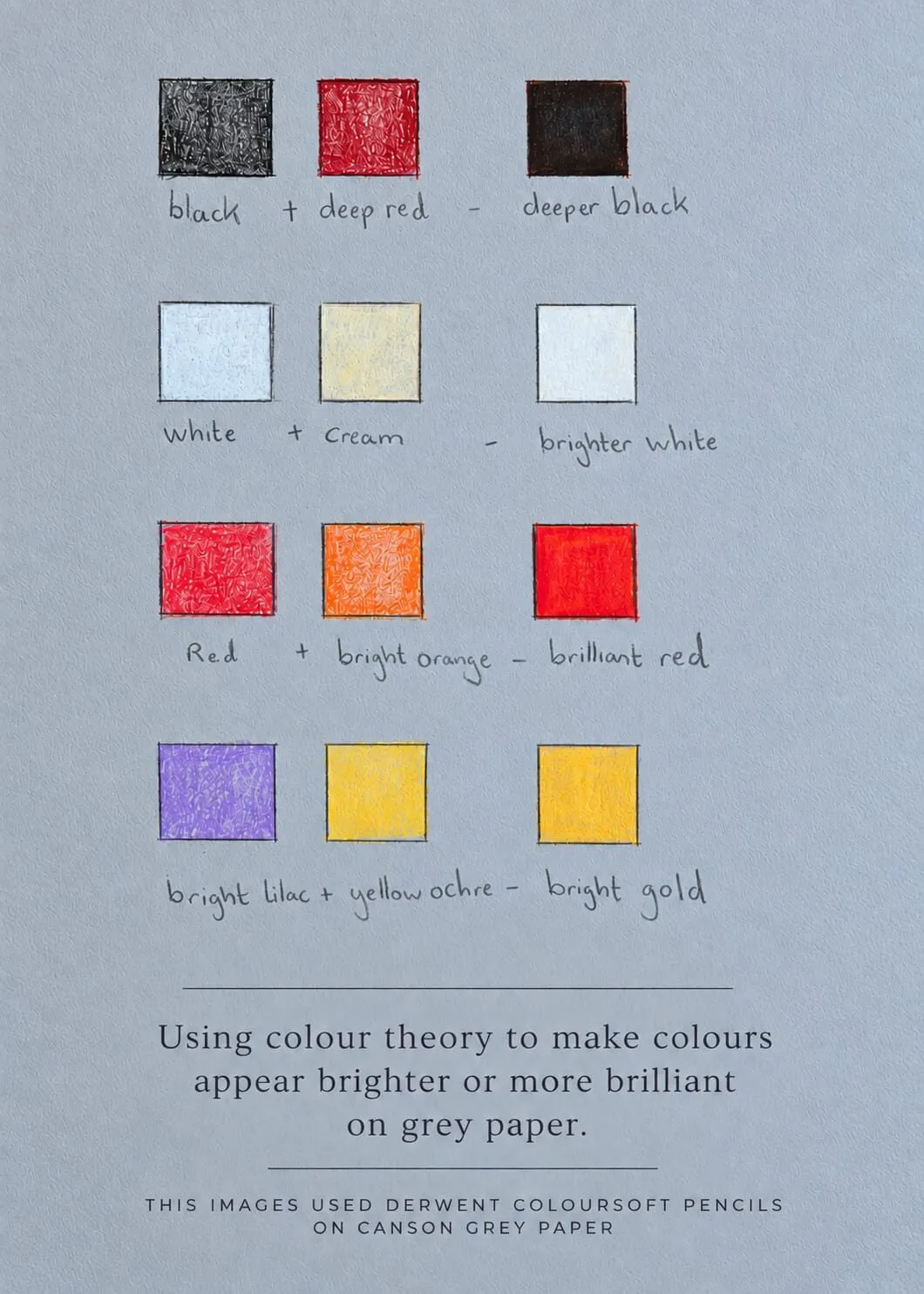
Key takeaways
- ◆Brown is a dark, muted orange. You get it by layering a pair of complements (red and green, orange and blue, yellow and violet) or by layering all three primaries.
- ◆Change the proportions to steer the brown: more red or orange makes it warmer, more blue or green makes it cooler.
- ◆Lightness comes from pressure and the amount of pigment, saturation from how close the mix is to a perfect balance of the complements.
- ◆Skin and earth browns are rarely one mix, so build them from ochre, red, grey and a cool shadow colour.
- ◆Always swatch your mixes on the paper you draw on, because paper colour and pencil opacity change every result.
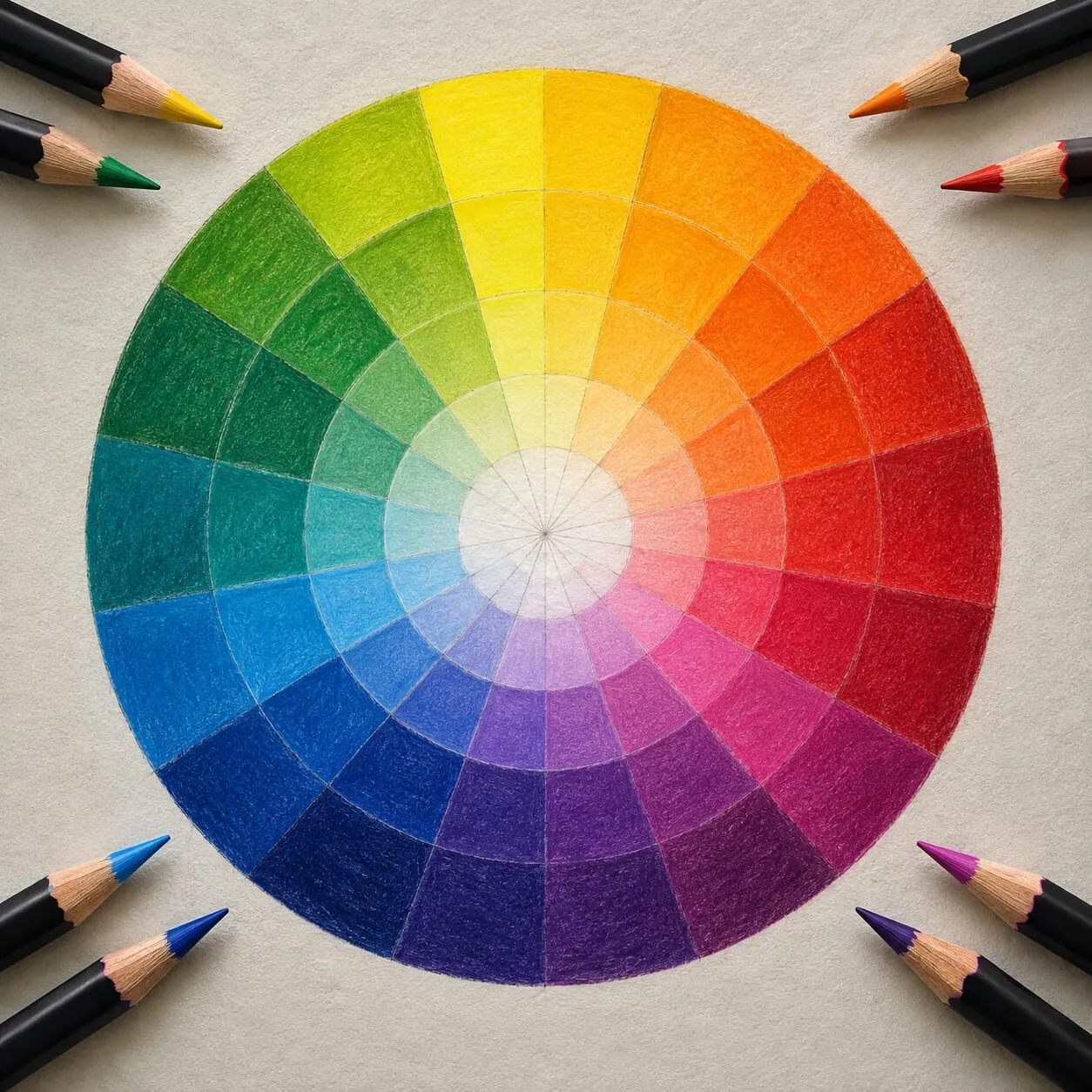
Brown is what you get when you neutralise orange. In coloured pencil, that means layering two colours that sit opposite each other on the wheel, or layering the three primaries together, until the result is dark and muted instead of bright. The quickest recipes are red with green, orange with blue, and yellow with violet, with the balance deciding whether the brown leans warm or cool.
This guide is written for coloured pencils, known as colored pencils in the US. It covers the pairings, the three-primary method, how to make browns warmer, cooler, lighter or richer, how to think about skin and earth browns, and the mistakes that turn browns to mud. It sits in the colour theory cluster and leans on complementary colours in drawing. If you would like to plan a mix against a photograph, try the palette from photo tool.
The short answer: complements or primaries
Every brown you will draw is a muted, darkened version of an orange, red or yellow. There are two routes to it.
Route one: layer two complements. Complementary colours sit opposite each other on the wheel. Layered, they cancel each other’s intensity and head toward a neutral. Because one of each pair is a warm colour and one is cool, the balance decides the temperature of the brown.
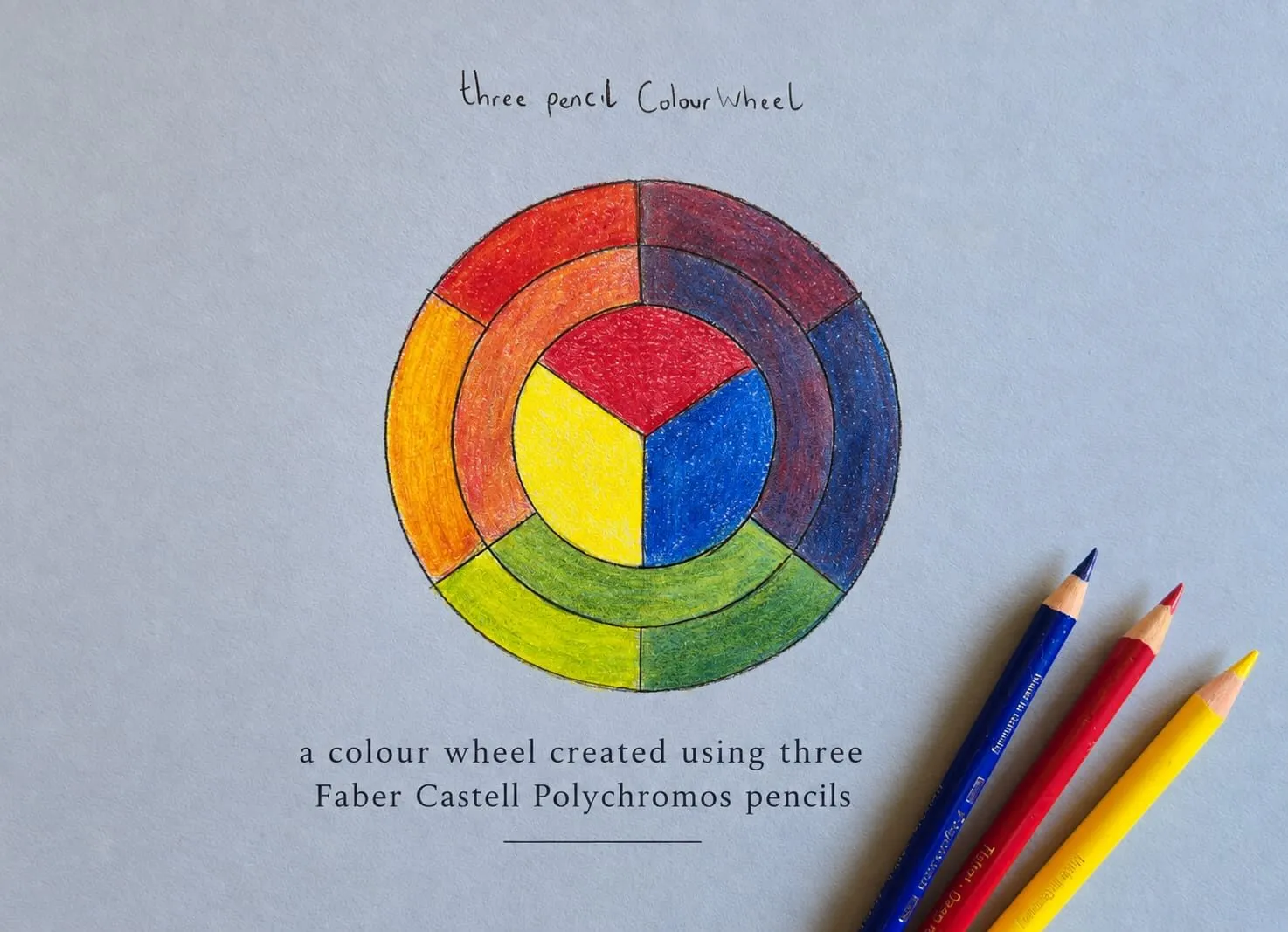
Route two: layer the three primaries. Red, yellow and blue together contain all the colour the eye needs to read as a neutral. This route gives you more control, because you can nudge each primary up or down, but it takes more layers.
If you need a refresher on why these pairs work, see the colour wheel explained and primary, secondary and tertiary colours.
Coloured pencils standing in a speckled ceramic pot.
Three complementary pairs for brown
| Pair | What you are mixing | Typical result |
|---|---|---|
| Red + green | A warm colour and its complement | A deep, slightly reddish brown when red leads, an olive-brown when green leads |
| Orange + blue | The most direct route to brown | A clean mid brown that swings from warm to cool with the blue |
| Yellow + violet | A light warm and a dark cool | A golden-tan brown when yellow leads, a dull purple-brown when violet leads |
The results depend on which exact red, green, blue or violet you use, so treat the table as a direction, not a recipe. Do not assume a particular pencil will give a particular brown: lay down a small swatch first and check.
Orange and blue
This is the pair to learn first, because brown is essentially dark orange. Lay a mid orange as the base, then glaze a blue over it. A little blue dulls the orange to a warm tan. More blue pushes it to brown, then to a cool dark brown. If you keep adding blue you arrive at a neutral grey, which is why this pair is also a method for mixing greys and neutrals.
Red and green
Red and green are the classic pair for rich, dark browns, because red is a deep, strong colour to start from. A warm red with a dark green gives a brown that feels close to fired clay or rosewood. A cooler red with a bluer green moves toward a dark, almost wine brown.
Yellow and violet
This pair makes lighter, more golden browns. Yellow ochre or a warm yellow under a touch of violet gives a tan or sand colour, useful for pastry, dry grass, leather and skin highlights. It is the gentlest route to a light brown.
Mixing brown from the three primaries
- Start with the colour that should dominate. For a warm brown, start with a yellow or orange. For a dark brown, start with a red.
- Layer the second primary lightly over the first, hatching in a different direction from the first layer so the pigments overlap instead of covering one another.
- Add the third primary last and lightly. A bit of blue is usually the final step, and it is easy to overdo.
- Stop and compare against the reference. Too orange means more blue. Too grey or cold means a touch more red or yellow.
- Burnish if you need a smooth, dense finish. The burnishing guide explains how, and why to wait until the colour is right.
A light touch at each stage is the secret. Brown is easy to make too dark, and once the tooth of the paper is full, you cannot add more layers to correct it.
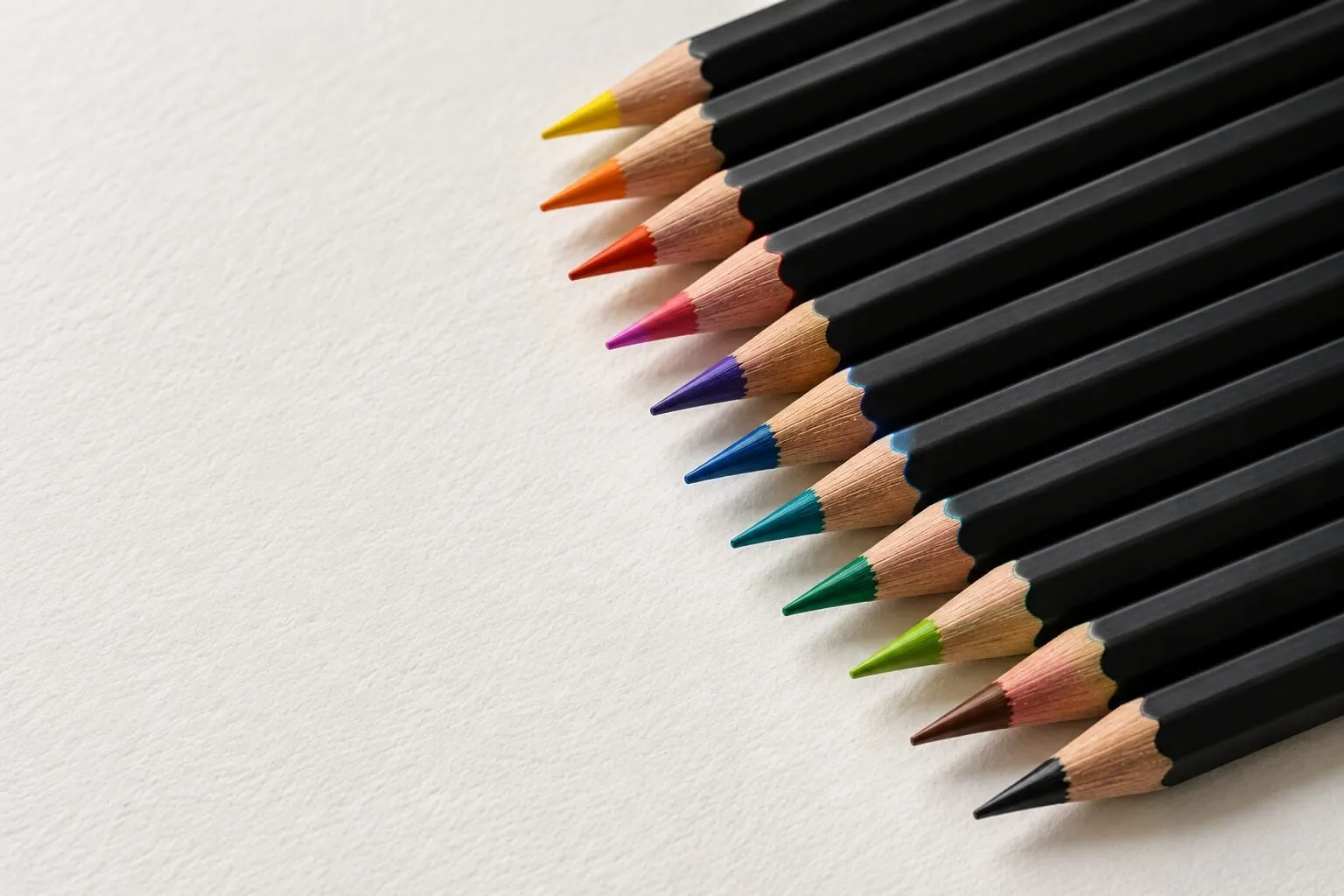
A row of sharpened coloured pencils fanned across white paper.
Warm browns and cool browns
Not all browns feel alike. Temperature is the difference between a chestnut horse and a wet tree trunk, and it is worth controlling deliberately.
- Warm browns have more red, orange or yellow in them. They feel close, sunlit and inviting. They suit pastry, wood in light, autumn leaves and warm skin.
- Cool browns carry more blue, green or violet. They recede and feel shadowed or damp. They suit wet bark, deep shadows, stone and the shadow side of a face.
A drawing usually needs both. Use warm browns where light hits the form, and cool browns where it turns away. The principles are in colour temperature: warm and cool.
Adjusting lightness and saturation
Mixing brown is two separate questions: how light or dark, and how strong or dull.
Lightness
- Use lighter pressure and let the paper tooth show for lighter browns.
- Put a pale warm layer such as cream or pale yellow over a dark brown to lighten it and warm it at once.
- Darken with more layers of the same mix first. If you need it darker still, add a deep blue, deep violet or deep green, which darkens without turning flat.
Saturation
- The closer a complement pair is to an even balance, the duller (more neutral) the result.
- A brown with a clear lean toward orange or red reads as more saturated and lively.
- To mute a brown without darkening it, layer a small amount of its complement over it. To make it livelier, add a touch of orange or red.
The deeper theory is in saturation and muted colours, and lightness is covered in value in drawing. Whatever colour you mix, check its value by photographing your swatch in greyscale or using the value study tool.
Skin browns and earth browns
Skin, wood, soil and fur are all brown, but they are built differently.
Skin
Skin is not a single brown. It is warm ochre, rose and red on the lit side, with cool greys, greens or violets in the shadows. A good approach is to build light, warm layers first, then add a cool layer over the shadow planes to neutralise the warmth. Our full guide is how to mix skin tones with coloured pencils, and the match and mix guide shows the swatch method.
Earth browns
Earth browns, such as soil, bark and rock, tend to be more neutral and more varied. Start with a warm base of yellow ochre or orange, add a muted red for richness, then bring in cool greys, blues or greens for the shadows and any mineral tones. Add little touches of reflected colour from the surroundings. Earth is rarely a single flat brown.
Food and wood
Pastry, chocolate and polished wood sit somewhere between the two. They need warm, saturated browns where light catches the surface and dark, cool browns beneath. Michael draws a lot of baked and glazed subjects on grey paper, and the brown tones in them are built up in layers rather than found in one pencil.
Common mistakes when mixing brown
- Pressing hard in the first layers. This fills the tooth and leaves no room for the second and third colours. Keep early layers light and build.
- Using black to darken. Black can make browns look flat or dirty. Try a deep blue, deep violet or deep green first, or read how to make black with coloured pencils.
- Stopping at one brown. A single brown pencil across a whole shape looks flat. Vary temperature and value within it.
- Over-mixing to mud. Every added colour dulls the result. If a mix has gone grey and lifeless, stop adding and lift or layer a warm colour on top.
- Trusting the pencil label. Brown pencils vary a great deal between ranges. Judge the swatch, not the name.
- Not testing on the real paper. Grey paper mutes light layers, and white paper makes them look stronger. Swatch on the paper you will use.
Checking your brown against a reference
Squint at your reference and ask three questions: is this brown warm or cool, light or dark, and bright or dull? Mix toward each answer separately. If you are unsure, use the colour scheme generator to see which hues sit opposite your brown, since those complements are the ones that will neutralise or enliven it.
The short version
Brown is a muted orange. Layer red with green, orange with blue, or yellow with violet, or use all three primaries, and control the balance for warmth. Keep the first layers light, vary the brown from lit areas to shadow, and avoid black as a shortcut. Swatch everything on your own paper, and return to the colour theory hub for the rest of the series.
Where to buy
Recommended products
Affiliate links. We may earn a small commission if you buy, at no extra cost to you. Why?
Pencils · Faber-Castell
Faber-Castell Polychromos
Firm, oil-based artist pencils that hold a point - a benchmark for detail and clean layering.
Pencils · Derwent
Derwent Coloursoft Pencils
Soft, velvety and richly pigmented - excellent for painterly blending and bold colour.
Quick answers
Frequently asked questions
What two colours make brown?+
Any pair of complementary colours makes a brown or neutral when layered: red with green, orange with blue, or yellow with violet. Orange with blue is the most reliable for a warm brown. Adjust the proportions to go warmer or cooler, and swatch on your own paper first.
What three colours make brown?+
Layer the three primaries: red, yellow and blue. Equal amounts lean toward a neutral brown-grey. More yellow and red gives a warm brown, while more blue gives a cool, dark brown. Use light layers and build, so you can correct the balance as you go.
How do I make brown darker or lighter with coloured pencils?+
For darker, add more layers and pressure, or bring in a deep blue or deep violet. For lighter, use lighter pressure, let the paper show, and add a pale warm tint such as cream or pale yellow on top. Avoid black, which can flatten the colour.
Should I just use a brown pencil?+
Brown pencils are useful, but a single brown looks flat. Layer a brown pencil with its complementary neighbours, such as blue or green, and with warmer colours like orange, to add life. It is faster to start from a brown pencil and adjust than to build every brown from scratch.
Are colored pencils and coloured pencils the same?+
Yes. Coloured pencils is the UK spelling and colored pencils is the US spelling, and they are the same product. The brown mixing methods here work for both.