
Colour Theory
How to Make Black with Coloured Pencils
Make rich, deep blacks with coloured pencils (colored pencils in the US) by layering deep reds, blues, greens and browns, and know when a black pencil helps.
This guide contains affiliate links. If you buy through them we may earn a small commission at no cost to you. How this works.
Jump to recommended products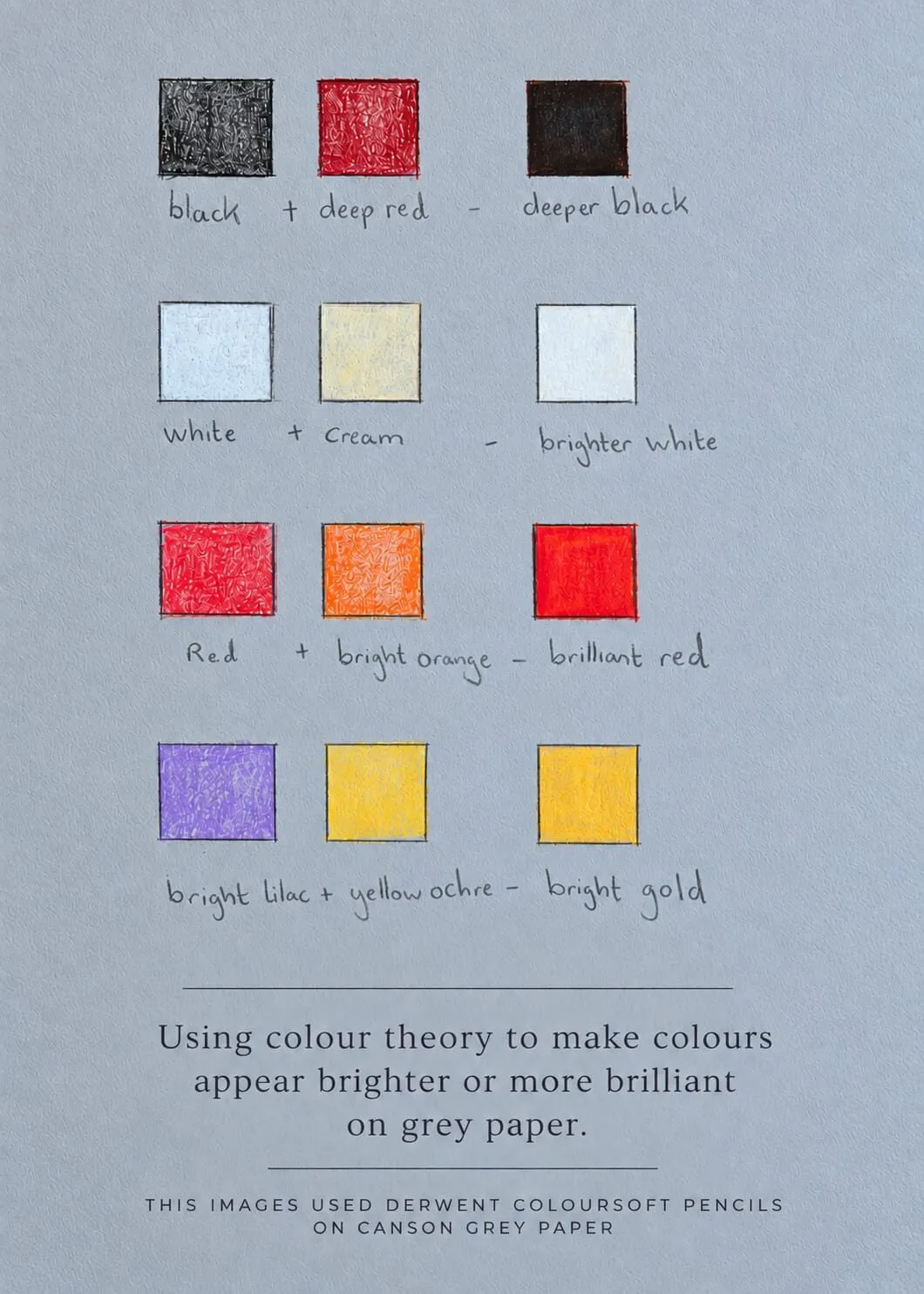
Key takeaways
- ◆You can build a chromatic black by layering deep colours such as dark red, blue, green and brown, and it often looks richer than a single black pencil.
- ◆Michael's swatch card shows that black layered with deep red gives a deeper black than black alone.
- ◆Layer in light passes, darkest colours last, and burnish at the end for a dense finish.
- ◆A black pencil is still useful as one ingredient, for accents and the very deepest core.
- ◆Check the lightfastness of your darks, because some deep, dark pigments fade or shift more than others.
A black made by layering deep colours is usually better than a black straight from the pencil. It has a temperature, it holds light and it sits naturally beside the rest of the drawing. Michael’s swatch card shows the idea in its simplest form: black layered with deep red gives a deeper black than black alone.
This guide is written for coloured pencils, known as colored pencils in the US. It explains how to layer deep colours into a rich dark, why not to rely only on a black pencil, how to work in stages, how to burnish, and how to keep your darks lightfast. It is part of the colour theory cluster, and the swatch card is taken apart in colour theory on grey paper. Plan dark areas with the value study tool.
The short answer
Layer two or three dark colours that tend to neutralise each other, such as a deep red with a deep green, or a deep blue with a deep brown, pressing lightly at first and building up. Put the darkest or coolest colour on last if you want a cool black, or finish with the warm if you want a warm black. Burnish when you are happy with the colour. Test on your own paper first.
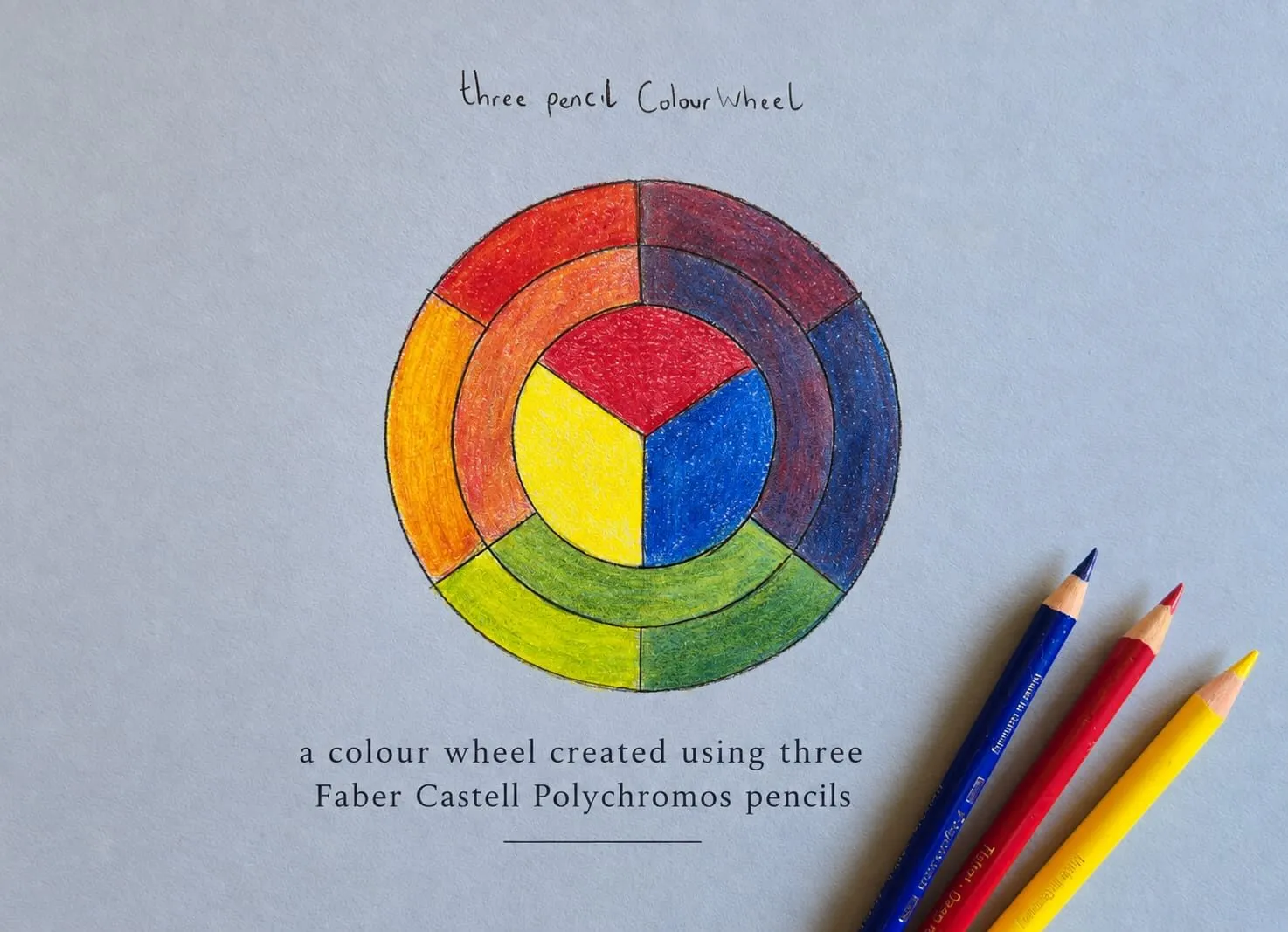
A hand-drawn colour wheel made with three Faber-Castell Polychromos pencils on blue-grey paper. Drawing by Michael Brace.
Why a chromatic black beats a flat black
A single black pencil gives one tone. Real darks are not one tone: a black cat, a dark coat or a deep shadow has reflected colour in it, warmer patches, cooler patches and subtle shifts. A chromatic black can hold all of that.
- It carries temperature. A black with red underneath feels warm. A black over blue feels cool. You choose the one that fits the light.
- It keeps the drawing coherent. Darks built from the same colours as the rest of the drawing feel part of it.
- It avoids the flat, chalky look that a heavily applied black can have on toned paper.
- It has more range. You can move from a soft dark to a deep one without changing pencils.
On mid-grey paper, a black pencil alone can also look slightly grey next to a saturated colour. This is the reason the swatch card pairs it with deep red. Colour theory on grey paper is explained in the grey paper guide.
Michael’s swatch: black plus deep red
The hand-drawn swatch card at the top of the page is done with Derwent Coloursoft on Canson grey paper. One of its four pairings is black with deep red, and Michael’s result is a deeper black.
The logic is simple. The red underneath adds warmth and richness, so the black on top no longer looks like a flat grey on the paper. The card’s other pairings are white with cream, red with bright orange and bright lilac with yellow ochre. Treat it as a starting point, not a formula: different pencils and papers will give different results, so make your own card.
Combinations to try
These are families of mixes, not specific pencils. Choose the darkest, most saturated versions of each colour in your set.
| Combination | Direction | Good for |
|---|---|---|
| Deep red + deep green | A neutral dark with a warm or cool lean | Foliage shadows, dark fabric, hair |
| Deep blue + deep brown | A cool, slightly warm-neutral dark | Night scenes, dark coats, metal |
| Deep violet + dark green | A rich, slightly cool dark | Shadows in plants and skin |
| Deep red + black | A warm, deeper black | Michael’s card; dark hair, velvet |
| Three dark primaries layered | A very neutral dark | Large deep shadows |
Changing the order changes the result, so try both and note which looks better on your paper.
How to build a chromatic black
- Plan the value. Decide which areas are truly the darkest. Use a value study or the value study tool so you do not use your darkest dark everywhere.
- Start with a mid-dark colour layer at moderate pressure. This is the colour you want to show through, such as deep red for warm or deep blue for cool.
- Add a second, contrasting dark in a different direction, lightly. Use a dark complement such as green over red.
- Build in light passes. Six light layers often look deeper and richer than two heavy ones, and leave room to correct.
- Judge against the lights around it. A dark looks darker beside bright colours. Check the contrast before you add more.
- Add black last, if at all, in the very deepest core or accents.
- Burnish with a light colour or a blender once the colour is right, for a dense, saturated finish.
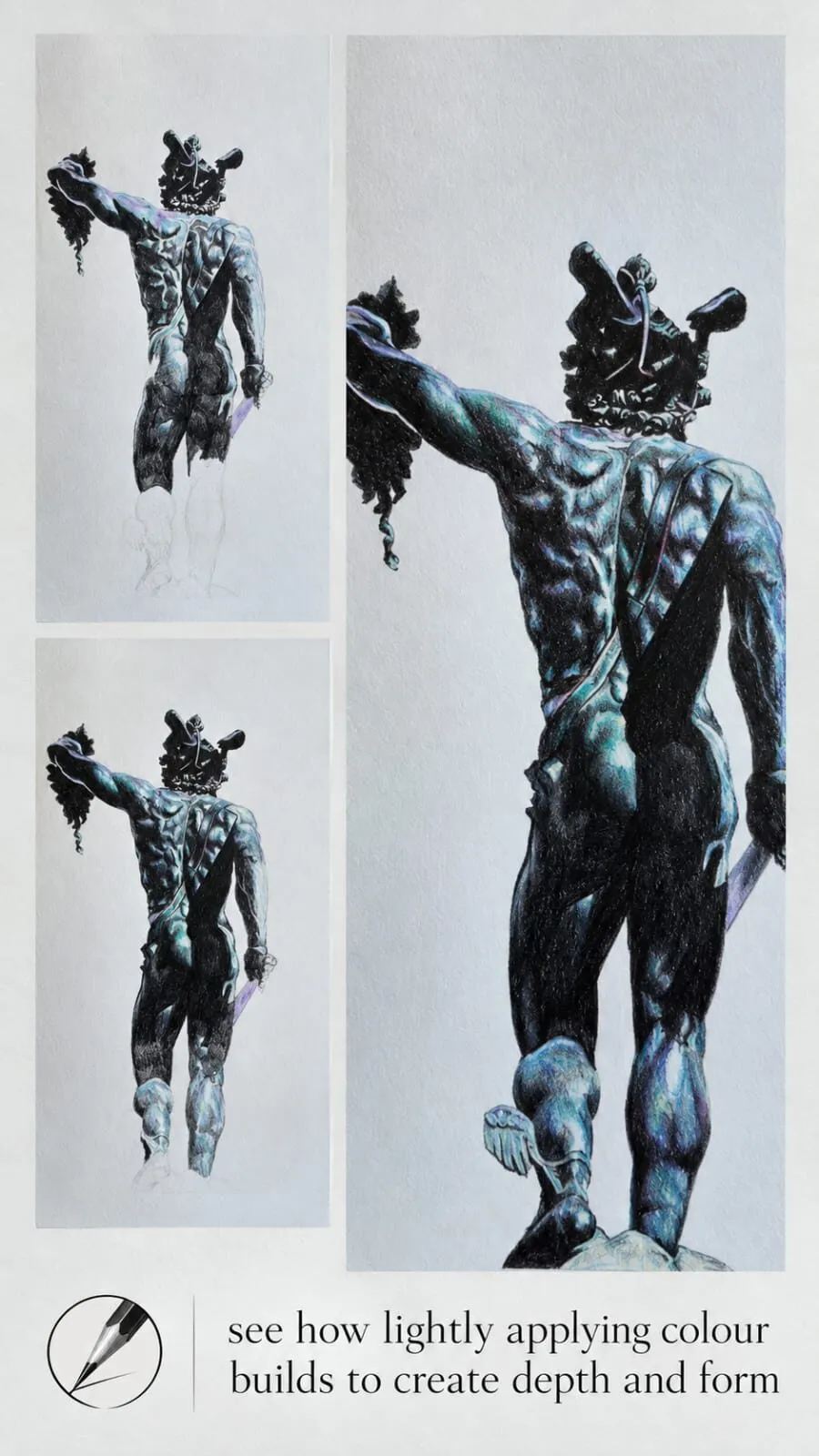
The Perseus statue in three stages: light layers of colour build depth and form before the darkest tones are pushed.
Burnishing your darks
Burnishing means pressing firmly, or layering a light colour or blender, to crush the pigment into the tooth of the paper. On dark areas it gives a smooth, dense, slightly glossy finish and saturates the colour. It is a finishing step, because once the tooth is full you cannot add more layers.
Do it last, and only when you are sure of the colour. Full detail is in how to burnish coloured pencils. Very heavy layering can also produce wax bloom with wax-based pencils, a whitish haze, so read about that if you work heavily with soft pencils. For lighter darks, stop before burnishing and let the paper grain show.
Do you still need a black pencil?
Yes, for a few jobs.
- The deepest accent in a drawing, such as the core of a pupil or a crevice.
- A quick, even dark for small areas, where a chromatic mix would be overkill.
- One ingredient in the mix, as on Michael’s card.
The point is not to ban black. It is to avoid using it alone on large areas, where it tends to look dull. For the mixed-neutral equivalent, see how to mix grey and neutral colours.
Lightfastness: a caution about dark colours
Darks are the colours that sit in a drawing the longest, and they are not all equally lightfast. Some deep reds, violets and blues are known to fade more than others, which can shift a chromatic black toward a different colour over time if one ingredient fades.
- Check the manufacturer’s lightfastness information for every pencil you use in an important dark. It varies by range and by colour.
- Favour lightfast pigments in any drawing you plan to sell or keep.
- Frame with UV-protective glazing and keep the drawing away from direct sun.
Read our coloured pencil lightfastness explained guide before you commit to a mix for a finished piece.
Common mistakes
- Going too dark too early. Early heavy layers fill the tooth. Build gradually.
- Making every dark the same. Vary temperature and value within the dark.
- Using black everywhere. The result can look flat and heavy.
- Ignoring the paper. On grey paper a dark needs more richness to read deeper. On white paper, it shows more contrast. Swatch on the exact paper.
- Skipping the test. Pencils vary, so a mix that works in one set may look different in another.
Testing your own black
Try a short test on your drawing paper. Make four squares. In the first, use black alone at firm pressure. In the second, layer a deep red lightly, then black. In the third, layer deep blue, deep green and deep brown. In the fourth, combine all of them. Compare in normal light and in a greyscale photo. You will learn which version looks richest, which feels warm or cool, and how much pressure each needs.
The short version
Layer deep colours to make a black that breathes: dark red with green, blue with brown, or black over deep red as on Michael’s swatch card. Build in light layers, burnish last, keep a black pencil for accents and check lightfastness for any dark that matters. Test on your own paper, and carry on through the colour theory hub.
Where to buy
Recommended products
Affiliate links. We may earn a small commission if you buy, at no extra cost to you. Why?
Pencils · Derwent
Derwent Coloursoft Pencils
Soft, velvety and richly pigmented - excellent for painterly blending and bold colour.
Paper · Canson
Canson Mixed Media Grey Paper
A toothy mid-tone grey paper that grips pigment and makes highlights glow.
Quick answers
Frequently asked questions
How do you make black with coloured pencils?+
Layer dark, deep colours over one another, such as a deep red, a deep blue and a deep green or brown, pressing lightly at first and building up. The mix reads as a rich chromatic black. You can add a black pencil as one layer. Swatch on your own paper to check the result.
Why not just use a black pencil?+
A black pencil alone can look flat, and on toned paper it may look slightly grey. Layering it over or under deep colours gives depth, warmth or coolness, and a dark that looks more natural next to the colours around it. Michael's card shows black over deep red for a deeper black.
What colours make black with coloured pencils?+
There is no single recipe, but combinations of deep red with deep green, deep blue with deep brown, or three dark primaries layered together tend to reach a very dark neutral. The exact result depends on your pencils and paper, so test combinations on your own paper.
Do dark pencils fade?+
Some pigments are more lightfast than others, and dark colours vary widely. Check the lightfastness rating from the manufacturer for each pencil you use in a dark mix, and avoid relying on a fugitive colour for an important dark. Framing away from strong light also helps.
Are colored pencils and coloured pencils the same?+
Yes. Coloured pencils is the UK spelling and colored pencils is the US spelling, and they are the same product. The approach to making black is the same for both.