The Art World
Can You Sell Fan Art? What Artists Should Know
A general guide to selling fan art: copyright, derivative works, trademarks, platform takedowns, and safer alternatives for pencil artists. Not legal advice.
Key takeaways
- ◆Copyright in a drawing belongs to its creator from the moment it is made, and that applies to the characters and worlds you might want to draw as well as to your own work.
- ◆Fan art is usually a derivative work, and characters and brand names may also be protected by trademarks, so selling it carries real risk even when your drawing is entirely your own.
- ◆Drawing fan art for practice and personal enjoyment is a different situation from selling it, and platforms can remove listings on request from rights holders.
- ◆Safer routes include original subjects, your own or properly licensed reference, public-domain subjects, commissions of people's own pets and objects, and licensing.
- ◆Rules differ by country and change over time, so this is general information only: check platform policies and ask a qualified professional about your situation.
Drawing your favourite character is one of the most natural ways to practise, and it is tempting to put the result on a print or mug and sell it. The question “can you sell fan art?” gets confident answers online in both directions, and most of them are wrong because they ignore the details. The honest answer is that it depends on the work, the country, the rights holder and the platform, and that selling carries more risk than drawing for yourself. The same principles apply whether the artwork is in graphite or coloured pencil (colored pencil in the US).
This guide explains the ideas behind that answer in plain terms: how copyright arises, what a derivative work is, why trademarks matter, what platforms do, and what safer alternatives exist for pencil artists. It is part of our art world guide and pairs with how to sell your drawings online.
How copyright arises
In most countries, copyright in an original work exists automatically from the moment it is created in a fixed form. You do not need to register it or add a symbol for your drawing to be protected, though a notice and records can help you show ownership. The same applies to everyone else: the designer of a cartoon character, the writer of a novel and the studio behind a film all hold rights from creation, and those rights usually last for a long time.
Two things follow. First, your own drawings are protected, which is why you should care about how others use them. Second, drawing someone else’s protected character does not transfer their rights to you. You own the copyright in your drawing as a drawing, but you do not gain the right to exploit the character it depicts.
Exactly what is protected, for how long and with what exceptions varies by country, so any specific question needs local advice.
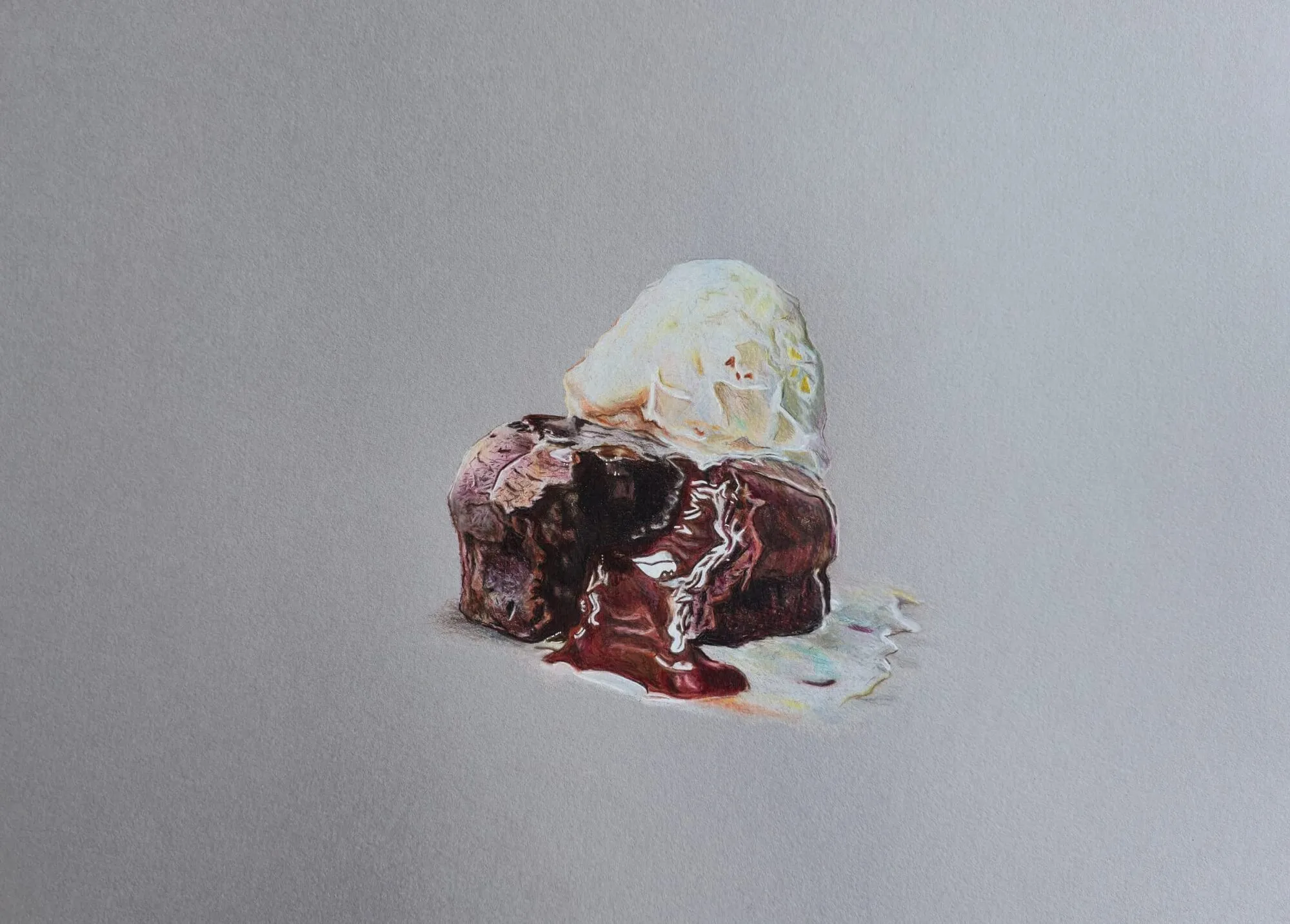
A molten chocolate dessert with ice cream drawn in coloured pencil on grey paper. Drawing by Michael Brace.
Derivative works in plain terms
A derivative work is a new work built on an existing one, such as a drawing of a known character, a poster of a film scene or an illustrated version of a famous story. Fan art is usually a derivative work, even when every line is your own, because it depends on a protected character, design or scene for its identity.
Rights holders commonly have the exclusive right, or at least the practical control, to authorise derivative works. That is why a studio can licence official merchandise and object to unofficial copies. Some jurisdictions have exceptions, such as parody, criticism or fair use or fair dealing, but they are narrow, fact-specific and difficult to rely on. A general-purpose claim that “it is my own drawing” does not settle the matter.
Trademarks, characters and brands
Copyright is only part of the picture. Trademarks protect names, logos, slogans and other signs that identify who makes a product. Many characters, sports teams, brands and franchises are protected in both ways at once: the artwork by copyright, the name and logo by trademark.
This matters for selling. Putting a famous name or logo on a print or item can suggest that the product is official or endorsed, which is exactly what trademark law is concerned with. It also means that even if you redraw a character from scratch, the use of its name, logo or distinctive branding in your listing can cause problems.
Real brands and products appear in drawings constantly, such as a branded tin in a still life, and the risk varies with how prominent they are, how you describe the work and what you do with it. If brand names or logos are central to your piece, think carefully, and ask a professional before selling.
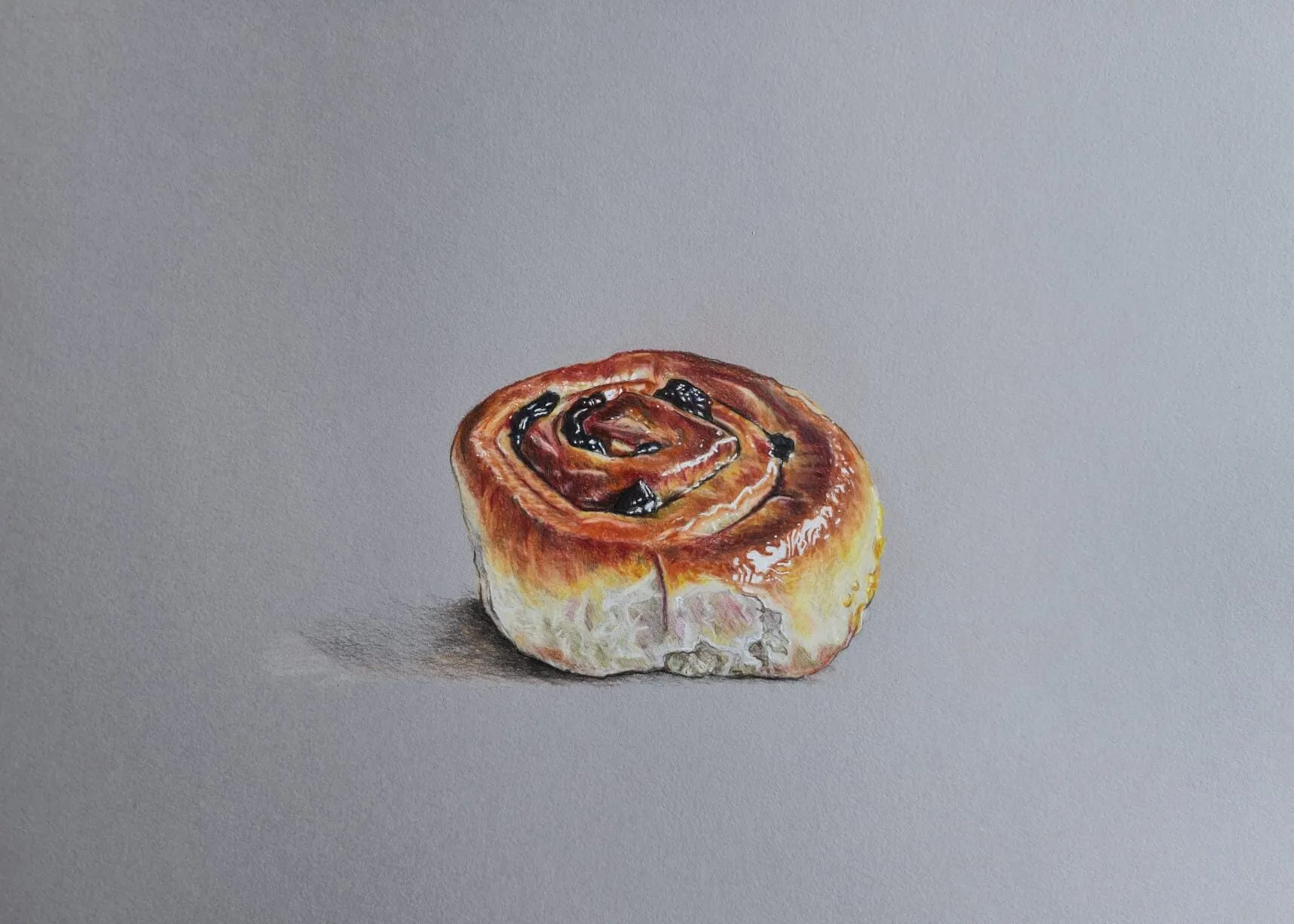
A glazed pastry swirl with raisins drawn in coloured pencil on grey paper. Drawing by Michael Brace.
Why selling is riskier than sharing
There is a practical difference between drawing for fun and selling for profit, even if the law does not divide them neatly.
- Personal practice and learning. Copying or re-imagining characters to develop your skills is a long-standing way to learn, and the drawings stay in your sketchbook.
- Sharing online. Posting fan art is widely tolerated by many rights holders, but tolerance is not a licence and can change, and each platform has its own rules.
- Selling. Once money is involved, the work competes with official products, and rights holders tend to pay closer attention. Prints, stickers, clothing and similar items are the areas most often challenged.
Some rights holders publish fan content policies that set out what they allow, and some do not allow sales at all. Read the policy for the specific franchise, and remember that a policy can be changed or withdrawn and may apply only in some circumstances.
Platform takedowns and policies
Online platforms and print-on-demand services usually have terms that prohibit infringing content and set procedures for rights holders to report it. In practice, a complaint can lead to a listing being removed, an account warning or, after repeated problems, closure. Because your shop may depend on one platform, that risk is worth weighing against the potential income.
Policies differ between platforms and change, so we cannot summarise them here. Read the current terms of any platform before you list, including their rules about trademarks, brand names and derivative content. If you receive a notice, read it carefully and consider advice from a qualified professional rather than ignoring it.
How to tell what is public domain and what is protected
Some material is free to use because copyright has expired or never applied, but working out which takes care.
- Do not assume. Something being old, widely shared or found online does not make it free to use.
- Check the source and country. The period of protection and its start date differ between countries, and one work can be in the public domain in one place and protected in another.
- Watch for layers. A very old story may be free, while a modern film, illustration or redesign of it is protected. A photograph of an old painting may carry its own rights.
- Look for clear licences. Some creators release work under open licences that state exactly what you may do, including whether commercial use is allowed. Read the terms and follow any conditions, such as credit.
- Keep records. Note where each reference came from and what the licence said.
- Ask when unsure. A librarian, a museum’s rights team or a qualified professional can help you check a specific work.
If you cannot confirm that a piece of reference is free to use, treat it as protected.
Safer alternatives to selling fan art
You can keep the skill-building and the enthusiasm without the risk, and often the work sells better because it is yours.
- Original subjects. Design your own characters, creatures and scenes, or draw from things you see. A drawing with its own identity builds your brand rather than someone else’s.
- Your own reference. Work from photographs you took yourself or material you are licensed to use. Our guide to drawing a portrait from a photo covers using reference well, including respect for the people in it.
- Public-domain or openly licensed subjects. Confirm the status as described above, then draw freely within the licence terms.
- Everyday objects and animals. Food, metal, fur and fabric reward skill. Our guides to drawing food realistically, drawing shiny metal and reflections and drawing animal fur show subjects that need no borrowed characters.
- Commissions. Clients who ask for a portrait of their own pet, home or treasured object bring their own reference, and you can agree terms in writing. See how to price your drawings. Make sure they own or may use any photographs they provide.
- Licensing. If you genuinely want to work with an existing character or brand, contact the rights holder and ask whether a licence is possible. Some run programmes for fan creators. Expect terms and conditions, and expect that some will say no.
- Inspired-by work with real difference. Drawing in a genre or style is generally different from copying a specific character, but the line is not always clear, so keep your work clearly your own and ask for advice if you are close to the boundary.
Questions to ask before you sell
Run through these honestly before listing anything based on someone else’s creation:
- Who owns the character, design or brand, and have they given permission?
- Does my listing use their name, logo or distinctive branding?
- Does my platform allow this kind of content, and what happens if there is a complaint?
- Would a buyer reasonably think my item is official?
- Is there a published fan content policy, and does it allow sales?
- Would I be comfortable if the rights holder saw my listing?
- Have I asked a qualified professional when the stakes are high?
If several answers are uncertain, pause. A slower decision costs far less than a removed shop.
Differences by country
Copyright exceptions, trademark rules, how long protection lasts and how rights are enforced differ from country to country, and so do the platforms’ local obligations. A guide written for readers everywhere cannot say what applies to you. Treat any blanket claim, such as “fan art is always fine” or “fan art is always illegal”, as a warning sign, and look for current information from your national copyright or intellectual property office, or from a qualified professional.
The short version
Copyright arises automatically, and fan art is usually a derivative of someone else’s protected work, often tangled up with trademarks. Drawing it for practice is one thing, and selling it is riskier, particularly on platforms that act on complaints. Build your income on original subjects, your own or licensed reference, public-domain material, commissions and licensing, and check the current policies of every platform. For legal certainty, ask a qualified professional. Then turn to how to sell your drawings online and how to make prints of your drawings to put original work to use.
Quick answers
Frequently asked questions
Is it legal to sell fan art?+
There is no single answer, because the law differs by country and depends on the details. Fan art of someone else's characters is generally a derivative work, and selling it without permission can infringe the rights holder's copyright or trademark. This is general information, not legal advice, so consult a qualified professional.
Can I post fan art online if I do not sell it?+
Sharing is not the same as selling, and many rights holders tolerate fan work made for enjoyment. Tolerance is not permission, though, and platforms can still remove content after a complaint. Policies differ by company and country, so read the relevant terms and ask a qualified professional if unsure.
What is the difference between copyright and trademark?+
Copyright protects original creative works, such as drawings, stories and character designs, from the moment they are created. Trademarks protect names, logos and other signs that identify a brand or product in trade. A single character can involve both, which is one reason fan merchandise is risky. Details vary by country.
What can I draw and sell safely instead of fan art?+
Original subjects you design yourself, your own reference photographs, objects and animals you can legitimately draw, and works whose protection has ended are the usual starting points. Commissions of a client's own pet or belongings work well too. Always check the source and licence of any reference, and keep records.