The Art World
How to Write an Artist Statement
Write a clear artist statement for drawings: what to include, length, first or third person, examples as templates, bio versus CV, and an editing checklist.
Key takeaways
- ◆An artist statement explains what you make, how you make it and why, in plain words that help a reader look at the work more closely.
- ◆Keep it short, specific and honest, usually one to a few short paragraphs, and follow any length set by a competition or gallery.
- ◆First person is usual for a statement, while a bio is normally written in the third person and a CV is a structured list of facts.
- ◆Avoid jargon and vague claims, and show your subject, materials and process instead of announcing that your work is important.
- ◆Edit hard: read it aloud, cut filler, check every fact and make sure it fits the specific place you are sending it.
Most artists dislike writing their statement, and it shows. The typical result is either a cloud of borrowed phrases about “exploring the human condition” or a polite paragraph that could describe any drawing by anyone. Neither helps a competition judge, a gallery or a buyer, which is what the statement is for.
A good statement is much more modest and much more useful. It tells a stranger what they are looking at, how it was made and why you care about it, in words they would understand without an art degree. This guide explains what a statement is, how long it should be, a simple structure, the question of voice, how it differs from a bio and a CV, and how to adapt it for competitions and galleries. It belongs to our art world guide and suits graphite and coloured pencil (colored pencil in the US) artists equally.
What an artist statement is
An artist statement is a short piece of writing in your own voice that explains your work. It answers the questions a viewer cannot answer by looking: what are these drawings of, how did you make them and why does it matter to you?
It is not a sales pitch, a biography or a review of your own genius. It is also not an explanation so detailed that the work becomes redundant. Its job is to open a door, so that a person looking at your drawing notices something they might have missed. A judge scanning many entries or a buyer weighing a piece will often read it quickly, so clarity counts more than cleverness.
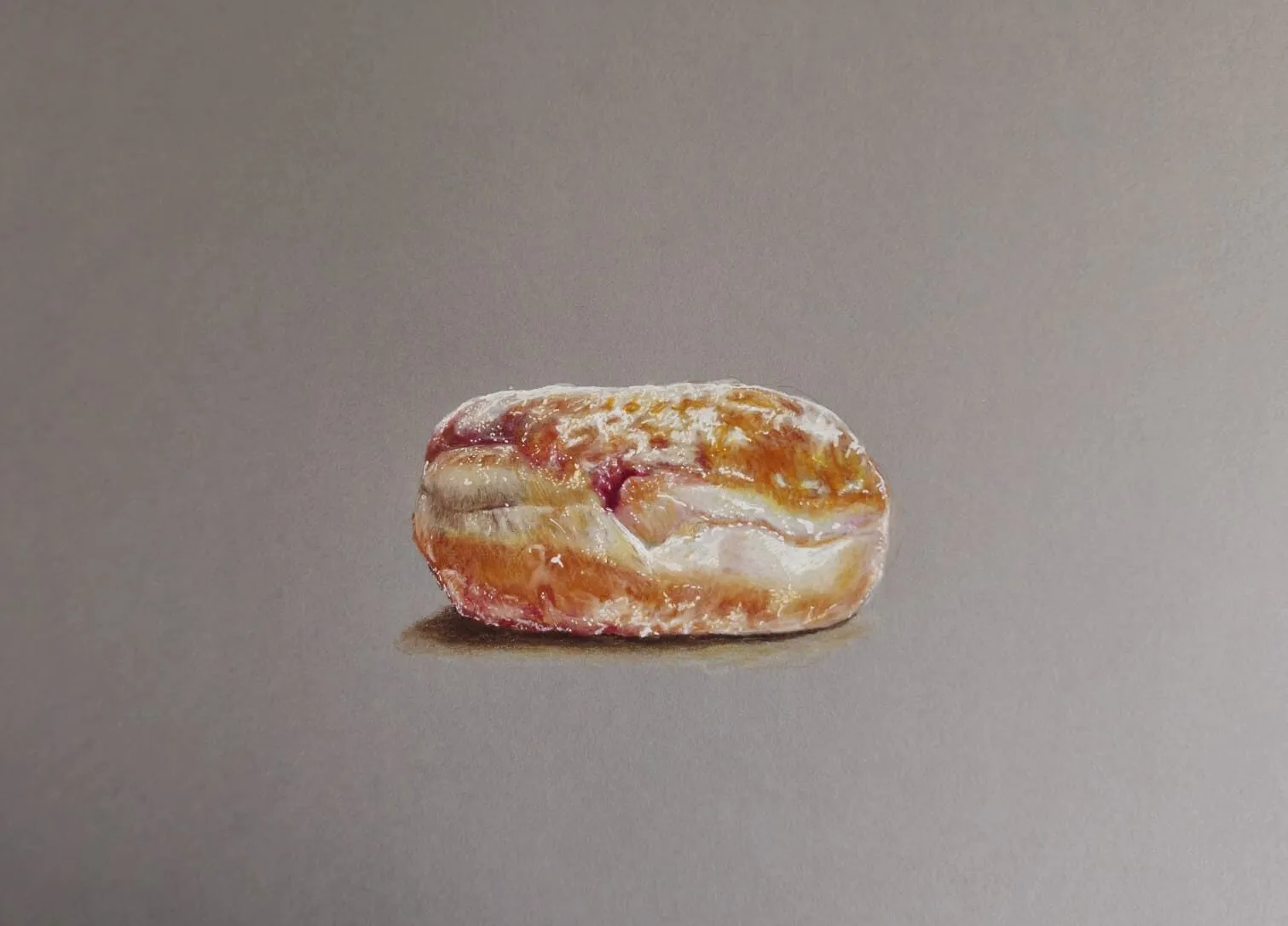
A sugared jam doughnut drawn in coloured pencil on grey paper. Drawing by Michael Brace.
How long it should be
Short, in almost every case. A statement of a few clear sentences can be enough for a single piece, and a general statement for a body of work usually fits in a handful of short paragraphs. Many competitions, galleries and platforms set their own limit, and you should treat it as firm.
Prepare versions in advance:
- A few sentences for a caption, social bio or entry form field.
- A short paragraph for most entries and gallery submissions.
- A longer version of a few short paragraphs for your website or a portfolio, as described in how to build an art portfolio.
Having all three ready means you can respond quickly when an opportunity appears, and you can adjust rather than start from nothing.
A simple structure: what, how, why
The easiest way to organise a statement is to answer three questions in order.
- What do you make? Name your subject and medium plainly. For example, a series of drawings of food, portraits of older people or studies of metal and reflections.
- How do you make it? Say what materials and methods matter: graphite or coloured pencil, toned or white paper, layering, the stages you work through. Specifics build trust. Our technique guides, such as how to layer coloured pencils, show the kind of concrete detail a reader can picture.
- Why do you make it? Give the reason that genuinely moves you, in honest terms: what draws you to the subject, what you want a viewer to notice, what you are trying to get better at.
Then, if there is room, add a closing sentence about where the work is going. Keep the order flexible for a long version, but for short entries, what, how, why is hard to beat.
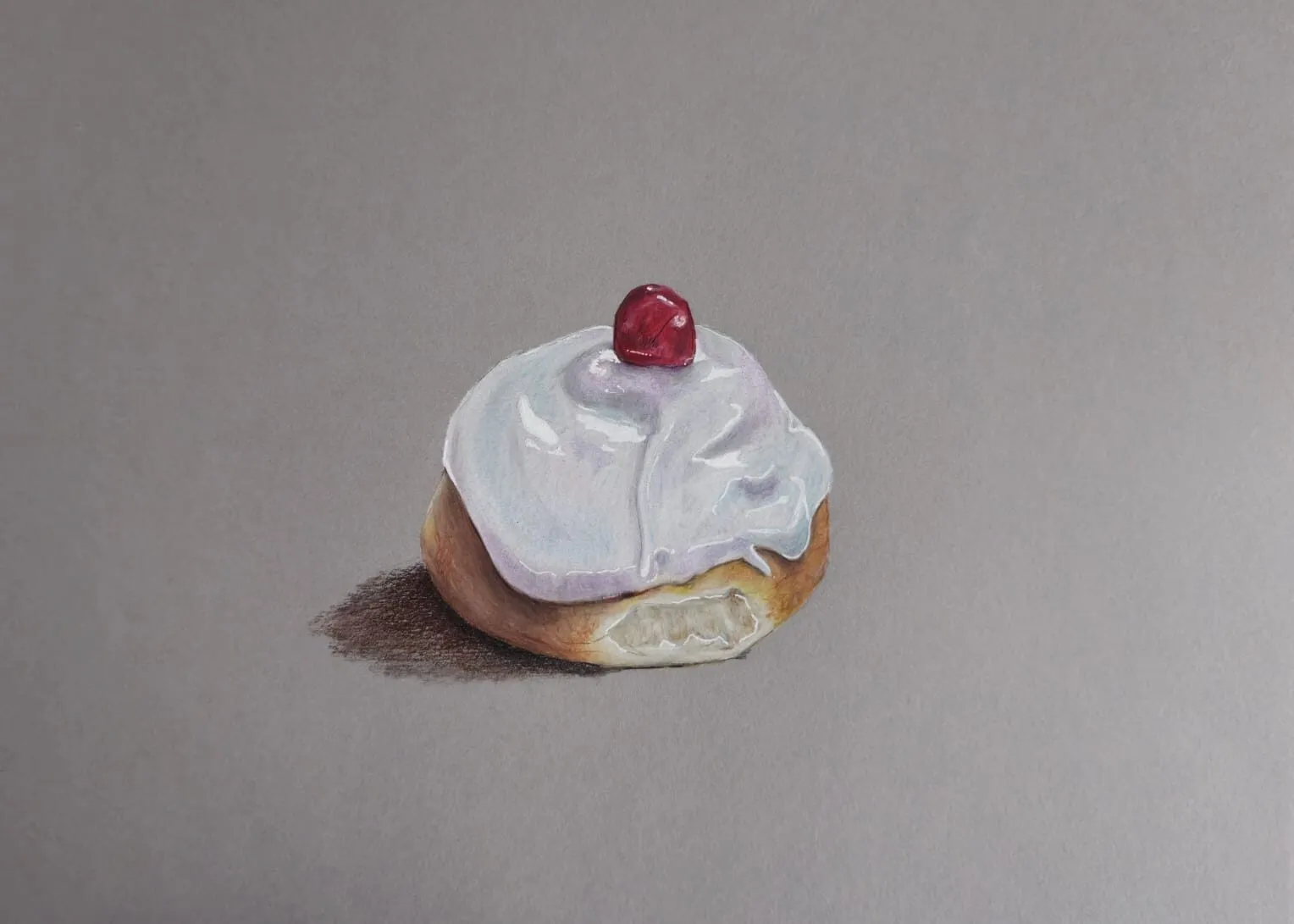
An iced bun topped with a cherry drawn in coloured pencil on grey paper. Drawing by Michael Brace.
First person or third person
- Statement: first person. It is your voice explaining your work, so “I draw…” is natural and warm. It also avoids the awkwardness of writing about yourself as if you were a stranger.
- Bio: third person. A biography is conventionally written as if by someone else: “Michael Brace is a contemporary realist working in coloured pencil and graphite.”
- Follow the instruction. If a competition or gallery specifies a person, use it. Stay consistent inside any one document.
Do not switch mid-paragraph, and do not refer to yourself as “the artist” in a first-person statement.
Avoid jargon and empty phrases
The fastest way to lose a reader is to sound like every other statement. Watch for:
- Abstract claims such as “explores the tension between…” when you have not said what the drawing shows.
- Borrowed vocabulary that you would not use in conversation.
- Superlatives and self-praise, such as “groundbreaking” or “unique”. Let the work make the case.
- Padding, such as “I have always been passionate about art”.
- Technical terms with no explanation. If you say burnishing or glazing, make sure the reader can follow from context, and do not use them to impress.
The test is simple: could you say it across a table to a friend who does not draw? If not, rewrite it. Replace each abstract phrase with a concrete detail from the work: a subject, a surface, a light condition, a method.
Examples as templates
The following are invented, generic illustrations to show the structure. They are not real artists’ statements. Replace every detail with your own.
Illustration 1: a short statement for a still-life series
I draw everyday food in coloured pencil on grey toned paper. I build each piece in thin layers, starting with the darks and adding light last, so that glazes and sauces look wet and glossy. I am interested in how ordinary things can look extraordinary when they are drawn with patience and close attention.
Illustration 2: a short statement for portraits
My drawings are portraits of older people, made in graphite and coloured pencil. I work slowly from the overall shape toward small changes in tone, because faces carry so much in their smallest shifts. I want viewers to spend time with each face, the way they might with someone in a room.
Illustration 3: a one-sentence version
I make detailed pencil drawings of metal, glass and reflections, exploring how light changes the look of ordinary objects.
What these have in common: they name the subject and medium, describe a real working method, give a modest reason, and stop. Notice that none claim importance. That restraint reads as confidence.
Artist statement, bio and CV
These three documents are often confused, but each has a different job.
| Statement | Bio | CV | |
|---|---|---|---|
| Purpose | Explain the work | Introduce you | Record your history |
| Voice | First person | Third person | List form |
| Content | What, how, why | Where you work, medium, verified achievements | Education, exhibitions, awards, publications |
| Typical length | Short to medium | Short | As long as needed |
Keep facts in the bio and CV accurate and exact. State “shortlisted”, “longlisted”, “exhibited” and “selected” precisely, because they mean different things. Michael, for example, lists his Derwent Art Prize 2026 and British Art Prize 2025 shortlistings plainly and does not stretch them. Only include results you can verify. Our guide to how to build an art portfolio shows where each document sits alongside your images.
Using it for competitions and galleries
Different readers want different things, so adapt without rewriting from scratch.
- Competitions. Read the entry instructions: some ask for a statement per piece, some for one overall and some for none. Keep it within the stated length and relevant to the work submitted. See how to enter an art competition and the overview of the best drawing competitions.
- Galleries. A gallery wants to see that your work is coherent and that you can talk about it clearly. Send the short statement with a tidy portfolio and an accurate bio. Look at what a venue shows first, using the best museums and galleries for drawings as a starting point.
- Online shops. Buyers are reassured by a short, human note on your website or listings. Pair it with process images and honest details, as covered in how to sell your drawings online.
- Specific pieces. When a form asks about one work, describe that piece’s subject, materials and intent rather than pasting in your general statement.
Keep the core consistent and adjust the emphasis, length and examples for each reader.
Editing checklist
Write a rough version quickly, then edit with these checks.
- Does it say what, how and why in plain words?
- Is every claim true and checkable?
- Have you cut filler, such as openings about always loving art?
- Is there any jargon you would not say aloud? Replace it.
- Is it the right length for where it is going?
- Does it use consistent voice, first person for a statement and third for a bio?
- Read it aloud. Stumbles show where sentences are too long or unnatural.
- Ask someone who does not draw what they understood from it.
- Check spelling and names, including competition names and dates in your bio.
- Set it aside and reread the next day before sending.
The short version
An artist statement tells a stranger what you make, how and why, in your own plain first-person voice. Keep it short, specific and true, separate it from your bio and CV, and adapt it for each competition, gallery or shop. Edit until every sentence earns its place. When it is ready, pair it with strong images from your portfolio and explore the wider art world guide.
Quick answers
Frequently asked questions
How long should an artist statement be?+
Short, usually somewhere between a few sentences and a few short paragraphs. A competition or gallery may set its own word limit, so follow that exactly. Keep a short version and a longer one ready, and make sure each one covers what you make, how and why without padding.
Should an artist statement be in first or third person?+
First person is the usual choice for a statement because it is your own voice and explanation of the work. A bio is normally written in the third person. Follow any instruction from the organiser, and stay consistent within a single document.
What is the difference between an artist statement, bio and CV?+
The statement explains your work and intentions. The bio is a short third-person summary of who you are, where you work and your verified achievements. The CV is a structured list of education, exhibitions, awards and other facts. They overlap, but each has a different job.
Do I need an artist statement to enter a competition?+
Some competitions ask for one, and others do not, so check the entry requirements on the official website. Even when it is optional, a brief, clear statement can help a selector understand your work. Prepare it in advance so you are not writing it in a rush before a deadline.