The Art World
How to Sell Your Drawings Online
Where to sell pencil drawings online, what to sell, how to photograph, price and ship work, and how to build trust and an email list that lasts.
Key takeaways
- ◆Choose one or two selling routes and do them properly before adding more: your own website, a marketplace, social media, a gallery, events or commissions.
- ◆Decide what to sell on purpose: originals, limited editions, open prints and commissions suit different buyers and need different descriptions.
- ◆Good photography, honest listings and a clear price list do more to win a sale than any platform choice.
- ◆Build an email list from day one, because it is the one audience you own if a platform changes its rules or reach.
- ◆Check each platform's current policies, and seek qualified advice on legal, tax and financial questions, which this guide does not cover.
Selling drawings online looks simple from outside: take a photograph, post it, wait for a buyer. In practice most artists stall at one of three points. They cannot decide where to sell, they cannot decide what to sell, or they sell nothing because nobody knows their work exists. Each of those is a solvable problem, and none of them is about talent.
This guide walks through the main routes to market, how to choose between originals, editions, prints and commissions, what a good listing needs, and how to build the kind of trust and audience that turns browsers into buyers. It works for graphite and coloured pencil (colored pencil in the US) alike. It is part of our art world guide, and it assumes you already have finished work you are proud of.
The routes to sell, compared
There are six common routes. None is right for everyone, and most artists use a mix.
| Route | Best for | Main trade-off |
|---|---|---|
| Your own website | Control, branding, collecting emails | You must bring your own visitors |
| Marketplaces | Existing shoppers, quick start | Competition, and you follow their rules |
| Social media | Building an audience, showing process | Reach can change, and you do not own the audience |
| Galleries and online galleries | Credibility, collectors | Selection, commission and their terms |
| Open studios and fairs | Meeting buyers face to face | Time, travel and costs |
| Commissions | Steady, personal work | Clear briefs and more communication |
Your own website
A small website is the most durable base. You control the layout, the descriptions and the price list, and you can collect email addresses. It does not need to be elaborate: a portfolio, an about page, a shop or enquiry page, and contact details. The catch is traffic, because a new site has no visitors. Plan to send people there from social media, competitions, your email list and your signature, which is why the routes work best together. Our guide to building an art portfolio covers how to choose and sequence the work you show.
Marketplaces
Marketplaces and print-on-demand shops give you access to shoppers who are already looking to buy art. That can be a fast way to test demand. The trade-offs are competition from many other artists, their rules on listings and payments, and the fact that the customer relationship belongs partly to the platform. Read the current terms, fee structure and policies on any marketplace before you commit, since these change and we cannot state them here.
Social media
Social platforms are where many drawing artists find their audience, because time-lapse, close-ups and progress images suit the medium well. Treat them as a shop window and a conversation, not a permanent home. Algorithms and policies change, so always invite followers to your website or email list. Process content works especially well, which is why Michael shares stage-by-stage figures such as the progression of a drawing alongside finished pieces.
Galleries and online galleries
Physical and online galleries lend credibility and reach collectors you might not find yourself. They are usually selective, they take a share of sales under terms they set, and they expect consistent prices. Approach them with a clean portfolio, a short statement and accurate credits. The best museums and galleries for drawings is a useful place to study what serious venues show.
Open studios, fairs and events
In-person events let buyers see scale, texture and quality, which photographs cannot fully convey. They cost time and money for stands, travel and framing, so check the organiser’s current terms and keep your display simple and well lit. Many artists use events to gather email addresses as much as to sell.
Commissions
Commissions, such as portraits of people, pets or treasured objects, can be a reliable source of work. They demand clear written terms on price, deposit, timing and revisions, which how to price your drawings explains. They also involve reference material, so make sure the client owns or has permission to use the photographs they send.
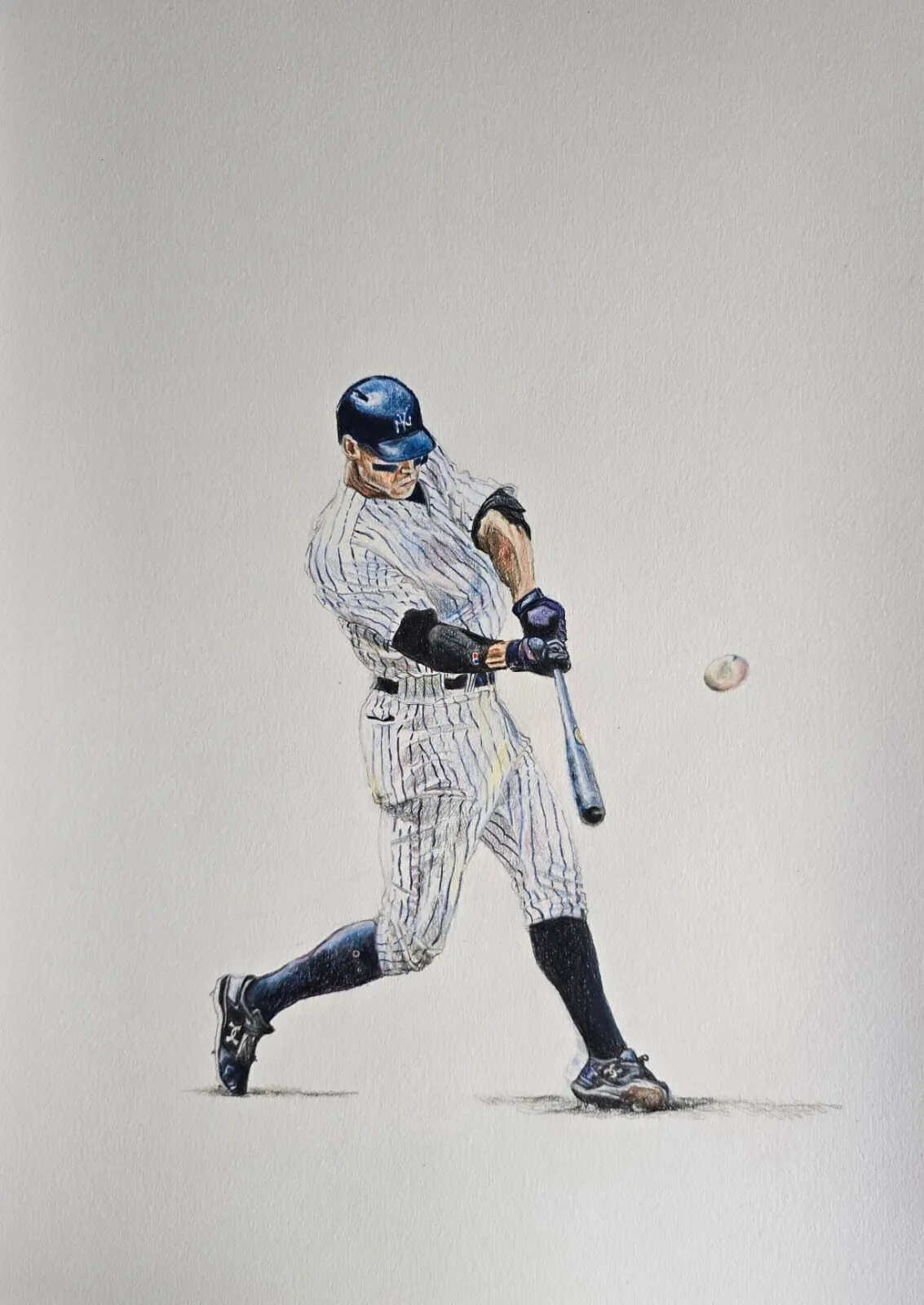
A baseball batter mid-swing drawn in coloured pencil. Drawing by Michael Brace.
What to sell and how to decide
Your product choice shapes everything else: photography, packaging, pricing and workload.
- Originals. One-off drawings, often framed. They carry the highest value and suit collectors. They are also one-of-one, so each sale needs replacing with new work.
- Limited editions. A fixed number of signed and numbered reproductions. They create scarcity and a lower entry point. The edition size must be honest and final.
- Open prints. Reproductions with no fixed limit. They reach more people and can be sold repeatedly from one drawing.
- Commissions. Made to order. Income is more predictable, but the work is not entirely your own choice of subject.
A sensible way to decide is to ask three questions. Who is my likely buyer: a collector, a gift buyer or a fan of a subject? How much time can I spend on packing and posting? And how do I want to be known: for rare originals or accessible prints? Many artists begin with a handful of originals, add prints of their strongest images once the files are right, and open commissions when they have a waiting audience. Read how to make prints of your drawings before you launch any reproduction, because print quality and honest descriptions protect your reputation.
Photography and listings
Online, the photograph is the artwork. Buyers cannot see texture, scale or colour in person, so your images and text carry the sale.
- Photograph properly. Use even light, keep the camera parallel to the paper and correct the colour. Follow how to photograph your drawings and save a full-size master.
- Show more than the front. Add a detail crop, a photo of the work in a room or frame, and, where helpful, a scale reference so buyers understand size.
- Write an honest listing. Give the title, medium, paper, size (image size and sheet size), whether it is framed, and whether it is an original, edition or print.
- State what is included. Mount, frame, packaging, delivery and any certificate.
- Explain the process briefly. Buyers respond to a sentence about how the piece was made, as long as it is accurate.
- Keep details consistent across every channel.
Be careful with colour. Screens differ, so describe key colours in words and avoid heavy saturation boosts in editing. The palette from photo tool can help you check you have described the dominant hues accurately.
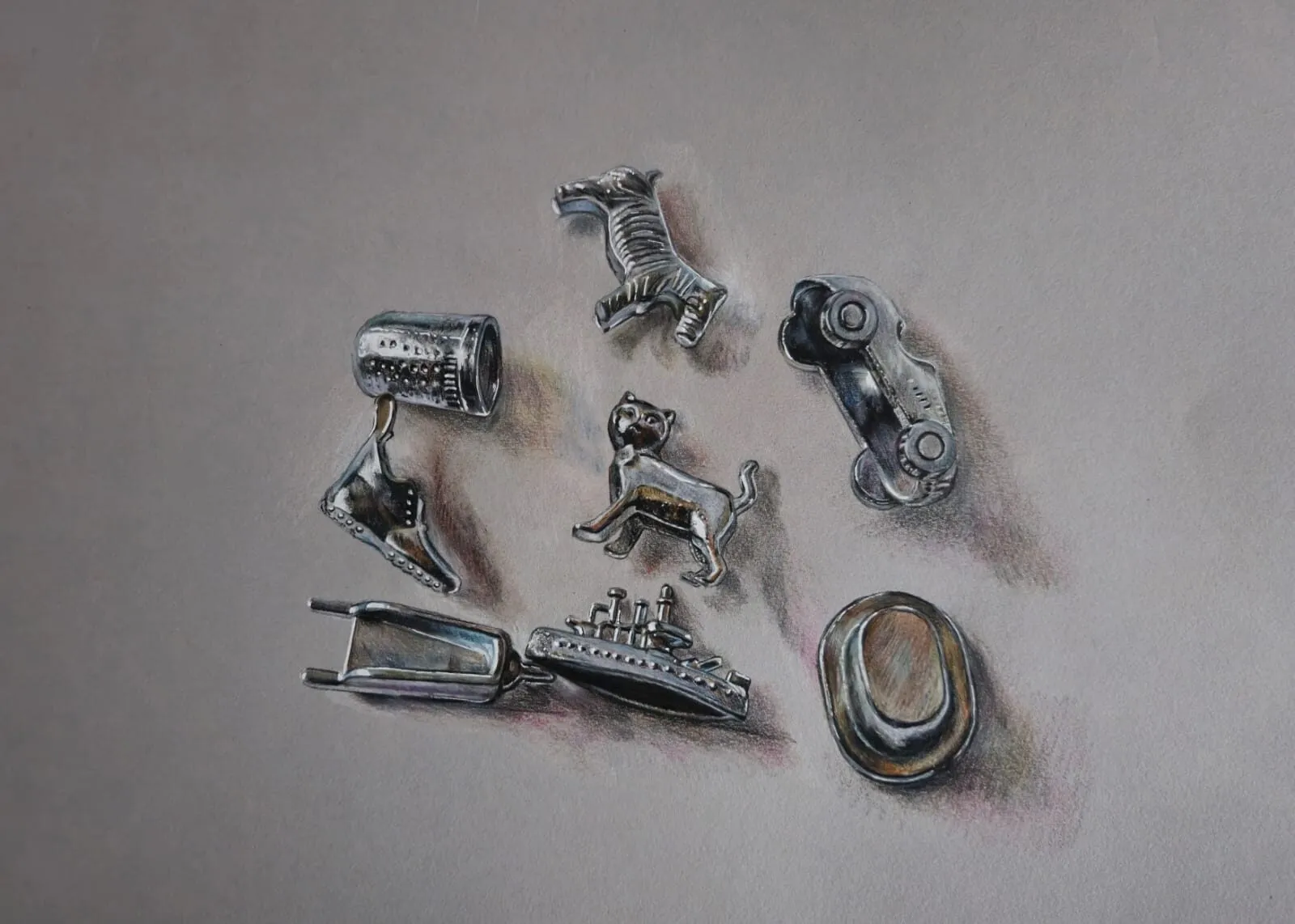
A group of silver metal board-game tokens drawn in coloured pencil on grey paper. Drawing by Michael Brace.
Pricing
Price from a method you can explain, keep the same price in every channel, and keep prints clearly below originals. The full approach, including cost floors, size-based pricing and raising prices over time, is in how to price your drawings. Remember that any marketplace or gallery commission, payment processing cost or shipping expense affects your take-home amount, so check the current terms and build them into your thinking before you list.
Shipping and packaging in general terms
Damaged work costs you money, goodwill and sometimes a review. The basic principles are simple, though the details depend on your carrier and destination, which you should always confirm directly.
- Protect the surface. Drawings can smudge or mark, so use a clean interleaving layer over the drawing and keep anything rough away from the image.
- Keep it flat and rigid. Sandwich unframed work between stiff boards, or use a sturdy backing, so it cannot bend.
- Keep it dry. Seal the package against moisture.
- Plan for framed work. Glass needs specialist protection, so consider selling unframed or using acrylic glazing, as discussed in how to frame and mount a drawing.
- Use tracking and, where sensible, insurance, and check the carrier’s current rules on size, weight and what is covered.
- State your shipping terms clearly on every listing, including where you ship and how long you need to prepare an order.
Think about customs and import rules before selling internationally, because they vary by country and can surprise buyers. Check official guidance rather than assuming.
Building an email list
An email list is the asset you own. If a platform changes how many people see your posts, or closes an account, your list still reaches the people who asked to hear from you.
- Offer a reason to sign up, such as first access to new work, studio updates or a print release.
- Put a sign-up form on your website and mention it in your social bios.
- Collect addresses at events only with clear permission.
- Send something worth reading, such as new work, a process story or a behind-the-scenes photo, at a rhythm you can keep.
- Follow the data protection and marketing rules that apply where you and your subscribers live, and use a reputable email service that handles consent and unsubscribing. Take qualified advice if unsure.
Trust signals that help unknown artists
Online buyers take a risk, because they cannot hold the work. Reduce that risk with evidence.
- Verified credits. Competition shortlistings, longlistings and exhibitions, stated exactly. Michael, for instance, lists his Derwent Art Prize 2026 and British Art Prize 2025 shortlistings plainly and does not inflate them. Follow the same discipline. Our guides to the best drawing competitions and entering an art competition explain how those credits are earned.
- Process content. Layout, layering and detail stages prove you made the work yourself and show the effort involved.
- A clear bio and statement. People buy from people. See how to write an artist statement.
- Plain policies. Shipping, returns and contact details in ordinary language.
- Materials information. Mention paper and pencils, and back it up with knowledge of archival paper for selling your drawings and coloured pencil lightfastness explained.
- Responsiveness. A prompt, courteous reply is one of the strongest signals of all.
Common mistakes to avoid
- Spreading too thin. Six half-maintained channels earn less than two well-kept ones.
- Poor photographs. Dull, tilted or glare-spotted images undersell strong work.
- Inconsistent prices between channels.
- Vague descriptions, especially between originals, editions and prints.
- Ignoring platform policies. Read the current terms before listing, because breaches can lead to removed listings or closed accounts.
- Selling what you do not own the rights to. Subjects based on other people’s characters or brands carry risk. Read can you sell fan art before you list anything based on someone else’s creation.
- Stopping after a few weeks. Audiences build slowly, so treat selling as a habit, not an event.
The short version
Pick one or two routes and do them well, starting with a simple website and an email sign-up. Decide deliberately between originals, editions, prints and commissions. Photograph carefully, write honest listings, price consistently and pack with care. Show your process, state your credits accurately and answer questions quickly. Check each platform’s current policies, and get qualified advice on legal, tax and financial matters. For the wider picture, return to the art world guide.
Quick answers
Frequently asked questions
Where is the best place to sell pencil drawings online?+
There is no single best place. Your own website gives control and a direct relationship with buyers, marketplaces bring existing traffic, and social media builds an audience. Most artists combine a simple website with one or two other routes. Test what works for your style, and read each platform's current policies first.
Should I sell originals or prints first?+
Originals carry the most value and suit collectors, while prints let more people own your work. Many artists start with a few originals to establish credibility, then add prints of their strongest pieces once the files and quality are right. Describe each honestly, and never pass a print off as an original.
Do I need my own website to sell drawings?+
It is not essential, but it helps. A simple site gives you one place to show your portfolio, list work, collect emails and point social followers. It also means you are not dependent on any single platform. Keep it small and clear, and link to it from every profile.
How do I get people to trust an unknown artist online?+
Show real evidence: clear photographs, process images, honest descriptions, a short bio with verifiable credits, and plain terms for shipping and returns. Competition shortlistings and exhibitions help if you can state them exactly. Respond promptly and kindly to questions, because a helpful reply is itself a trust signal.