Graphite & Charcoal
Best Charcoal for Drawing: Types and How to Choose
Vine, compressed, charcoal pencils, powder and white charcoal explained, with advice on softness, paper, fixative, erasers and dust safety.
Key takeaways
- ◆Vine charcoal is light, easy to erase and ideal for sketching and layout; compressed charcoal is darker, denser and harder to remove.
- ◆Charcoal pencils give the most control for detail, while powder suits large soft tone.
- ◆White charcoal and chalk on toned paper add highlights, giving a three-tone approach.
- ◆Charcoal needs paper with tooth, a kneaded eraser and, usually, fixative to keep the drawing stable.
- ◆Charcoal dust is fine and messy, so ventilate the space, avoid breathing it and clean surfaces damply.
Charcoal is the oldest drawing medium there is, and it remains one of the most versatile. A stick of charcoal can lay in a large shape in seconds, create a deep black that graphite struggles to match, and be erased or smudged into soft atmosphere. It can also make a mess of your hands, your paper and your working space if you do not know how to handle it.
This guide explains the main types of charcoal, how to choose softness, which paper and erasers to use, how to fix a finished drawing and how to handle the dust safely. It names categories rather than ranking specific products, because ranges change and quality is best judged by testing. If you are undecided between charcoal and graphite, read our comparison of graphite versus charcoal first.
Types of charcoal
Vine charcoal
Vine charcoal is made by burning sticks of wood, traditionally willow or vine, in the absence of air. The result is a light, dry, slightly brittle stick that leaves a pale to medium grey mark. It lifts off the paper very easily, which makes it the best choice for sketching, layout and any drawing where you expect to make corrections. It comes in thin, medium and thick sticks and in soft, medium and hard grades.
Best for: initial sketches, tonal underdrawings, large gestural work and beginners. Less good for: deep blacks and fine detail.
Compressed charcoal
Compressed charcoal is made from powdered charcoal mixed with a binder and pressed into sticks. It is denser and darker than vine, leaves a rich black, and is harder to erase. It comes in grades from soft to hard, with the softest giving the deepest black.
Best for: dark accents, bold contrast and finished tonal drawings. Less good for: corrections, since it sinks into the paper.
Charcoal pencils
Charcoal pencils wrap compressed charcoal in a wooden casing or paper wrap. They can be sharpened to a point, keep your hands cleaner and give more control than sticks. They are the natural bridge between charcoal and graphite, and they are excellent for detail and edges in a charcoal drawing.
Best for: detail, edges, small areas and cleaner working. Less good for: large areas, where a stick is quicker.
Charcoal powder
Charcoal powder is finely ground charcoal, applied with a brush, tissue, chamois or cloth. It gives smooth, even tone in large areas, and it is a good way to tone a whole sheet before lifting highlights.
Best for: toning paper, soft backgrounds and atmospheric work. Less good for: any use where dust control is a concern.
White charcoal and chalk
White charcoal, or white chalk in pencil or stick form, is used to add highlights, especially on toned or mid-grey paper. It lets you work in three tones: the paper as the mid-tone, charcoal for the darks and white for the lights. This approach is classical for figure and portrait studies.
Best for: highlights on toned paper. Less good for: white paper, where it does not show.
| Type | Darkness | Erasable | Best use |
|---|---|---|---|
| Vine | Light to medium | Very easy | Sketching, layout |
| Compressed | Dark | Harder | Deep tone, contrast |
| Pencil | Medium to dark | Moderate | Detail, edges |
| Powder | Adjustable | Easy | Toning, soft tone |
| White | Light | Moderate | Highlights on toned paper |
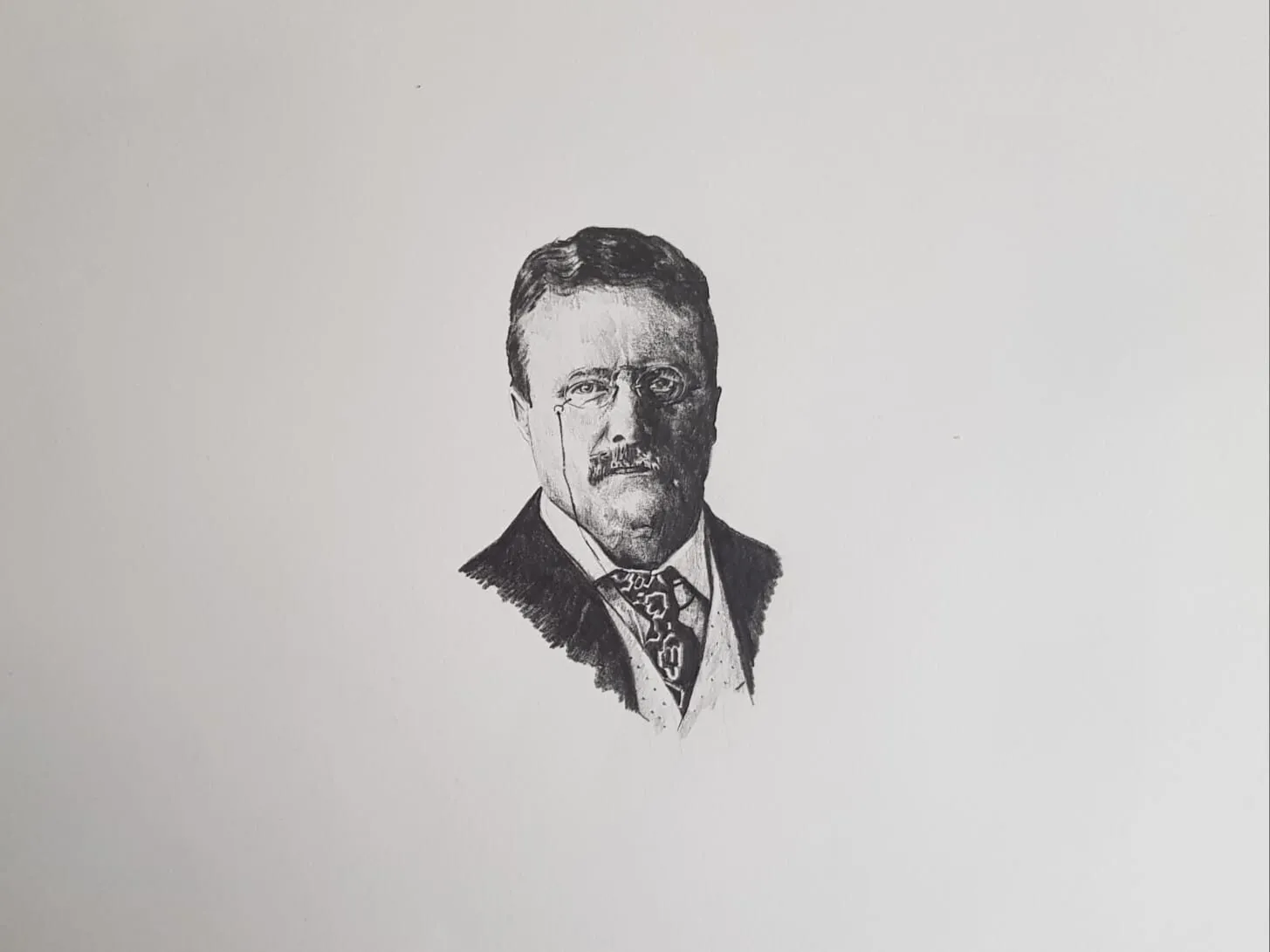
A graphite portrait of Theodore Roosevelt. Drawing by Michael Brace.
Choosing softness
Charcoal comes in soft, medium and hard grades, though the names and scales vary by maker and are not standardised.
- Soft charcoal gives dark tone with little pressure and blends easily, but it crumbles and smudges quickly.
- Medium charcoal balances darkness and control, which makes it a good all-round choice.
- Hard charcoal holds a point and gives paler, finer lines, but it can feel scratchy and does not blend as smoothly.
For a beginner, medium and soft are the most useful. A good starter is a small box of assorted vine sticks, one or two compressed sticks and a charcoal pencil in a medium grade. Try different softnesses on the paper you intend to use, since paper changes the result significantly.
Paper for charcoal
Charcoal needs tooth to hold onto. Smooth paper gives it little grip, so the particles slide and brush off easily. A paper with a clear texture, such as a laid or textured drawing paper, or a paper with good tooth such as cartridge or cold press, holds the charcoal and lets you build tone. Heavier paper is better because charcoal work involves erasing and reworking, and thin paper can crease or tear.
Toned paper in grey or buff is well suited to charcoal with white highlights. Paper choice affects how the drawing looks and how well it survives, so consult our guide to the best paper for graphite drawing for general points on tooth and weight, and read paper tooth: smooth versus textured to understand what grip means.
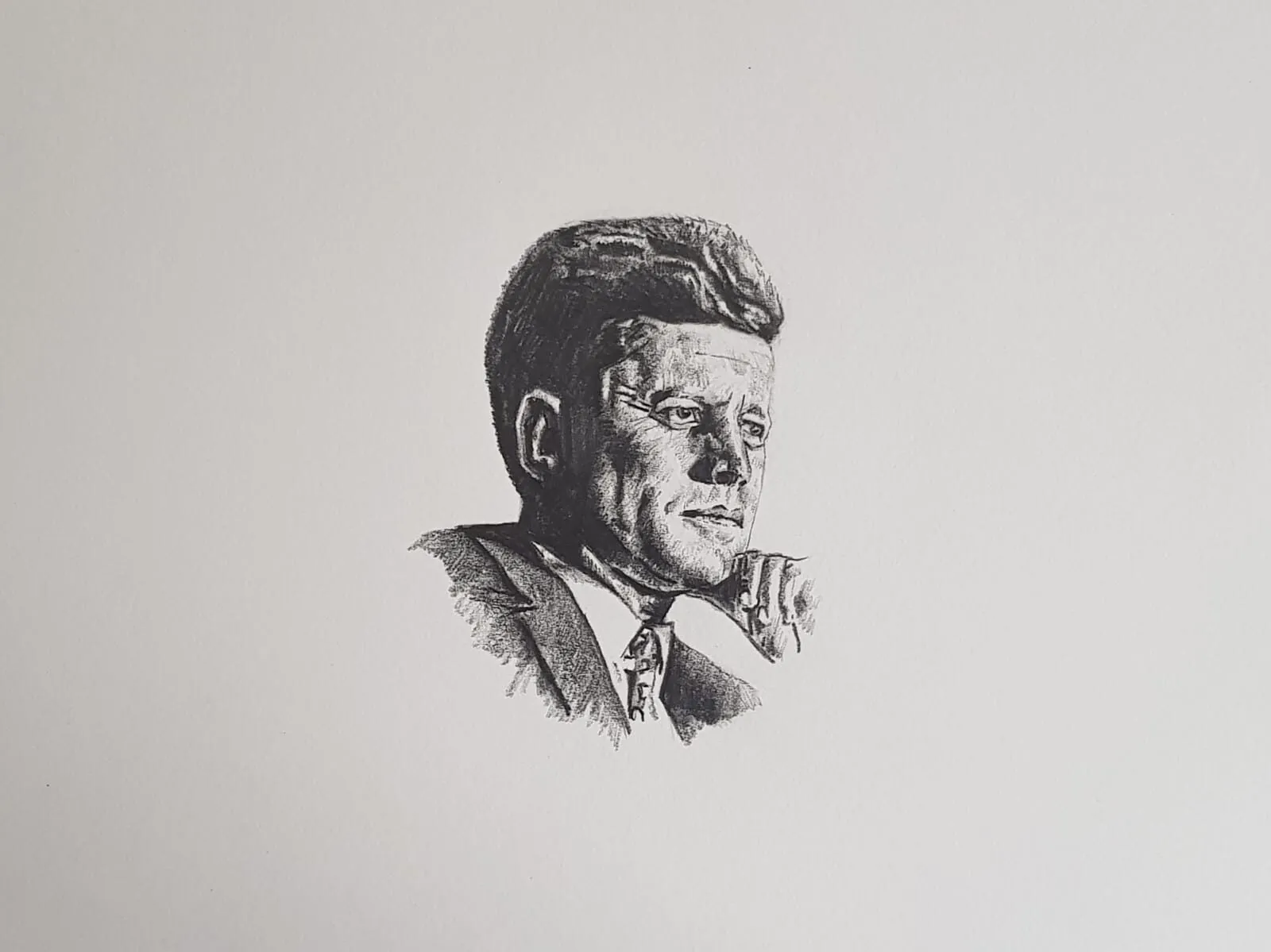
A graphite portrait of John F. Kennedy. Drawing by Michael Brace.
Erasers and lifting
Charcoal is one of the most erasable drawing media, which is part of its charm. A kneaded eraser is the essential tool: it lifts charcoal without damage, can be shaped to a point for detail and can be pressed against the drawing to remove tone gently. It gets dirty with use; stretch and fold it to expose a clean surface.
You can also use a soft cloth, chamois or tissue for large-scale lifting, and a vinyl eraser for cleaner removal, though vinyl can leave a smear on heavily worked areas. Many artists tone a sheet with charcoal, then draw with the eraser, lifting light shapes out of the dark ground. See the best erasers for graphite for details on eraser types, most of which work for charcoal too.
Blending charcoal
Charcoal blends with fingers, tissue, chamois, stumps and brushes. Because it is so loose, it blends much more easily than graphite, so it is easy to over-blend and lose the crispness of the shapes. Blend only where you want smoothness, and keep some marks and edges untouched for structure. For more on blending tools, most of which apply to charcoal, see how to blend graphite.
Fixative
Fixative is a light varnish, usually sprayed from a can or pump, that holds loose particles in place. For charcoal, it is usually advisable, because a finished drawing can smudge from the slightest touch.
Some general points:
- Spray in a well-ventilated place, preferably outdoors, following the maker’s safety directions.
- Use light, even coats at the distance recommended, rather than one heavy coat.
- Test on scrap paper. Fixative can slightly darken tone or change the surface.
- Fix at the end if you plan to keep working; fixing too early makes the surface resist further charcoal, although some products are labelled as workable.
Fixative is discussed further in how to avoid smudging pencil drawings, which also covers storage and framing.
Safety and ventilation
Charcoal produces fine dust, and dust of any kind is best kept out of your lungs. Good habits include:
- Work in a ventilated room, and avoid still, enclosed spaces.
- Do not blow excess dust off a drawing towards your face; tap it off gently onto a surface or take it outdoors.
- Clean with a damp cloth rather than sweeping or dry dusting, which throws dust back into the air.
- Consider a dust mask if you work with large amounts of powder or spend long sessions with charcoal, especially if you have respiratory problems.
- Ventilate when using fixative, and follow the safety information on the product.
- Wash your hands after drawing and keep charcoal away from children who may put it in their mouths.
Recommended starter kits
Minimal kit
A small box of vine charcoal in mixed thicknesses, a kneaded eraser, a sheet or two of textured paper and a piece of tissue for blending. This is enough for experimenting with sketching, tone and lifting.
Portrait and figure kit
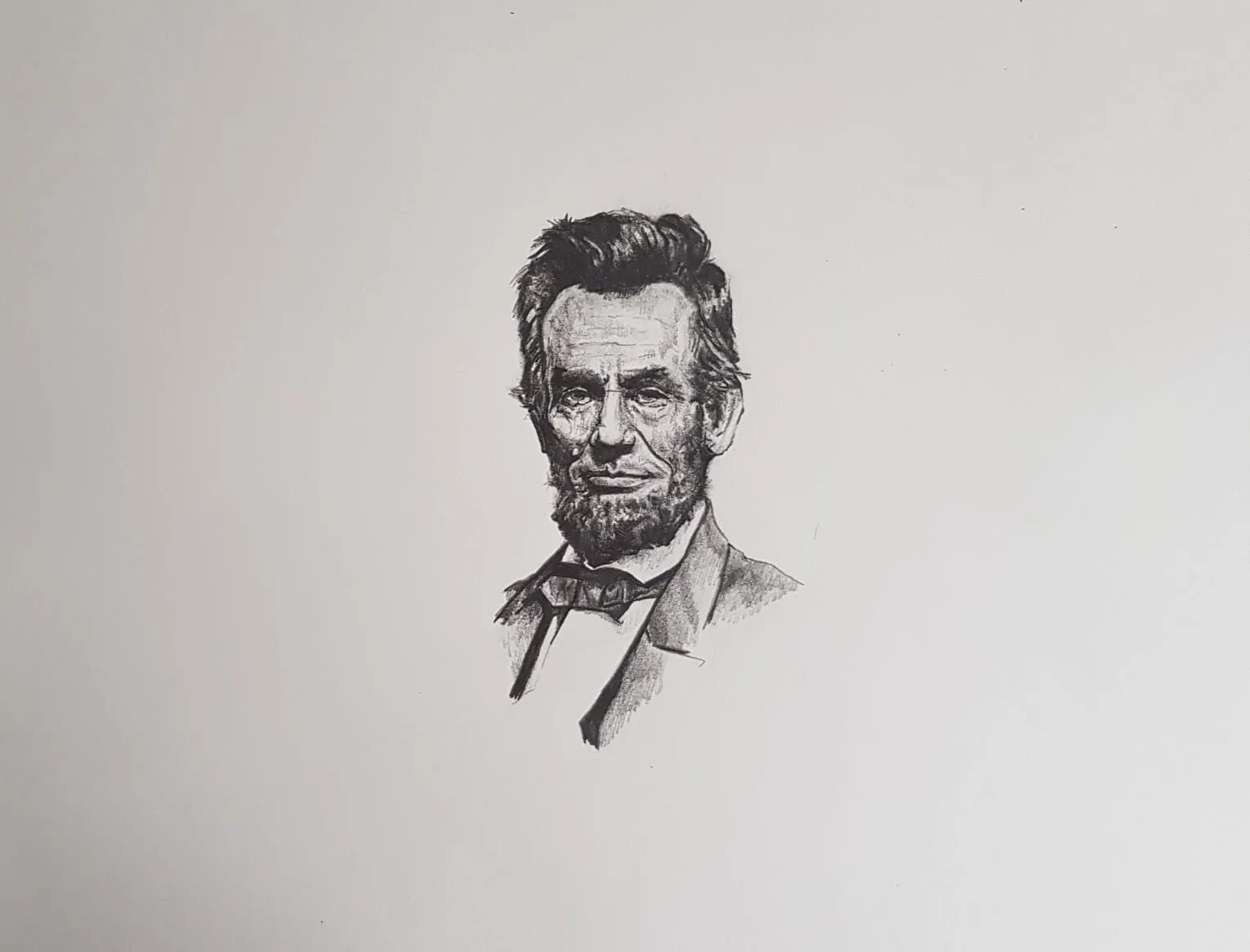
Vine sticks for layout, one or two soft compressed sticks, a charcoal pencil in medium, a white charcoal or chalk pencil, a kneaded eraser, and grey or buff toned paper. This supports the classical three-tone approach, as in the head study shown above.
Mixed graphite and charcoal kit
Add a set of graphite pencils to the portrait kit for the finest detail; a small spread of 2H to 6B is enough. See the best graphite pencils for drawing for suggestions.
Common mistakes
- Starting with dark compressed charcoal. It is hard to correct, so begin with vine.
- Using smooth paper. Charcoal slides and brushes away; choose a surface with tooth.
- Over-blending. Everything becomes a grey smudge; keep some structure.
- Ignoring dust. It affects the drawing and your health; ventilate and clean up.
- Skipping fixative or applying it too heavily. Use light coats, and test first.
- Forgetting to protect the drawing. Cover it with a sheet of glassine or clean paper when storing, and avoid stacking drawings directly.
Where to go from here
Charcoal is a strong partner to graphite. Try a study where you lay in the big shapes with vine charcoal, add darks with compressed charcoal and finish details in a sharp graphite pencil. Return to the graphite and charcoal guide for the wider picture, and use the value study tool to check that your drawing has a full range from light to dark.
Charcoal shines in bold tonal studies, so try drawing clouds and skies or drawing shadows and light, and see the best drawing pencils for beginners if you are starting out.
The short version
Use vine charcoal for sketching and layout, compressed charcoal for deep darks, charcoal pencils for detail and powder for soft tone, adding white charcoal for highlights on toned paper. Choose medium to soft grades on paper with tooth, keep a kneaded eraser at hand, fix the finished drawing in a ventilated place and treat the dust with respect.
Quick answers
Frequently asked questions
What is the difference between vine and compressed charcoal?+
Vine charcoal is made from burnt sticks and is light, dry and easy to erase, which suits sketching and layout. Compressed charcoal is made from powder bound into a stick, so it is darker, denser and harder to remove. Many artists start with vine and add compressed charcoal for the deepest darks.
What softness of charcoal should I buy?+
Start with soft to medium. Soft charcoal gives dark tone easily and blends well, but it crumbles and smudges more. Hard charcoal holds a point and is good for lines but gives paler tone. A mixed pack of vine sticks, plus one compressed stick and a charcoal pencil, covers most needs.
Do I need fixative for charcoal drawings?+
Usually yes. Charcoal sits loosely on the paper and smudges easily, so a coat of fixative when the drawing is finished helps protect it. Use it in a ventilated place, hold the can at the distance the maker recommends, and spray light coats. Test on scrap paper first, as fixative can slightly darken tone.
Is charcoal dust harmful?+
Charcoal dust is a fine particulate and should not be inhaled in quantity. Avoid blowing dust off a drawing toward your face, work in a ventilated area, and wipe surfaces with a damp cloth instead of sweeping. If you have breathing problems or work with charcoal often, consider a dust mask and check the maker's safety information.