Books & Courses
How to Find Your Drawing Style
How to find your drawing style through subjects, marks, materials and values, with practical exercises: master copies, limits, series and reviewing your favourite work.
Key takeaways
- ◆Style is not something you choose in advance. It emerges from repeated decisions about subject, marks, materials and values.
- ◆Copying masters teaches you what you like and how it is built; it does not erase your own voice.
- ◆Limits help: a single subject, one pencil range or a restricted palette makes your habits visible.
- ◆Work in series and review your favourite pieces to spot what they share.
- ◆Consistency builds recognisable style, but experiment deliberately and on a schedule so you do not stagnate.
Most beginners worry about style before they have drawn enough to have one. They look at artists they admire, see a clear personal look, and assume they need to invent one too. In practice, style is what is left when you make a lot of decisions repeatedly over time. It is a by-product of drawing, not a goal you set at the start.
That does not mean you have to wait passively. You can speed up the process by looking closely at what you already do, limiting your choices so your preferences show up, and studying the artists you admire. This guide walks through what style is made of, exercises that reveal yours, and how to stay consistent without getting stuck. If you are still building basic skills, how to practise drawing daily comes first.
What style is made of
Style is not one thing. It is the pattern across four kinds of decision.
| Ingredient | The choices involved | Examples |
|---|---|---|
| Subject | What you choose to draw and how you frame it | Animals, portraits, still life, food, landscape; close crops or full views |
| Marks | How the pencil touches the paper | Loose hatching, smooth blended tone, tiny dots, visible strokes |
| Materials | Tools and surfaces | Graphite or coloured pencil, white or toned paper, smooth or toothy surface |
| Values and colour | Range of light and dark, and palette | High contrast or soft, saturated or muted, warm or cool |
Change any of these and the work changes. Two artists drawing the same horse can look unrecognisable next to each other if one works in tight, smooth layers on white paper and the other in loose strokes on grey.
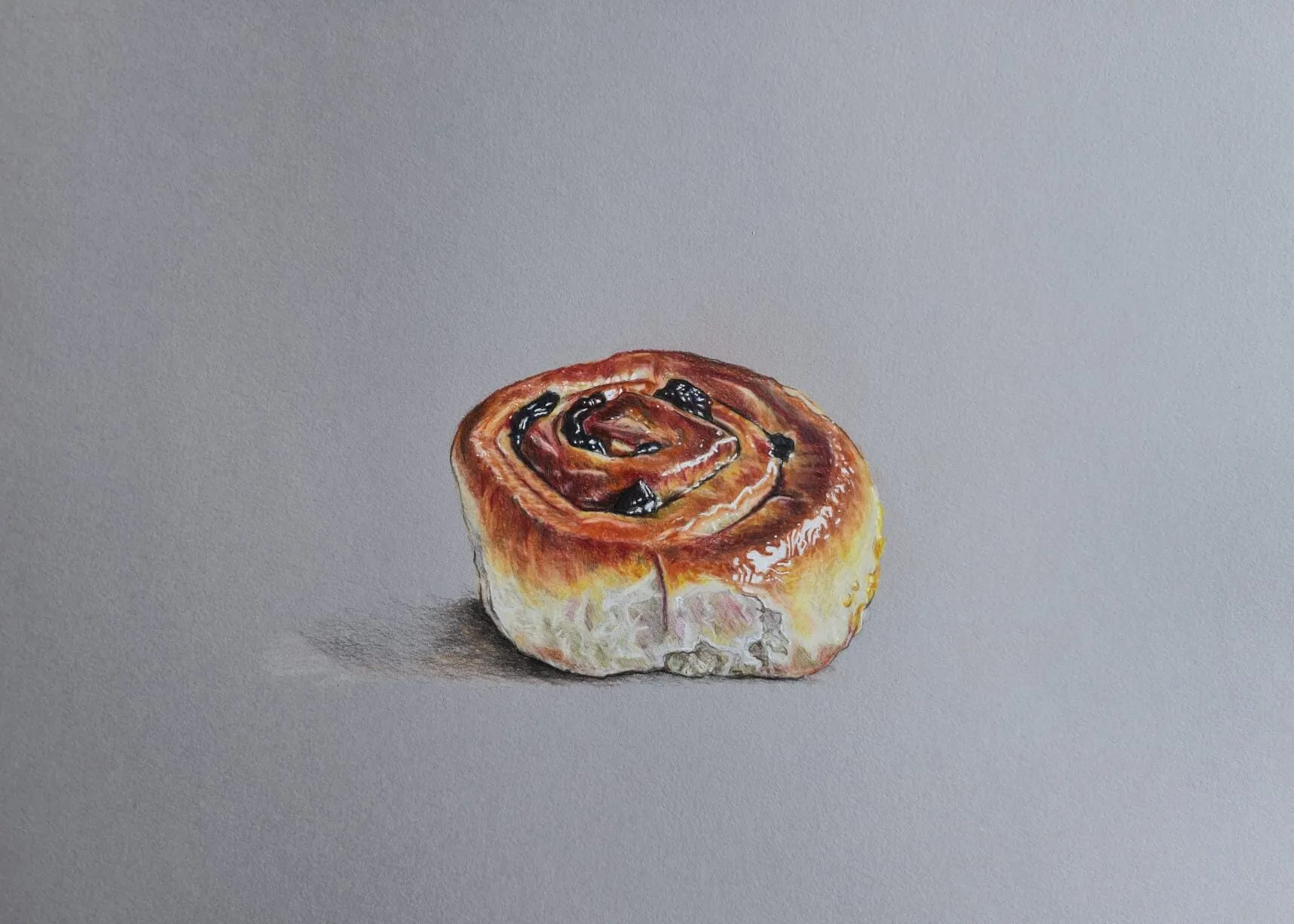
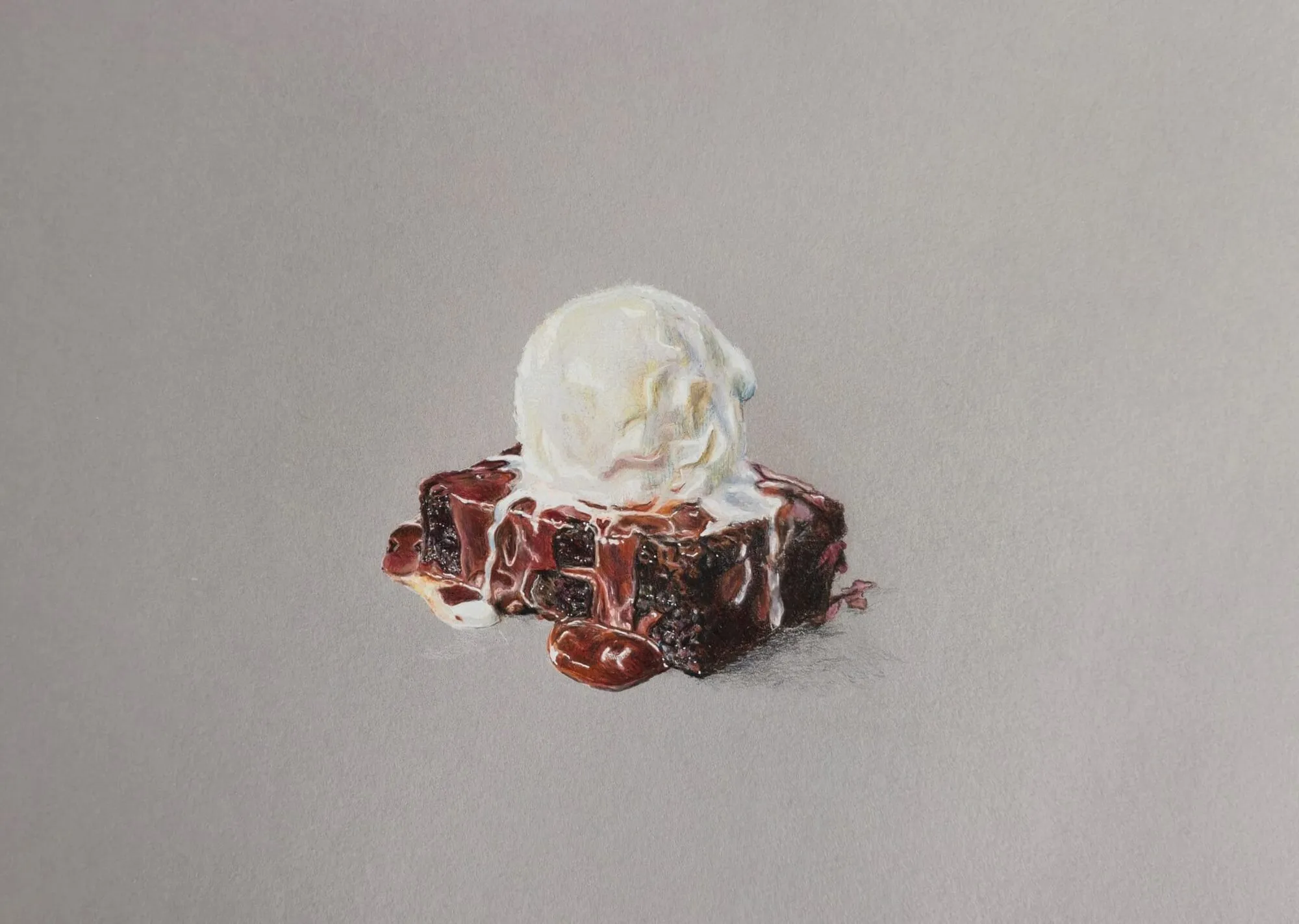
A glazed pastry swirl with raisins drawn in coloured pencil on grey paper. Drawing by Michael Brace.
Start by looking at what you already do
You probably have more of a style than you think. To find it:
- Gather 10 to 20 pieces you have made, good or not.
- Pick your favourites. Choose the ones you enjoyed making or are proudest of, not the ones that were hardest.
- Look for what they share. Is it a subject? A type of line? A colour range? A mood? Write down three to five words.
- Look at the ones you dislike and note what they lack or do differently.
Patterns usually jump out. You might notice that all your favourite drawings have strong darks, or that you keep choosing animals, or that you always use warm colours. Those recurring choices are the seed of your style.
Exercises that reveal your style
Copy masters to see what you respond to
Copy a small section of drawings by artists you admire, then write down what you learned: how they built form, how they handled edges, what they left out. Studying several different artists shows you which decisions you keep agreeing with. Start with master draughtsmen to study, which explains the copy, analyse and thumbnail method.
Keep these copies as studies, and do not present them as your own work. The point is to borrow methods, not results.
Use limits
Constraints make your habits visible because there is less to hide behind. Try:
- One subject for a month. A pear, a pet, your hand, one street.
- One pencil or a single small set. Learn what it can and cannot do.
- Three values only. See how you place your tones.
- Limited palette. See limited palette drawing for how a restricted set of colours forces decisions.
- One surface. Stay with one paper for several drawings.
Afterwards, ask which limit felt natural and which fought you.
Work in series
Draw the same subject or theme five to ten times, varying one element each time, such as the light, the crop, the paper or the palette. A series shows your preferences emerging and gives a body of work that looks coherent. It also trains you to explore instead of giving up after one attempt.
Reflect and curate
Every few months, lay out your work and pick the five pieces that feel most like you. Why those? Write a paragraph. The exercise works best when you repeat it: your choices will change, and the change is the story of your style.
Try the same drawing in different ways
Draw one reference three times: once tight and smooth, once loose and gestural, once in a limited palette. Notice which feels most like you, and which you would enjoy doing for hours. Enjoyment is a good guide.
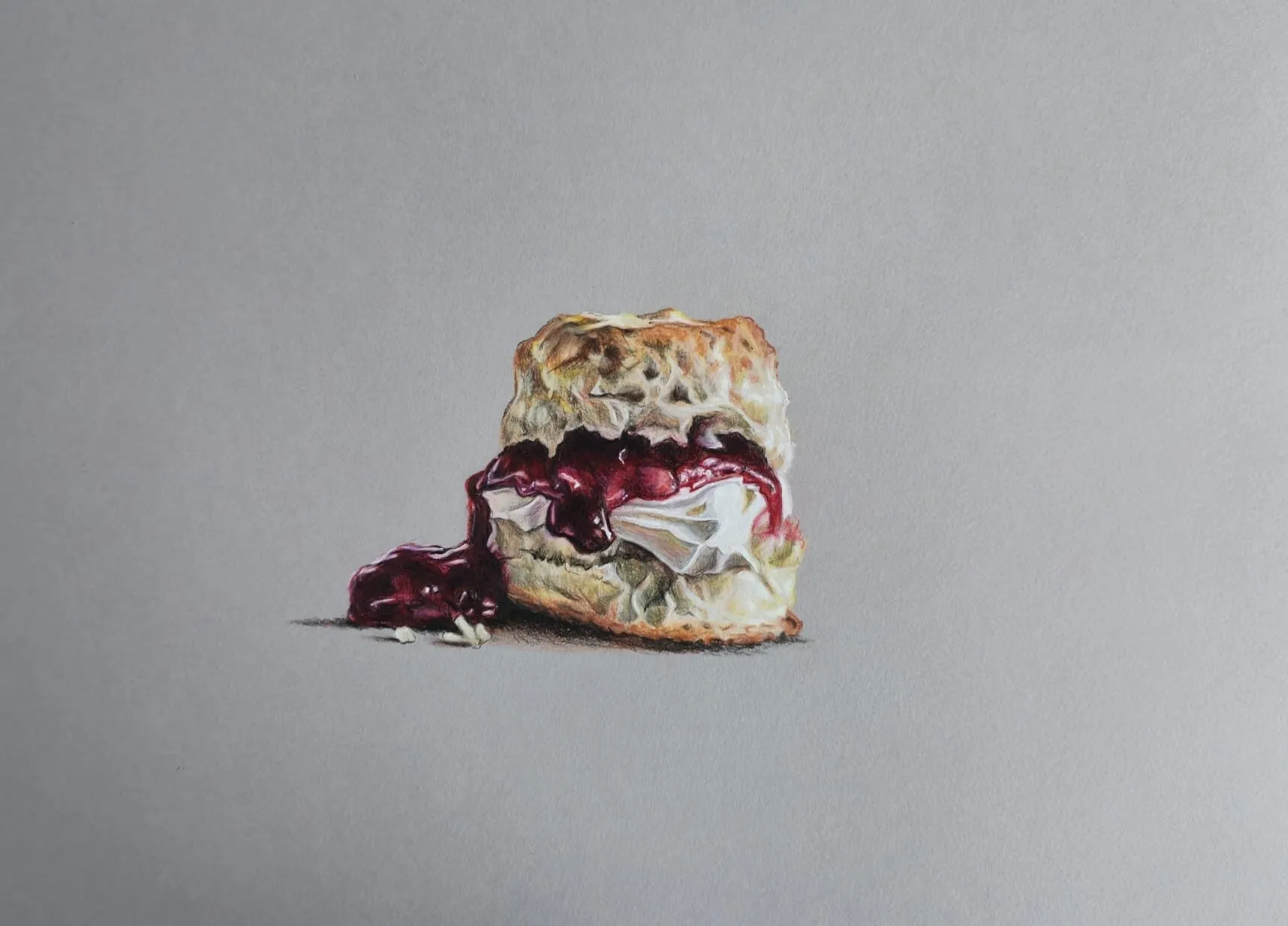
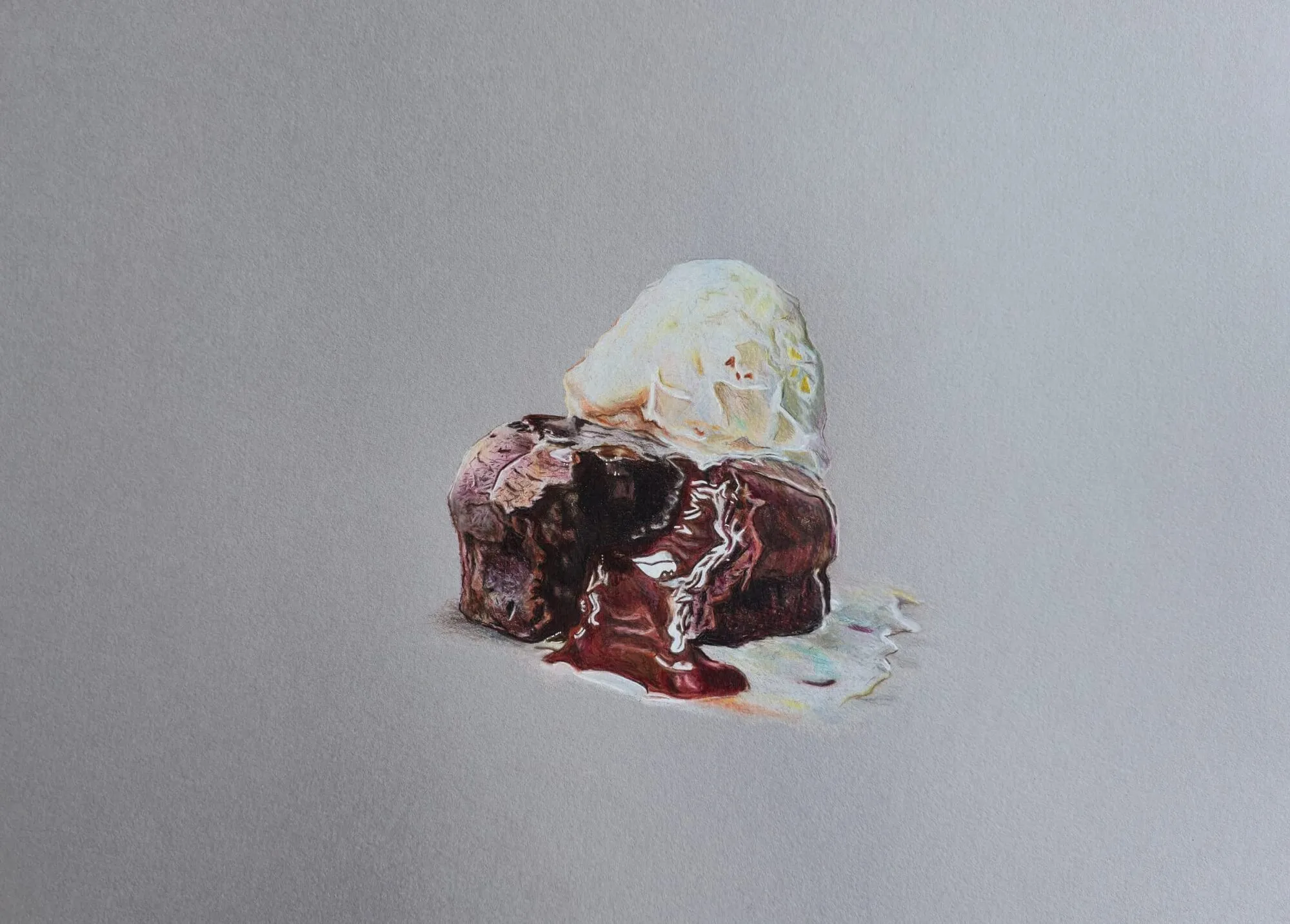
A scone with cream and jam drawn in coloured pencil on grey paper. Drawing by Michael Brace.
Materials shape style more than people expect
It is tempting to think style lives in your hand, but paper and pencils have a big effect. On toned paper, you work from the middle tone outwards, pulling lights and adding darks, which often leads to dramatic, high-contrast images. Smooth, hot press paper suits fine, polished detail, while textured paper gives a visible grain. The choice of coloured pencils also shapes your work, since some ranges are soft and creamy and others are firm and crisp.
If you use coloured pencils (colored pencils in the US), layering method, burnishing and the amount of paper grain you let show all become part of your look. See how to layer coloured pencils and why use grey paper for coloured pencil.
Values and colour: the quiet signature
Many recognisable styles rest on a particular use of value. Some artists work in a narrow range of soft mid-tones, others push to deep darks and bright highlights. Take a photo of your favourite drawings and run them through the value study tool to see the tonal range you prefer. Your colour habits are similar: do you lean warm or cool, saturated or muted? Try the colour scheme generator to explore palettes, and read saturation and muted colours for why this choice changes the feel of a piece.
Consistency: how style becomes recognisable
A recognisable style mostly comes from repetition. The same subjects, the same palette tendencies, the same way of finishing edges. If you want your work to look like it belongs together, for a portfolio or a gallery wall, keep some things constant while varying others. A series with the same paper and palette but different subjects will still look cohesive. See how to build an art portfolio for how this matters when presenting work.
When to experiment
Consistency can turn into a rut. Schedule experiments instead of waiting for them to happen:
- One experimental piece for every four or five regular ones.
- A yearly change. Try a new subject, paper or technique for a few weeks.
- When you are bored. Boredom is a signal that your current approach has stopped teaching you anything.
- After studying a new artist. Try their method on your own subject.
Keep experiments in a sketchbook so they carry no pressure. Some will be forgotten and others will become part of your work. If you feel stuck rather than bored, see how to overcome artist’s block.
A six-week plan
- Week 1: gather and review your existing work, and write down what they share.
- Week 2: copy two or three small masters from different artists and write what you learned.
- Week 3: choose one limit, such as a single subject or a small palette, and draw it several times.
- Week 4: repeat one drawing tight, loose and in limited colour.
- Week 5: start a series of five related drawings.
- Week 6: review everything, pick your favourites and note the common threads.
Then repeat, with a different subject and limit.
The short version
Style emerges from the decisions you make about subject, marks, materials and values. Find it by reviewing your favourite work, copying masters for study, working with limits and in series, and reflecting every few months. Stay consistent enough to be recognisable, and experiment on purpose so you keep learning.
Quick answers
Frequently asked questions
How long does it take to develop your own drawing style?+
There is no set time. Style usually emerges after you have built enough skill to make deliberate choices, and it keeps evolving. Many artists notice a consistent voice after a year or two of regular work in a focused area, but the process is gradual and depends on how much you draw and how reflective you are.
Is it wrong to copy other artists to find my style?+
Copying for study is a long tradition and a good way to learn how others solve problems. Keep it as practice: note what you learned, then apply it to your own subjects. Do not present copies as original work or sell them, and credit the artist when you share a study.
Do I need to stick to one subject to have a style?+
No, but it helps. A recurring subject, palette or way of handling edges makes your work recognisable. Artists with varied subjects often still share a consistent approach to colour, mark or composition. Choose what you love drawing and let the rest follow.
Can coloured pencil artists have a style too?+
Yes. In coloured pencil (colored pencil in the US) style comes through paper choice, the way you layer and burnish, how saturated or muted your palette is, and whether you work on white or toned paper. Two artists using the same pencils can look completely different.