Graphite & Charcoal
Best Fixative for Pencil Drawings: Types, Use and Safety
What fixative does for graphite and charcoal, the main types, when to use or skip it, how to spray safely, how it changes tone and what to use instead.
Key takeaways
- ◆Fixative binds loose graphite, charcoal or pastel to the paper so it smudges less, but it is not a permanent seal.
- ◆Choose a fixative made for art, test it on scrap paper first and expect a slight shift in tone, often a little darker.
- ◆Workable fixative lets you keep drawing over the top; final fixative is for a finished piece.
- ◆Spray outdoors or in a well-ventilated space, in light even coats, and follow the manufacturer's label for safety.
- ◆Framing under glass with a mount and using slip sheets protect a drawing without any spray, and suit many graphite pieces.
Graphite and charcoal look permanent on the page, but they are loose particles resting on the paper surface. A sleeve, a hand or a stack of sheets can rub a finished drawing into a grey haze. Fixative is the spray that holds those particles in place, and it is one of the most misunderstood materials in a drawing kit: artists either apply too much or avoid it altogether.
This guide explains what fixative does, the kinds you will meet, when to use it and when not to, how to apply it, how to do so safely, how it changes the look of a drawing and what the alternatives are. It is a buying guide in the sense of choosing a type, not a brand ranking, so it names no specific brand claims. Always follow the instructions on the product you choose.
What fixative does
Fixative is a thin, clear liquid binder, usually sold in an aerosol can or a bottle for use with a sprayer. When sprayed, it deposits a very fine film that glues loose particles to the paper and to each other. The result is a drawing that resists light rubbing and smudging.
It does not:
- make the drawing waterproof,
- make it permanent forever,
- replace framing and careful handling,
- fix errors or remove existing smudges.
It does:
- reduce smudging and dust fall-off in charcoal, pastel and soft graphite,
- make transport and storage safer,
- sometimes allow layering over the top (workable types).
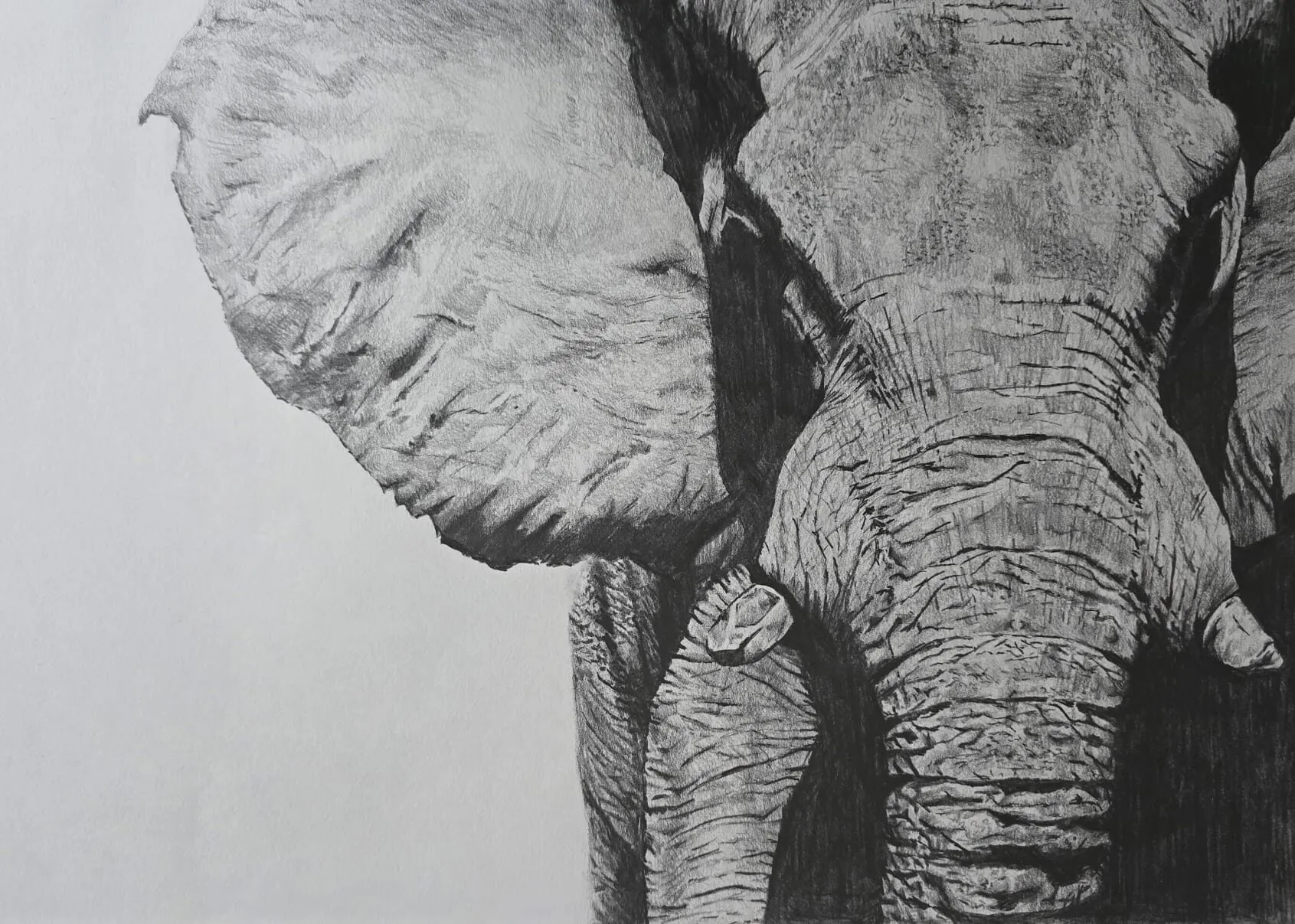
A close-up of an elephant’s ear, trunk and skin drawn in graphite pencil. Drawing by Michael Brace.
Types of fixative
Spray fixative (final)
This is the general-purpose type, sold for charcoal, pastel, graphite and chalk. It is intended to be applied to a finished drawing. Because it binds the surface, erasing and adding more tone afterwards is harder.
Workable fixative
Workable fixative leaves the surface open enough to take more media. You can spray an intermediate stage, for example to protect a completed passage, then keep drawing over it. It is helpful in long, layered pieces and when you want to stop smudging while you continue. The surface is usually still slightly more resistant than untreated paper, so test it.
Matt and gloss finishes
Some fixatives are labelled with a finish. Matt aims for minimal change in surface sheen, and glossier ones may add a slight shine. For graphite, which has a natural soft sheen, many artists prefer a matt finish. Check the label and test.
Pump and aerosol
Fixatives come in aerosol cans and in bottles with a pump or a mouth diffuser. Aerosols give an even fine mist and are convenient. Pump sprayers avoid propellants, but can give larger droplets that spot the surface. Choose the form that suits your workspace, and read the safety instructions for either.
The hairspray question
Hairspray is often suggested as a cheap substitute. It is not formulated for permanence on paper. Ingredients vary between products and over time, and some may yellow, become tacky, attract dust or leave a residue. For a practice sheet, it does little harm. For a drawing you care about, choose a fixative made for artists, because its formulation is intended for this purpose. If you do experiment, test on scrap paper and let it age before trusting it.
Quick guide to types
| Type | Best for | Main trade-off |
|---|---|---|
| Final fixative | Finished charcoal, pastel, soft graphite | Hard to draw over afterwards |
| Workable fixative | Layered drawings in progress | Less protection than final |
| Matt finish | Graphite where you want no sheen | May dull deep darks slightly |
| Aerosol | Even coverage, speed | Needs ventilation |
| Pump sprayer | Small areas, no propellant | Droplets can spot the surface |
| Hairspray | Not recommended for valued work | Unknown long-term behaviour |
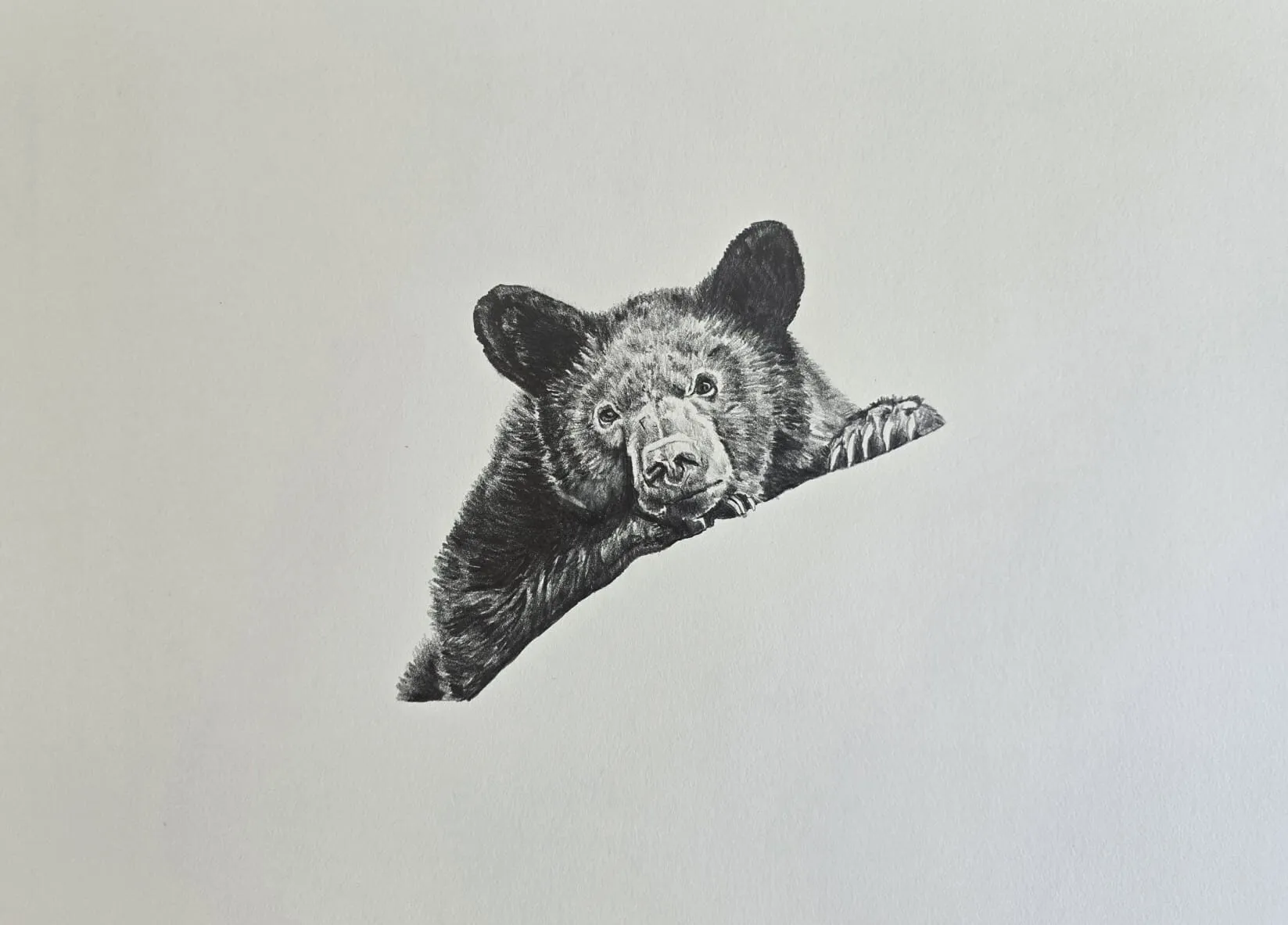
A bear cub resting on a branch drawn in graphite pencil. Drawing by Michael Brace.
When to use fixative
Consider it for:
- Charcoal drawings, which are loose and smudge easily. See charcoal drawing for beginners.
- Soft graphite work with heavy, deep darks that have not been burnished, such as 6B and softer layers.
- Drawings that will travel or be stored without glass.
- Mixed media with pastel or chalk.
- Long projects where you need to protect finished areas while working on others, using workable fixative.
When not to use it
- Hard graphite or well-burnished drawings, which are already fairly stable and may not need it.
- Delicate, pale drawings, where any change in tone or sheen could spoil the subtlety.
- Drawings you will keep adding to, unless you use a workable type.
- Blended areas you want to stay soft, since fixative can harden them.
- Drawings with highlights made by lifting, where fixing can make it harder to adjust them.
- Coloured pencil with heavy wax layers, where a spray may interfere with the surface and is not usually necessary; see the notes on protecting coloured work in how to prevent and remove wax bloom.
If you are unsure, test on an offcut of the same paper with a similar tone. A test patch costs nothing and avoids ruining a finished drawing.
How to apply fixative
Follow the label of your product first; the steps below are general.
- Test first. Make a patch of similar tone on the same paper and spray it to see how it changes.
- Prepare the space. Work outdoors or in a well-ventilated area, with the drawing lying flat or on an upright board, away from flames or heat.
- Shake aerosol cans as instructed so the contents mix.
- Hold the can at the recommended distance, typically about 25 to 30 cm, though you should check your can.
- Spray in light, even, sweeping passes, starting and ending off the paper so you do not leave heavy spots.
- Apply thin coats, letting each dry between passes as directed. Several light coats are better than one heavy one.
- Leave the drawing flat to dry in a dust-free spot.
- Avoid touching until it is fully dry.
Do not spray too close, which causes puddles, drips and dark spots, and do not spray in cold, damp or humid conditions if the label advises against it.
Ventilation and safety
Fixatives contain solvents and propellants. To use them responsibly:
- Read the label and any safety data provided by the manufacturer, and follow it.
- Spray outdoors or with strong ventilation, and keep the area free of people, pets and food.
- Keep away from heat, flames and sparks, including pilot lights and cigarettes.
- Use a mask appropriate for spray products if the manufacturer recommends one.
- Store cans as directed, and dispose of empty cans according to local rules.
- Take breaks, and never spray in a small closed room.
If the smell or the vapour causes problems for you, consider alternatives to spraying, described below.
How fixative changes tone and colour
Fixative almost always changes a drawing a little. The usual effects are:
- Slight darkening of tone, because the film deepens the contrast of particles.
- Loss of softness in delicate blends, which may look more solid.
- A slight change in surface sheen, from matt to a faint satin, or the reverse.
- Reduced ability to lift or erase, because particles are bound down.
- Possible shifts in colour on toned paper or with pastel, where pale tints may dull.
Hence the test patch. If a drawing relies on very fine, pale transitions, or on the softness of blending, consider protecting it by other means. You can see how your tones sit using the value study tool before and after a test, by photographing each patch under the same light.
Alternatives to spraying
For many graphite drawings, the best protection needs no spray at all.
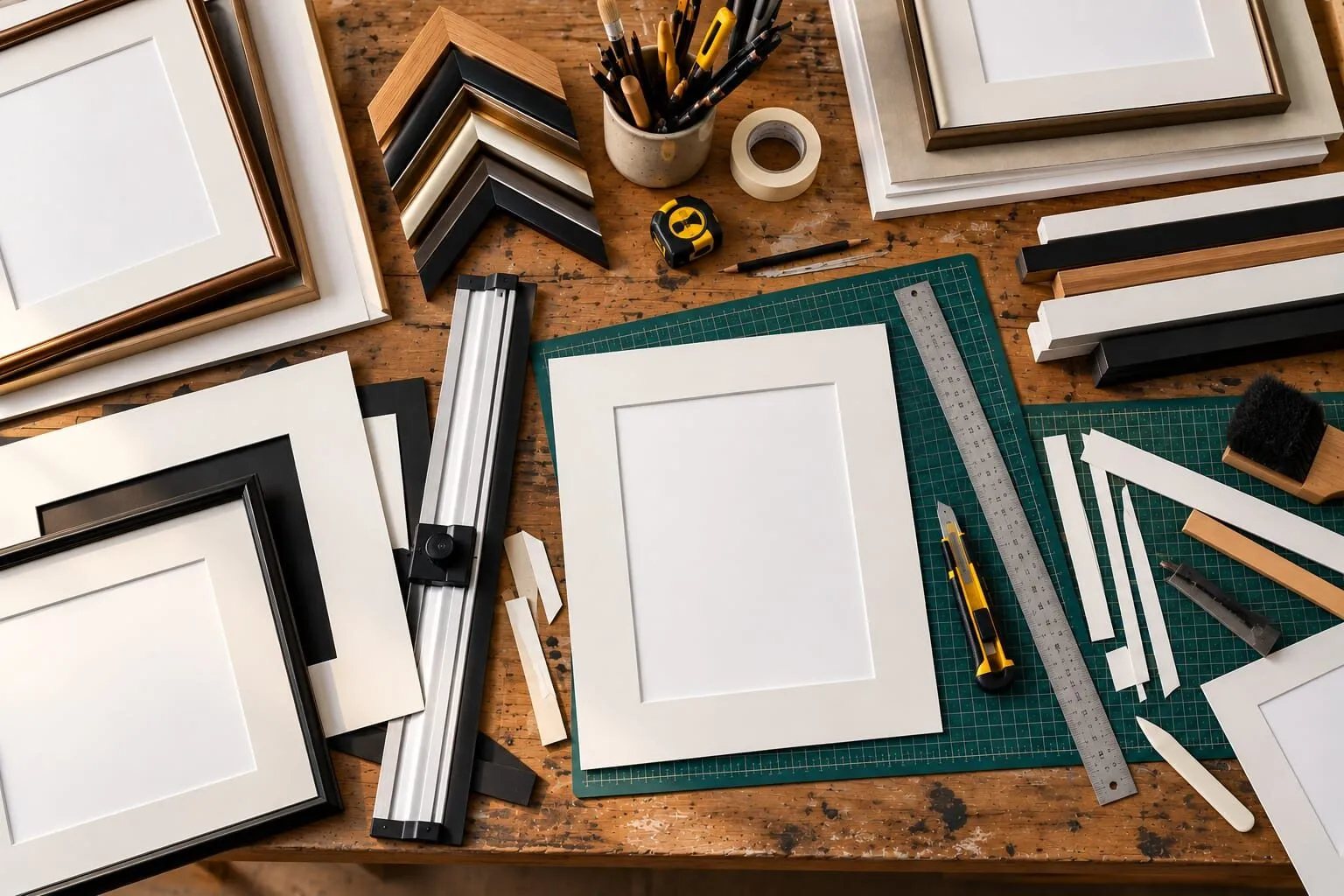
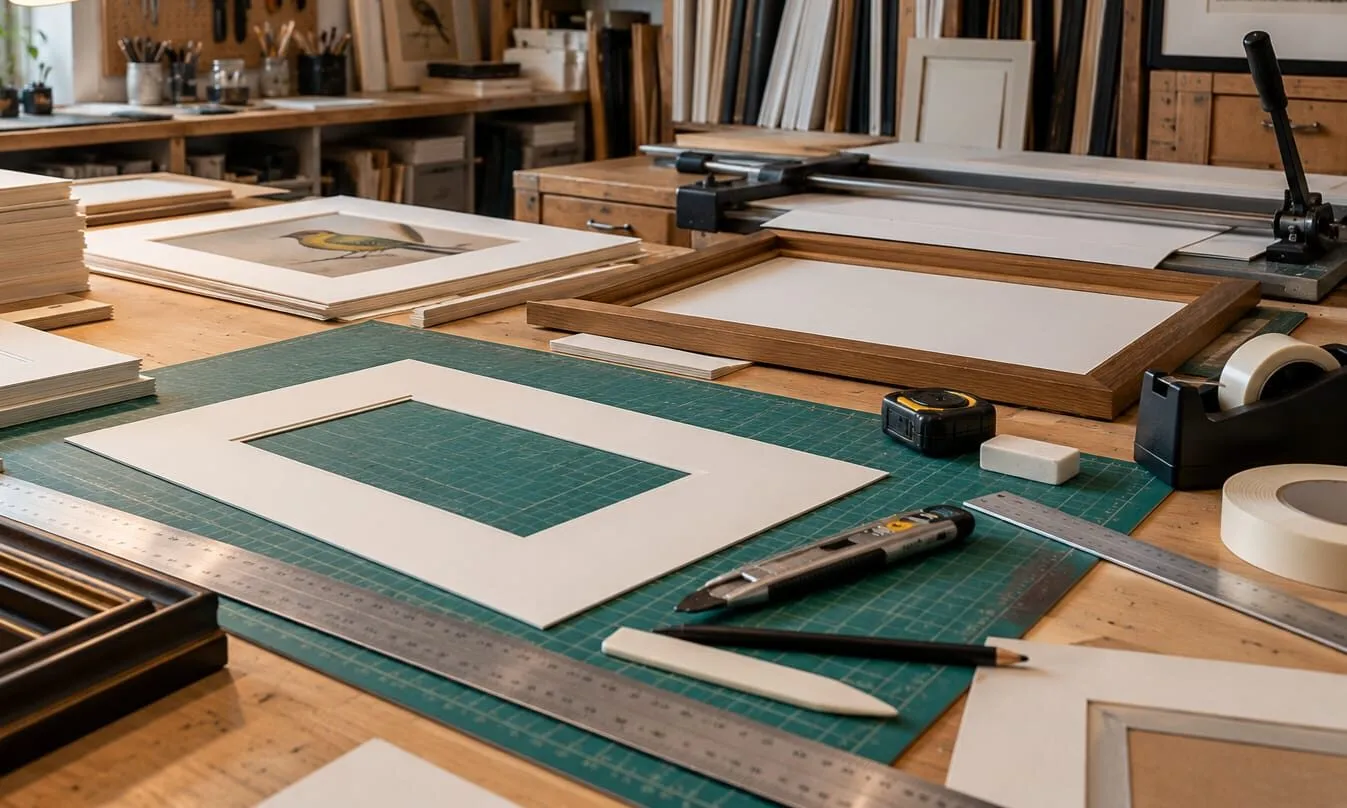
- Framing under glass with a mount or spacer so the glazing does not touch the surface. See how to frame and mount a drawing, and use the frame and mount calculator to work out sizes.
- Slip sheets: glassine or clean, acid-free tissue laid over the drawing for storage and transport.
- Interleaving in a portfolio, with a sheet between each drawing.
- Careful handling and hinging: hold drawings by the edges, and keep them flat.
- Working habits: a scrap sheet under your hand, top-to-bottom working and a brush to remove crumbs. See how to avoid smudging pencil drawings.
How to choose a fixative
Because this is a category guide, here is what to check rather than a ranking:
- Is it made for art use on charcoal, pastel or graphite, as stated on the label?
- Is it workable or final, and does that match your use?
- What finish does it leave, matt, satin or gloss?
- Is it labelled as archival or non-yellowing? If the manufacturer says so, check what they say and how long.
- What form is it, aerosol or pump, and does it suit your ventilation?
- Does the label give clear safety and handling instructions?
- Does a test patch on your paper look right?
Buy a small can to test first, and do not assume that a spray suited to charcoal is the best choice for delicate graphite.
The short version
Fixative binds loose graphite and charcoal to paper, but it slightly changes tone, cannot be undone and needs careful, ventilated use. Use a workable type while still drawing and a final type when finished, always test on a scrap patch and follow the label. Avoid hairspray for work you value. For many graphite drawings, framing under glass with a mount, slip sheets and careful handling protect the work without any spray.
Quick answers
Frequently asked questions
Do graphite drawings need fixative?+
Not always. Graphite smudges less than charcoal, and many artists protect finished drawings by framing them under glass or interleaving pages with clean sheets. Fixative helps if a drawing will be handled or stored without glass, but it can change tone slightly and cannot be undone, so test it first.
Can I use hairspray as fixative?+
It is widely suggested, but it is not designed for art. Hairspray formulations vary, may contain ingredients that discolour, yellow or become sticky over time and are not tested for permanence on paper. Purpose-made art fixative is the safer choice for work you care about. If you experiment, do it only on scrap paper.
Does fixative change the look of a drawing?+
It can. Many fixatives slightly darken tone, reduce the softness of blended areas and leave a faint sheen or matte film depending on the product. Heavy coats can also make later erasing or layering harder. Test on a scrap piece with similar tone, and apply thin, even coats.
How do you spray fixative safely?+
Spray outdoors or in a well-ventilated area, away from heat, flames and children, and follow the instructions and safety information on the can. Hold the can at the recommended distance, use light sweeping passes and let the work dry flat. Wear a suitable mask if the label advises it.